
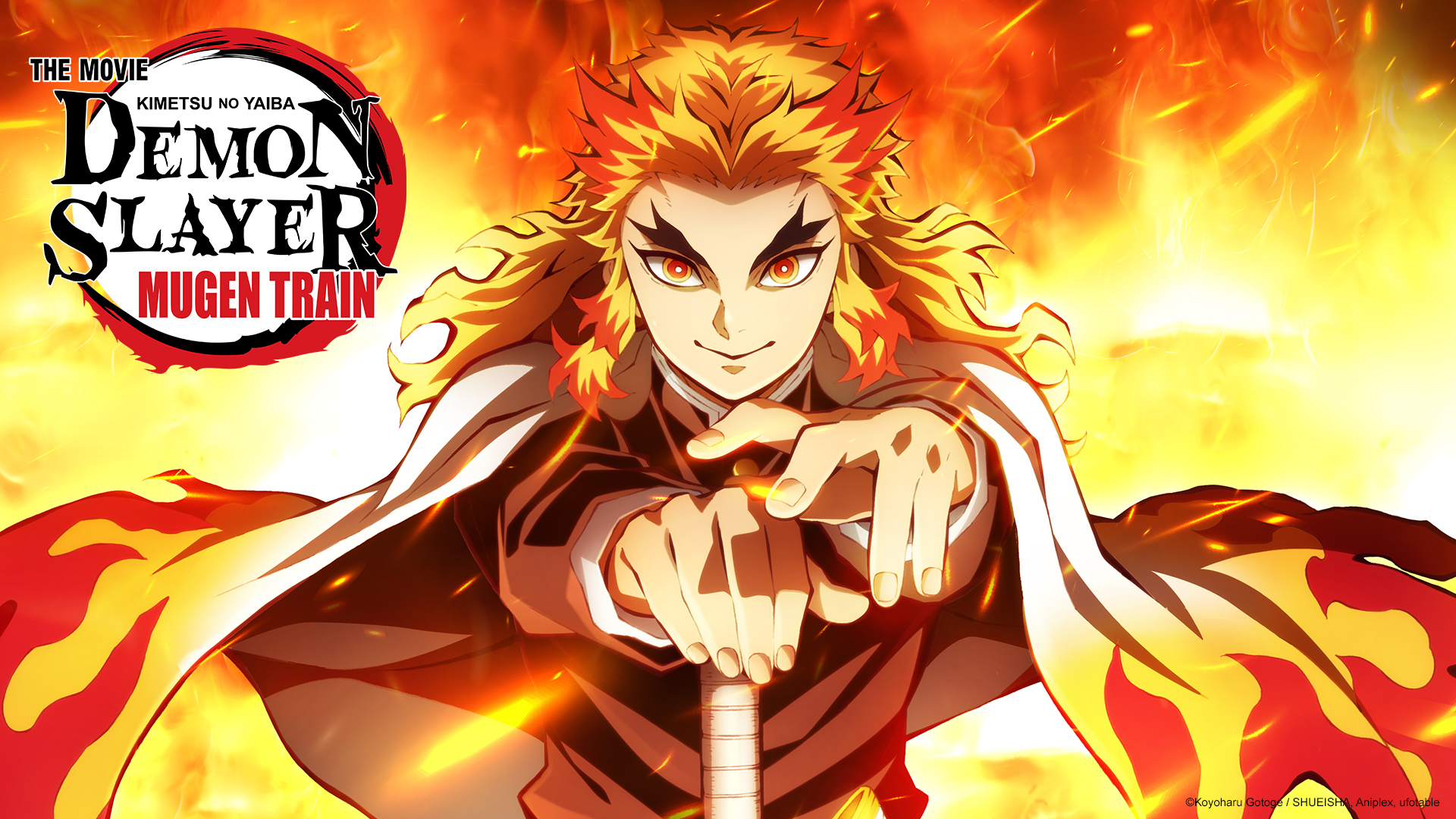
When Demon Slayer: Kimetsu no Yaiba – The Movie: Mugen Train opened in Japan in October 2020, it had an advantage most movies could only dream of: an audience that was already invested in its characters. But a built-in fanbase alone doesn’t explain how an anime sequel became a box-office event on a scale rarely seen for Japanese animation.
The film went on to become the highest-grossing movie in Japanese box-office history at the time, surpassing Hayao Miyazaki’s Spirited Away. By the time it opened in North America in April 2021, it was already a phenomenon. Its U.S. opening exceeded $21 million, setting a record for a foreign-language film debut in the market.
Those numbers tell part of the story. The more interesting question is why this particular film connected so strongly with audiences, and why its appeal extends beyond the people who were already following Tanjiro Kamado’s journey.
How a TV Anime Became a Theatrical Event
Mugen Train didn’t ask audiences to meet an entirely new cast or learn a new fictional world. It continued the story of the 2019 Demon Slayer anime, bringing Tanjiro, his demon-turned-sister Nezuko, and their companions into their next major mission.
That continuity was a strength. Viewers who had spent a season watching Tanjiro train, fight, and search for a way to restore Nezuko’s humanity already had a reason to care about what happened next. The movie could build on that attachment instead of spending its runtime introducing the premise from scratch.
The source material mattered, too. By December 2020, the Demon Slayer manga had sold nearly 120 million copies across formats, according to The Japan Times. The film arrived with an enormous readership behind it, while the anime had introduced the story to an even wider audience. It was a rare meeting point between manga readers, anime fans, and moviegoers looking for a major theatrical release.
Timing also played a role. The movie became Japan’s defining box-office success of 2020, when the pandemic had disrupted theatrical releases around the world. That context doesn’t explain the film’s popularity on its own, but it helps show just how unusual its performance was.
The Film Understands What Fans Came For
The basic setup is straightforward: Tanjiro, Nezuko, Zenitsu, and Inosuke board a train after passengers begin disappearing. They join Kyojuro Rengoku, the Flame Hashira, to investigate. What should be a contained mission gradually turns into something far more dangerous.
The train setting gives the movie a different rhythm from an adventure that constantly moves between locations. The characters are traveling through a confined space, surrounded by passengers they have a responsibility to protect. There is no easy way to separate the fight from its potential consequences for everyone on board.
The film also knows that Demon Slayer works best when its supernatural battles have a personal cost. Tanjiro isn’t fighting simply because he wants to become stronger. His mission is tied to Nezuko, his family, and the possibility that a demon might not be beyond saving. That perspective gives the series a moral tension beyond defeating one enemy after another.
Mugen Train builds on those established relationships rather than trying to reinvent the franchise. For fans, that means getting more of what drew them in. For viewers who appreciate character-driven action, it means the spectacle has a clear emotional foundation.
Why Rengoku Became the Heart of Mugen Train
Kyojuro Rengoku is central to the movie’s lasting reputation. As the Flame Hashira, he is an elite swordsman, but his appeal isn’t limited to his abilities. He is enthusiastic, direct, and serious about the responsibility that comes with being powerful.
His dynamic with Tanjiro is particularly important. Tanjiro is still developing as a fighter, while Rengoku represents a level of skill and confidence he hopes to reach. Their time together gives the younger demon slayers a chance to see what their ideals look like when put into practice by someone who has already dedicated his life to the job.
Rengoku also gives the film a clear point of contrast. The younger characters are still discovering what they can do, and how much they are willing to risk. He carries himself like someone who has already answered those questions.
Without spoiling the film’s major developments, Rengoku’s role is a big reason the story stayed with viewers after the credits. The film gives his beliefs consequences, asking what it means to protect others when being strong doesn’t guarantee that everyone can be saved.
The Animation Is Part of the Story, Not Just Decoration
The work of animation studio ufotable is another major part of Mugen Train’s appeal. Its action combines hand-drawn character animation with digital effects and camera movement that make sword techniques feel fast, forceful, and distinct.
That visual style matters because Demon Slayer has a recognizable language for combat. The fighters’ techniques aren’t just names attached to different attacks; they shape the look and movement of the action. Water and flame effects, changes in perspective, and carefully timed impacts help make each confrontation feel like an event.
The train gives the filmmakers a practical advantage, too. Carriages, narrow passages, and the movement of the locomotive create a sense of momentum and confinement. The characters have to respond to threats in a space that keeps moving, while the passengers around them raise the stakes.
Critics responded strongly to the film’s presentation. Rotten Tomatoes lists a 98% critics’ score based on 49 reviews, with its critics’ consensus highlighting the animation and action set pieces alongside the story’s emotional core. That score reflects the reviews collected by the site, rather than a universal verdict, but it gives a useful snapshot of the film’s reception. Rotten Tomatoes
Does Mugen Train Still Deserve the Attention?
A record-breaking release doesn’t automatically make a movie worth revisiting. Box-office numbers tell us how many people showed up; they don’t guarantee that the experience holds together afterward.
Mugen Train has a stronger case than its commercial success alone. It is a focused continuation of a popular story, with a clear setting, a memorable new central presence in Rengoku, and action sequences that serve the characters rather than existing only for spectacle.
It is also a useful example of how anime films can function as major cinematic releases without abandoning what makes the source material work. The movie doesn’t need to explain every part of the Demon Slayer universe again. It trusts the audience to care about the characters, then gives those relationships a new test.
There is one important caveat for newcomers: this is a continuation of the series, not a completely standalone introduction. Watching the first season gives the characters and their goals more context. If you’ve already seen it, Mugen Train is the next major step in Tanjiro’s story.
Watch Demon Slayer: Mugen Train on Amasian TV
Part of the fun of returning to a film like Mugen Train is being able to focus on the details you might have missed the first time: the choreography, the visual transitions, the performances, and the small character moments between battles. Amasian TV carries Demon Slayer: Kimetsu no Yaiba – The Movie: Mugen Train in English-dubbed format.