

3 Chinese Action Comedies When You Want Something Lighter
Sometimes you want an action movie without spending two hours watching everyone look miserable.
Chinese-language cinema has plenty of films that mix action with comedy, whether that means detectives stumbling through a murder investigation, former mercenaries turning a heist into a personal score-settling mission, or three strangers getting pulled into an increasingly ridiculous trip across Thailand.
Amasian TV has a few movies that fit that mood particularly well. Badges of Fury, Golden Job, and Lost in Thailand all take a different route to the same destination: action with plenty of personality and comedy along the way.
Badges of Fury Turns a Murder Mystery Into a Police Comedy
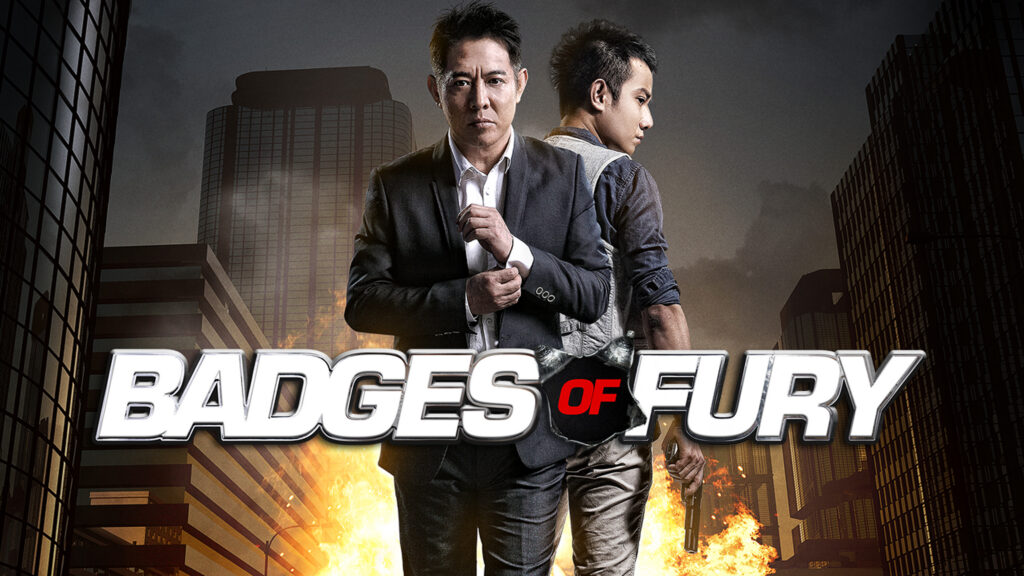
Three murders happen in Hong Kong over the course of three days, and the victims all have something unusual in common: each dies with a smile on their face.
That is the setup for Badges of Fury, a 2013 action comedy starring Jet Li and Wen Zhang as two detectives investigating what becomes known as the “Smiling Murder” case.
Wang Bu’er is the younger detective, while Jet Li’s Huang Feihong is the more experienced officer. Their investigation eventually points toward aspiring actress Liu Jinshui, putting the detectives in the middle of a case involving celebrities, suspects, undercover work, and increasingly ridiculous situations.
The interesting part of the movie is the contrast between its murder-mystery setup and its comedic tone. There are genuine stakes to the investigation, but the detectives themselves are frequently the source of the chaos.
And because this is a Jet Li movie, the comedy eventually gives way to martial-arts action. The film also features Collin Chou and Wu Jing, giving action fans some familiar faces to look out for.
Golden Job Brings the Heist Movie to Five Old Friends
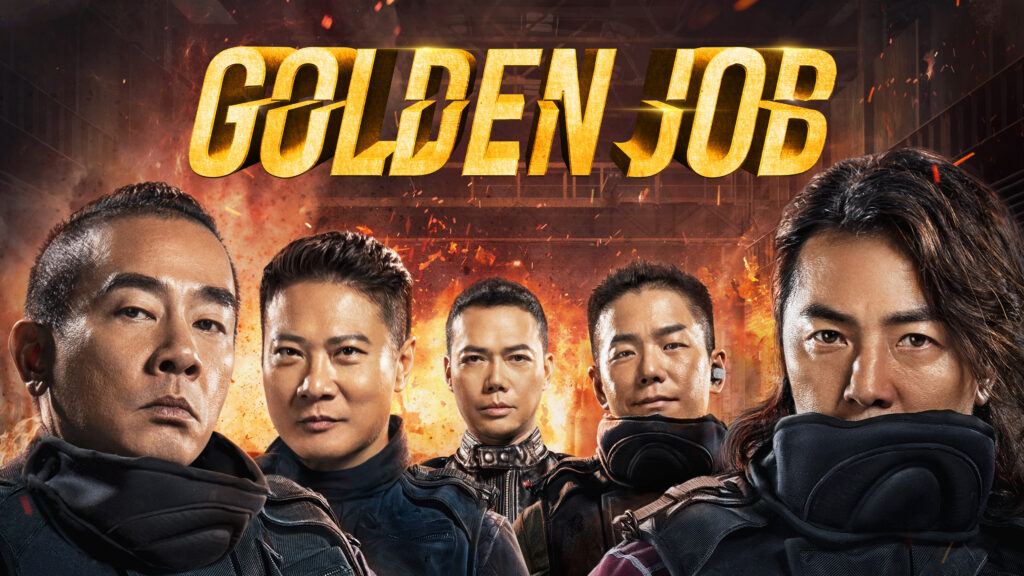
Golden Job has a more traditional action-movie setup: five former mercenaries reunite for a job.
Lion, Crater, Bill, Calm, and Mouse grew up together after being adopted and raised by the same mentor, Cho Sir. Years later, they work as mercenaries and decide to steal a truckload of medicine intended to help children in Africa. There’s one problem: the truck is actually carrying gold, and the entire operation turns out to be a setup by one of their own.
That betrayal changes the movie from a straightforward heist into a personal chase. Lion ends up imprisoned in Hungary, Cho is left seriously injured, and the group eventually comes back together to settle the score.
The film was directed by Chin Ka-lok, who also stars alongside Ekin Cheng, Jordan Chan, Michael Tse, and Jerry Lamb. The cast’s history together is part of the appeal: the movie reunites several of the actors from the Young and Dangerous films, giving the group dynamic an added layer for Hong Kong cinema fans.
The action also has a globe-trotting quality. Production took place in locations including Taiwan, Japan, Hungary, Montenegro, Beijing, and Inner Mongolia.
Lost in Thailand Leaves the Action Behind for a Road Trip

Then there’s Lost in Thailand, which takes the action-comedy idea in a completely different direction.
Xu Zheng’s 2012 directorial debut follows Xu Lang, a businessman racing to Thailand over control of a potentially valuable new technology. His rival, Gao Bo, is also heading there, while Wang Bao is simply looking to enjoy his trip and experience Thailand. The three eventually become entangled in the same journey.
Xu Zheng, Wang Baoqiang, and Huang Bo form the central trio, and much of the movie’s comedy comes from the mismatch between them. Xu Lang is focused on business, while Wang Bao approaches the trip with a much more carefree attitude.
That gives the movie a buddy-comedy quality that separates it from the other two films on this list. There is a business rivalry driving the story, but the journey itself becomes increasingly important as the characters get pulled away from what they originally intended to do.
The film was also a major Chinese box-office success. It became the highest-grossing Chinese-language film in China at the time, eventually taking more than ¥1.3 billion in mainland China.
Which Kind of Action Comedy Fits Your Mood?
These three movies make a good progression depending on what you’re looking for.
Badges of Fury is the choice for a detective story with martial arts and broad comedy. Golden Job leans into the ensemble action movie, with old friends, betrayal, international locations, and a heist gone wrong. Lost in Thailand is the most relaxed of the three, turning its business rivalry into an unpredictable road trip.
If you’re looking for something lighter between heavier thrillers and action movies, these three Chinese-language films are worth adding to the list.
Detective Dee: The Chinese Mystery Movies Where History Meets Fantasy
What do you get when a historical detective story meets wuxia action, imperial intrigue, and giant sea monsters?
The Detective Dee movies.
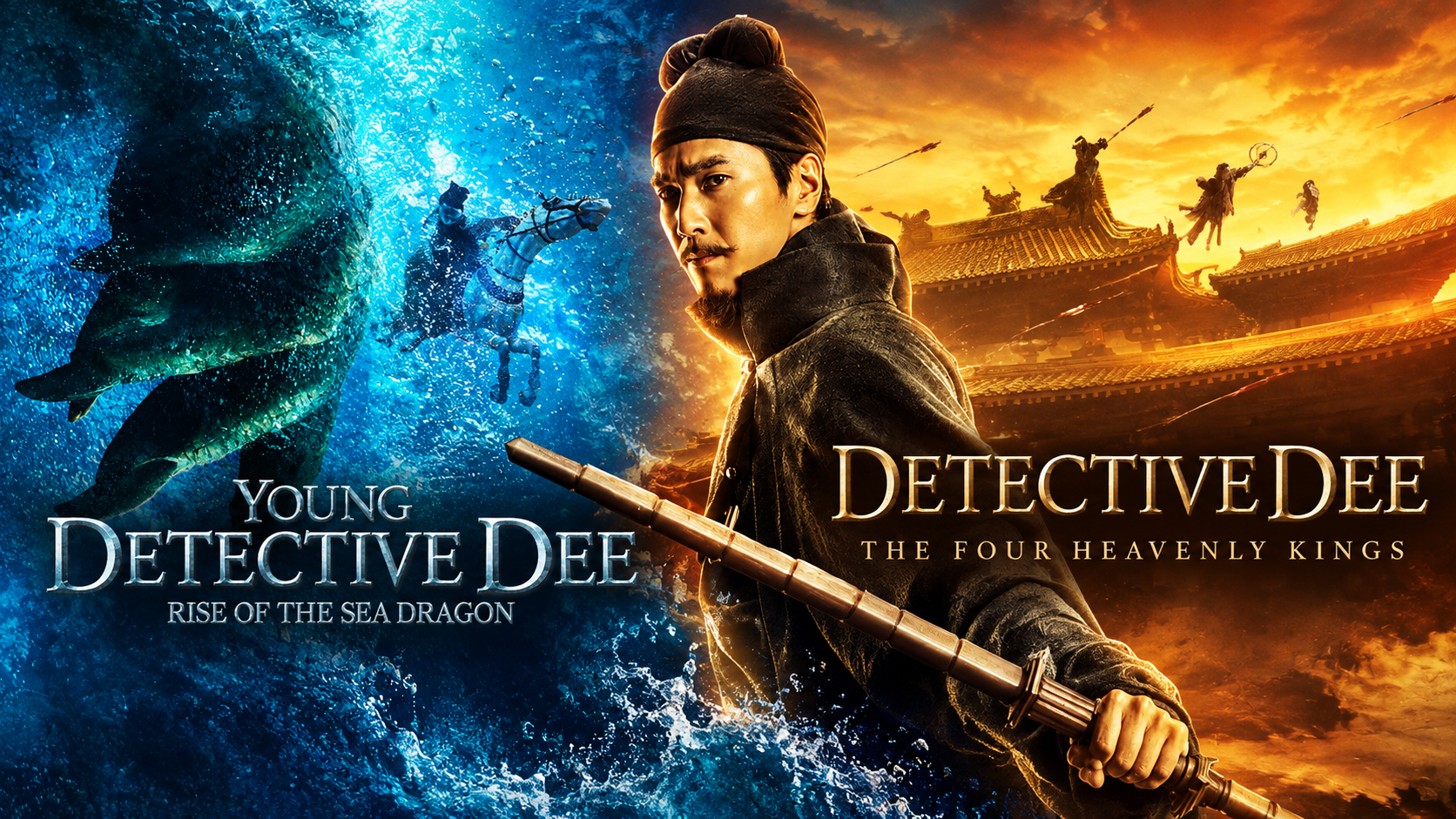
The character is based on Di Renjie, a real Tang dynasty official who later became the subject of fictional detective stories. Tsui Hark’s films take that historical figure and build an entirely different kind of mystery around him, where solving a case can mean following clues through an imperial court one moment and fighting masked assassins the next.
Two films on Amasian TV, Young Detective Dee: Rise of the Sea Dragon and Detective Dee: The Four Heavenly Kings, offer a good introduction to this version of the character.
1. Young Detective Dee: Rise of the Sea Dragon
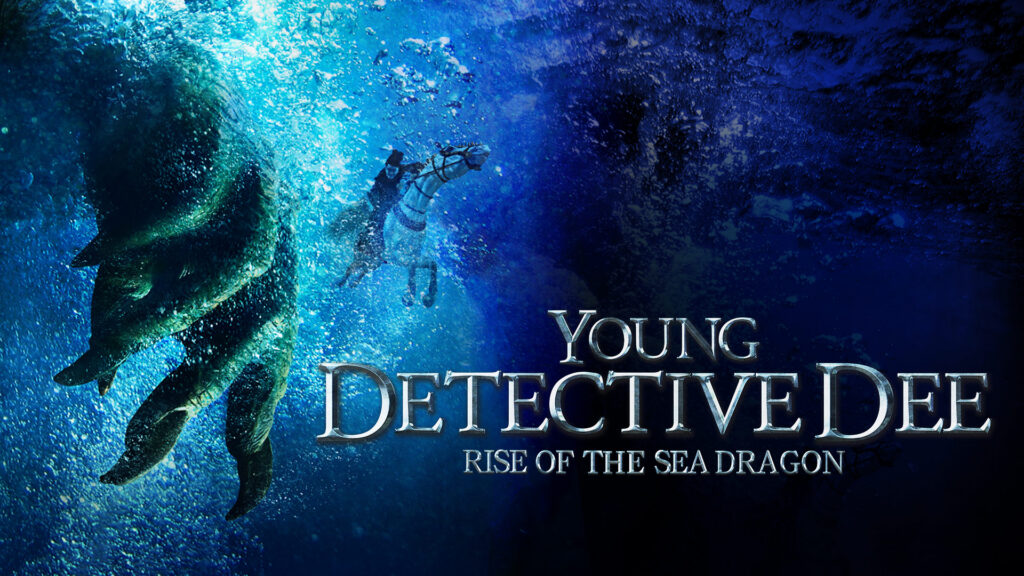
2013 | Directed by Tsui Hark | Starring Mark Chao, William Feng, Angelababy, and Carina Lau
Set in AD 665, Rise of the Sea Dragon follows a young Dee as he arrives in Luoyang to join the imperial Justice Department. His timing isn’t great. A naval fleet has been attacked by what appears to be a massive sea monster, and Empress Wu has given the authorities only ten days to solve the mystery.
Mark Chao plays Dee as a younger, more confident version of the detective. He’s constantly observing people, remembering details, and finding connections that other investigators overlook. His rivalry with Yuchi Zhenjin, played by William Feng, gives the investigation another layer, with the two men repeatedly finding themselves on opposite sides of the same case.
Then things get considerably stranger.
The investigation brings Dee into contact with assassins who seem capable of moving through the water, mysterious creatures, palace intrigue, and a plot surrounding Yin Ruiji, the imperial capital’s most famous courtesan. The movie uses its detective premise as a gateway into the kind of elaborate fantasy action Tsui Hark is known for.
2. Detective Dee: The Four Heavenly Kings

2018 | Directed by Tsui Hark | Starring Mark Chao, William Feng, Lin Gengxin, Ethan Juan, Ma Sichun, and Carina Lau
The Four Heavenly Kings brings Dee back into the middle of another dangerous case, this time involving Empress Wu and a mysterious crime wave spreading through the city.
Dee is accused of wrongdoing by Wu while strange, seemingly supernatural events begin piling up around him. The official synopsis describes the film as a wuxia fantasy, and that’s an important distinction: the mystery is surrounded by martial arts, mysticism, elaborate weapons, and creatures that could never appear in a conventional historical detective story.
The film also shows just how far Tsui Hark pushes the visual side of the series. A giant albino gorilla, masked assassins, elaborate combat sequences, and supernatural imagery all become part of Dee’s investigation. Even critics who found the mystery itself less convincing noted the film’s constant energy and inventive action.
Where the detective story meets wuxia
That’s really the appeal of these movies.
The Detective Dee films don’t separate the investigation from the action. A clue can lead directly into a fight, while a fight can reveal something about the mystery. Dee’s intelligence matters, but he also has to survive a world filled with skilled fighters, political enemies, and seemingly impossible phenomena.
Tsui Hark’s approach also gives the historical setting a very different feel. The Tang dynasty provides the costumes, architecture, court politics, and political conflicts, while wuxia allows the filmmakers to turn that world into something much more fantastical.
So if you go into Detective Dee expecting a straightforward period crime story, you’re going to get something considerably stranger.
And that’s the fun of it.
If you’re looking for Chinese movies that combine mystery, martial arts, historical drama, and fantasy, Young Detective Dee: Rise of the Sea Dragon and Detective Dee: The Four Heavenly Kings are an easy pairing to start with.