
Circle: The Korean Sci-Fi Mystery That Connects Two Worlds
Some Korean dramas give you one mystery to solve. Circle: Two Worlds Connected gives you two.
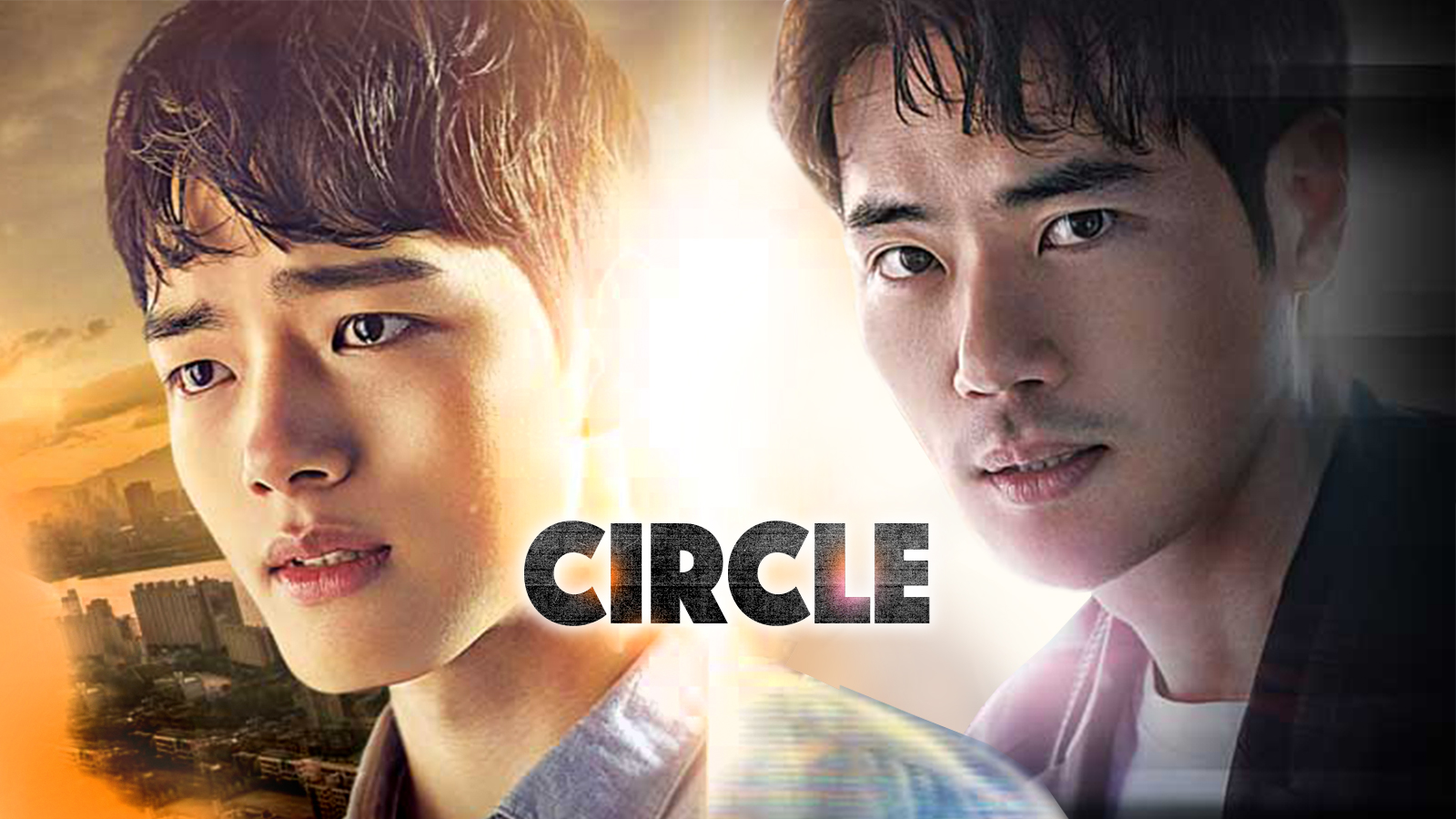
The 2017 tvN drama follows two stories separated by 20 years. In 2017, university student Kim Woo-jin becomes involved in a strange series of events surrounding an alien and a mysterious death. In 2037, veteran detective Kim Joon-hyuk investigates a murder inside Smart Earth, a futuristic city where crime has supposedly been eliminated.
What makes Circle interesting is that these aren’t simply two separate timelines. The drama deliberately builds them as connected pieces of the same mystery.
Two Stories, One Mystery
The first half of Circle takes place in 2017, where Woo-jin is a university student studying neuroscience. His twin brother, Kim Beom-gyoon, becomes obsessed with an alien conspiracy after a series of unexplained events, eventually pulling Woo-jin into the investigation.
Then the drama jumps forward to 2037.
Twenty years later, Kim Joon-hyuk, played by Kim Kang-woo, is a detective in General Earth. He enters Smart Earth after its supposedly crime-free society experiences a mysterious murder. Instead of simply solving the case, Joon-hyuk becomes increasingly interested in the company behind Smart Earth and what is really happening inside the futuristic city.
That setup gives Circle its central hook: how does a mystery from 2017 connect to a murder in 2037?
The Drama’s Unusual “Double Track” Format
One of the most interesting things about Circle is actually its structure.
Rather than using a conventional time-travel story, the drama tells its two stories within the same episode. tvN described the format as a “double-track” drama: one part follows the 2017 story, while the other follows events in 2037. The two narratives are separated by time but connected through their characters and technology.
That makes the audience pay attention to details in both timelines.
A clue introduced in one story can change how you look at something happening in the other. Characters also take on different roles as the story moves between the two periods, creating another layer to the mystery.
It’s less about watching the past eventually become the future and more about putting two halves of a puzzle together at the same time.
What Happens When Technology Can Control Emotion?
The 2037 storyline is where Circle moves beyond a straightforward mystery.
Smart Earth is built around the idea that people’s emotions can be controlled. Its society is designed to reduce the things that cause unhappiness, crime, and conflict. On paper, it sounds almost utopian.
But the drama asks a much more uncomfortable question: if you could eliminate negative emotions, would you actually be happier?
tvN’s own description of the series frames this as one of its central ideas. The drama imagines a society where human emotions are controlled and asks what that would mean for happiness and, ultimately, what makes people human.
That gives the sci-fi elements some weight beyond futuristic technology and alien mysteries. Circle is interested in whether removing pain also means removing something essential from human experience.
A K-Drama Built Around Questions
Circle works best when you don’t know exactly where the mystery is going.
The drama keeps introducing questions around the alien, Woo-jin’s missing brother, Smart Earth, lost memories, and the people behind the technology connecting the two worlds. Even the official episode descriptions repeatedly shift the characters’ understanding of what happened and who they can trust.
That makes it a good choice for viewers who enjoy Korean dramas where the mystery itself is part of the experience.
And with only 12 episodes, Circle doesn’t require the kind of long commitment that comes with many Korean dramas. Amasian TV currently lists all 12 episodes of Circle: Two Worlds Connected.
Watch Circle: Two Worlds Connected
If you’re looking for a Korean drama that mixes science fiction, mystery, crime, aliens, futuristic technology, and questions about human emotion, Circle takes an unusual approach.
Instead of slowly building toward a single future timeline, it gives you two stories at once and asks you to figure out how they fit together.