

Park Jeong-min: The Korean Actor Making Every Role His Own
Park Jeong-min has a habit of making supporting characters difficult to forget. Whether he is playing a streetwise fixer, a historical independence activist, or a North Korean security officer caught between competing loyalties, he tends to give his characters their own rhythms and personalities rather than simply filling a role in someone else’s story.
That quality is especially visible in Humint, Ryoo Seung-wan’s 2026 action drama. Park plays Park Geon, a North Korean State Security officer investigating a disappearance near the Russian border. The film puts him alongside Zo In-sung, Park Hae-joon, and Shin Se-kyung in a story built around competing intelligence operations in Vladivostok.
But Humint is only the latest example of what makes Park’s career interesting. Two films currently available on Amasian TV, Deliver Us from Evil and Harbin, show just how differently he can approach characters within crime, action, and historical dramas.
From Indie Breakthrough to Major Productions
Park’s breakthrough came with Bleak Night, the 2011 independent drama that established him as an actor to watch. His performance earned major recognition, including Best New Actor honors, and he gradually moved between independent films and increasingly prominent commercial productions.
That progression is worth noting because Park did not build his reputation by sticking to one type of character. His filmography moved through dramas such as Dongju: The Portrait of a Poet, comedies such as Keys to the Heart, crime films, action movies, and eventually large-scale productions.
By the time he appeared in Deliver Us from Evil, he was working alongside major stars Hwang Jung-min and Lee Jung-jae. KOFIC lists the film as a 2020 crime-action movie that ultimately recorded more than 4.35 million admissions in Korea.
Deliver Us from Evil Shows His Ability to Create a Character Quickly
Park plays Yui in Deliver Us from Evil, a character who enters the story after former black-ops agent In-nam travels to Thailand to find a kidnapped child.
Yui is not simply there to move the plot from one action sequence to the next. Park gives the character a distinctive presence that changes the texture of the film whenever he appears, providing In-nam with an unpredictable ally during the increasingly dangerous search.
That is useful context for understanding Park’s approach as an actor. He can make an impression without needing the biggest role in the cast.
The contrast with Hwang Jung-min and Lee Jung-jae is particularly effective. Hwang’s In-nam is controlled and focused on completing the rescue, while Lee’s Ray brings a much more aggressive energy to the pursuit. Park’s Yui occupies a completely different space between them.
Deliver Us from Evil is also a good example of how Park can make a supporting performance feel like its own character study rather than an extension of the protagonist’s story.
Then He Took on Harbin
Park’s role in Harbin moves in almost the opposite direction.
Woo Min-ho’s historical drama follows Korean independence activists planning an attack in Harbin against Japanese colonial rule. Park plays Woo Deok-soon alongside Hyun Bin as independence leader Ahn Jung-geun.
The difference between Yui in Deliver Us from Evil and Woo Deok-soon in Harbin is immediately apparent. One is defined by an unusual personality and chaotic circumstances; the other belongs to a historical story in which the characters are operating under extreme political and personal pressure.
Park does not need to make every character flashy. In Harbin, his performance works within the larger ensemble and the film’s deliberately tense atmosphere.
That ability to adjust rather than impose the same persona on every role is one of the more interesting things to track across his filmography.
Humint Puts That Range Into an Action Thriller
In Humint, Park moves into another unfamiliar position: a North Korean security officer working an investigation that becomes entangled with a larger intelligence conflict.
KOFIC describes Park Geon’s investigation as uncovering possible connections between a border disappearance and North Korean Consul General Hwang Chi-sung, played by Park Hae-joon. Meanwhile, Zo In-sung’s South Korean intelligence officer is pursuing his own investigation in Vladivostok.
The setup gives Park a role that depends less on being the comic relief or the memorable supporting character and more on maintaining uncertainty about what his character knows and where his loyalties lie.
That makes Humint a useful next step in his career. It puts an actor known for highly distinctive characters into a story where suspicion and restraint are central to the performance.
The film was released in South Korea on February 11, 2026, runs 119 minutes, and had recorded nearly 2 million admissions as of September 16, according to KOFIC. Netflix currently lists it among its Korean action titles, starring Park alongside Zo In-sung and Park Hae-joon.
Why Park Jeong-min’s Supporting Roles Matter
One of the easiest ways to overlook Park’s work is to look only at who receives top billing.
His filmography makes a stronger case for paying attention to the actor who enters a scene and changes its energy. In Deliver Us from Evil, he brings personality to a dangerous rescue story. In Harbin, he becomes part of a historical ensemble. In Humint, he has to sustain the tension of an intelligence officer whose investigation keeps getting more complicated.
These are very different demands.
That versatility also explains why his career has continued expanding into major productions without requiring him to abandon the kinds of unusual characters that made him interesting in the first place. KOFIC’s current filmography includes Humint, The Ugly, Harbin, Uprising, Dr. Cheon and the Lost Talisman, Smugglers, Decision to Leave, and Deliver Us from Evil.
Where to Start With Park Jeong-min
If Humint is what brought Park Jung-min to your attention, Deliver Us from Evil is one of the best Amasian titles to watch next.
It puts him in a completely different kind of role from Park Geon, while also giving him the opportunity to work opposite Hwang Jung-min and Lee Jung-jae in a hard-edged crime thriller.
Harbin offers another useful comparison. Watching Park move from the eccentric, unpredictable Yui to the more restrained Woo Deok-soon makes it easier to see the range behind an actor who can sometimes be hidden in plain sight among larger ensemble casts.
Watch Deliver Us from Evil and Harbin free on Amasian TV and see two very different sides of Park Jeong-min’s filmography.
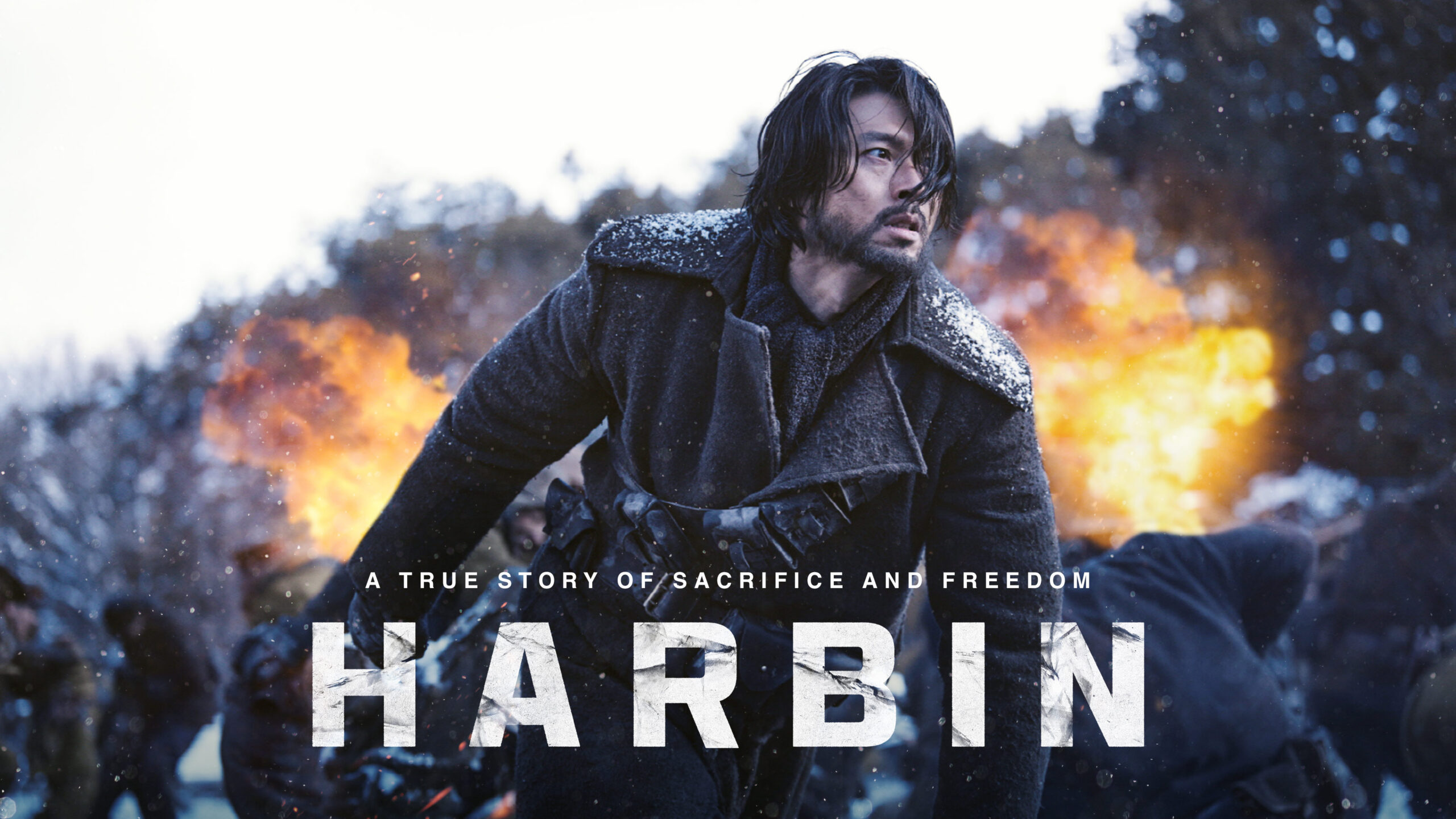
Harbin: The Korean Historical Thriller About a Daring Mission for Independence
History can make for some of the most gripping thrillers, especially when the outcome is already known but the journey there is anything but certain.
Harbin takes one of the defining moments in Korea’s independence movement and turns it into a tense story of resistance, betrayal, and determination.
Directed by Woo Min-ho, the film is set in 1909 and follows Korean independence fighter Ahn Jung-geun, played by Hyun Bin, as he leads a clandestine group planning to assassinate Itō Hirobumi at Harbin Railway Station.
But before the group can reach their target, their plans begin to unravel.
An attempt to obtain explosives goes wrong, raising suspicions that someone within the resistance may be working as an informant. With Japanese forces closing in, Ahn and his fellow fighters have to continue their mission while questioning who they can actually trust.
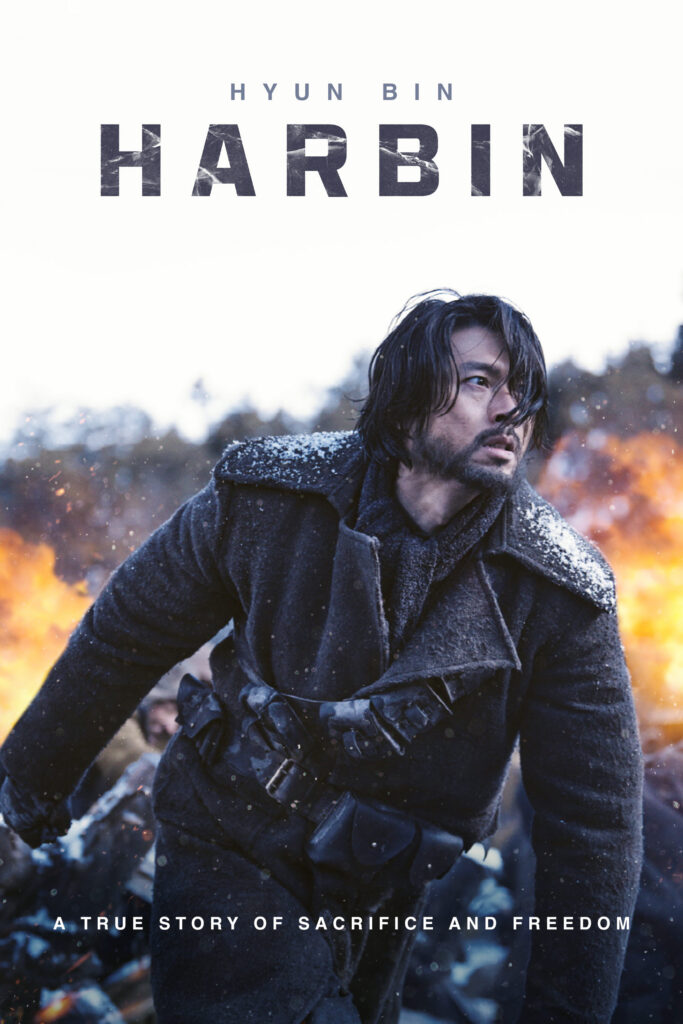
A Dangerous Mission in 1909
Harbin takes place during a pivotal period in Korean history.
By 1909, Korea was under Japanese colonial rule, and resistance fighters were continuing their efforts to regain the country’s sovereignty. Ahn Jung-geun becomes the leader of a secret operation targeting Itō Hirobumi, a major figure in Japan’s efforts to establish control over Korea.
The mission eventually takes the group to Harbin, China, where they plan to intercept Itō at the city’s railway station.
The journey is filled with uncertainty. Plans have to be kept secret, movements have to be carefully calculated, and the possibility of betrayal hangs over the entire operation.
That gives the film its thriller quality. Even when the historical destination is known, Harbin keeps the focus on the risks involved in getting there.
When the Enemy May Be Closer Than Expected
One of the film’s biggest sources of tension comes from within the resistance itself.
After a mission to procure explosives goes awry, Ahn begins to suspect that there is an informant among them.
Suddenly, the group has another problem to solve.
They aren’t only being pursued by Japanese forces. They also have to determine whether someone they trust is secretly working against them.
That uncertainty creates a constant sense of danger throughout the story. Every meeting and every decision carries the possibility of exposing the entire operation.
Hyun Bin as Ahn Jung-geun
At the center of Harbin is Hyun Bin, who takes on the role of Ahn Jung-geun.
The actor leads an ensemble cast that includes Park Jeong-min, Jo Woo-jin, Jeon Yeo-been, Yoo Jae-myung, Lily Franky, and Lee Dong-wook.
The film gives Ahn a strong sense of purpose, but it also places him in an increasingly complicated situation. He has to lead the mission while dealing with the possibility that the group has been compromised.
That makes Harbin less about a single heroic figure and more about the people surrounding him and the sacrifices required to keep the mission alive.
A Historical Thriller From Woo Min-ho
Harbin was directed by Woo Min-ho, whose filmography includes politically charged thrillers such as Inside Men and The Man Standing Next.
His approach to the material helps Harbin feel like more than a straightforward historical drama.
The film combines historical events with the pacing and suspense of a thriller, moving its characters between secret meetings, dangerous journeys, and confrontations with the forces pursuing them.
The production also traveled beyond Korea, filming in locations including Mongolia and Latvia to create the film’s cold and expansive environments.
The result is a story that feels appropriately large for the historical events it depicts while remaining centered on a relatively simple objective: reach Harbin and complete the mission.
The Real Story Behind Harbin
What makes the film particularly compelling is that its central mission is based on a real historical event.
On October 26, 1909, Ahn Jung-geun assassinated Itō Hirobumi at Harbin Railway Station.
Rather than beginning and ending with the assassination itself, Harbin focuses on the events leading up to it.
That allows the movie to explore the uncertainty surrounding the operation and the people who risked everything to carry it out.
For viewers unfamiliar with Ahn Jung-geun’s story, the film provides a dramatic introduction to one of the most significant figures in Korea’s independence movement.
Why Harbin Stands Out
Historical movies can sometimes feel distant from the people at the center of them. Harbin takes a different approach by building its story around the uncertainty of the mission.
The characters don’t know what awaits them at the end of the journey.
They don’t know who might betray them.
And they don’t know whether they’ll survive long enough to reach their destination.
That makes the historical setting feel immediate rather than simply educational.
It’s also a strong choice for anyone who enjoys Korean thrillers but wants something with a different setting and tone. Instead of a modern crime investigation or revenge story, Harbin draws its tension from a real political struggle and a mission that changed the course of Korean history.
A dangerous mission. A group of determined independence fighters. And a journey toward one of the most consequential moments in Korean history.
Watch Harbin on Amasian TV and follow Ahn Jung-geun’s mission from the resistance to Harbin Railway Station.