
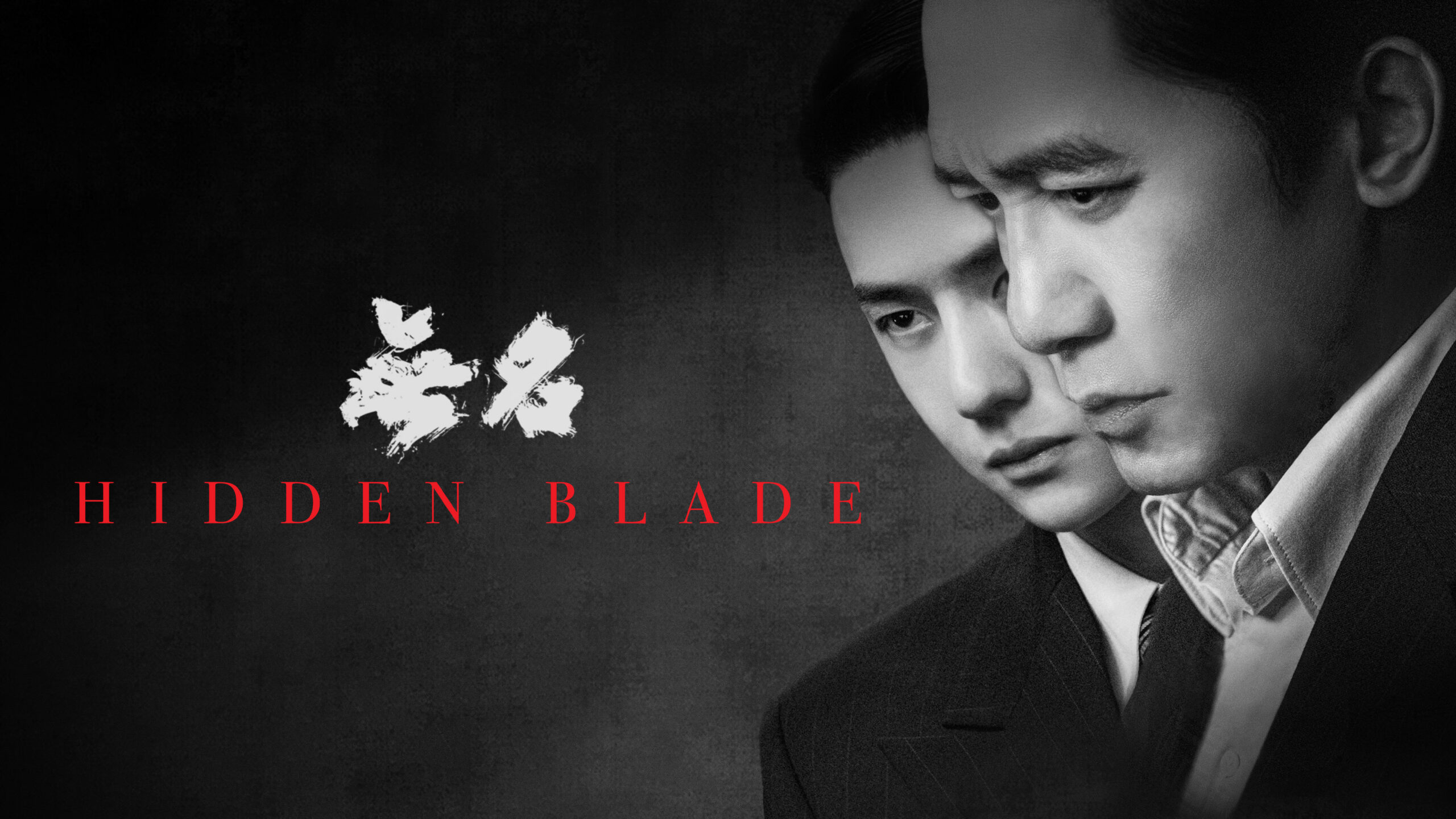
Hidden Blade: A Chinese Spy Thriller Built on Secrets and Double Agents
Set in Shanghai during World War II, Hidden Blade follows a network of underground operatives working inside a city controlled by Japanese forces and the collaborationist Wang Jingwei regime. Directed by Cheng Er, the 2023 Chinese thriller stars Tony Leung as Mr. He and Wang Yibo as Mr. Ye, two figures whose real loyalties become increasingly difficult to read.
The film arrived in Chinese theaters during the 2023 Lunar New Year period and later received a limited U.S. theatrical release on February 17, 2023. It went on to earn more than $136 million worldwide.
But the most interesting thing about Hidden Blade is how Cheng Er builds the movie around uncertainty, giving viewers pieces of information out of order and letting seemingly minor conversations become important later.

Watch Hidden Blade on Amasian TV
A Spy Story Told Like a Puzzle
The basic premise is straightforward enough. During the war, Chinese underground agents operate behind enemy lines, passing intelligence and trying to undermine the occupying forces. The network has to operate around Japanese intelligence agencies, the Wang Jingwei government, and competing political factions.
What makes the movie harder to follow is the way Cheng Er presents that story.
Hidden Blade moves backward and forward through its timeline instead of laying out events chronologically. A conversation that seems insignificant early on can acquire a completely different meaning once the audience learns what happened before or after it. The structure has been noted by critics as one of the film’s defining characteristics, with South China Morning Post describing its nonlinear storytelling as demanding close attention.
That approach also changes how the characters are introduced. You aren’t always told exactly who someone works for or what they know. Instead, their behavior, conversations, and relationships gradually provide the clues.
For a spy thriller, that makes every conversation potentially important.
Tony Leung’s Mr. He Keeps the Film Grounded
Tony Leung plays Mr. He, a senior figure whose position places him close to the machinery of the collaborationist government while concealing his own allegiance.
Leung is particularly well suited to this kind of role because the performance doesn’t depend on constantly explaining what the character is thinking. Much of the tension comes from watching him remain composed while the situation around him becomes increasingly dangerous.
That restraint becomes especially useful in a film where information is deliberately withheld. A glance or pause can matter because the audience is already trying to work out what Mr. He knows.
Leung’s performance received major recognition in China. At the 36th Golden Rooster Awards, he won Best Actor for Hidden Blade, his first Golden Rooster acting win. Cheng Er also won Best Director, while the film received the award for Best Film Editing.
Wang Yibo Brings Another Kind of Tension
Wang Yibo plays Mr. Ye, a younger operative caught within the same web of competing interests. His character’s relationship with Mr. He gives the film one of its central sources of tension.
Mr. Ye isn’t presented as a conventional action hero who simply moves from one mission to another. Much of his role involves listening, watching, and navigating situations where revealing too much could be dangerous.
That makes his scenes with Leung especially important. The two actors often play characters who have reasons to conceal what they know, so their interactions work on two levels: what the characters are saying and what they may actually be trying to communicate.
Wang Yibo was nominated for Best Supporting Actor at the Golden Rooster Awards for the role.
Shanghai Becomes Part of the Story
The film’s visual style reinforces its atmosphere of secrecy.
Rather than relying entirely on large-scale action sequences, Hidden Blade spends considerable time inside offices, restaurants, meeting rooms, and other controlled spaces. One review noted how Cheng Er and production designer Sun Li use carefully composed interiors and political symbols such as flags to give these conversations visual weight.
That matters because espionage in Hidden Blade often happens through conversations rather than gunfights.
A character sitting across a table from another person can be in as much danger as someone being chased through the streets. The audience is constantly looking for the hidden meaning behind ordinary exchanges.
When violence does arrive, it can feel abrupt precisely because so much of the movie has been built around quiet tension.
The Film Rewards Paying Attention
Hidden Blade has divided critics partly because its nonlinear structure can be demanding. Some reviews praised the ambition and visual style, while others found the fragmented storytelling difficult to follow.
That makes it a particularly interesting choice if you enjoy spy stories where the mystery isn’t limited to discovering who committed an act or what happens next.
Here, the larger question is how all the pieces fit together.
The film asks viewers to keep track of names, relationships, political affiliations, shifting timelines, and information that characters may or may not possess. Once those pieces begin connecting, earlier scenes can take on new significance.
It’s the kind of movie where remembering a conversation from 30 minutes earlier can actually pay off.
Watch Hidden Blade on Amasian TV
With Tony Leung and Wang Yibo at the center of a World War II espionage story, Hidden Blade offers a more intricate alternative to straightforward Chinese action movies. Its focus on double agents, political maneuvering, and fragmented storytelling gives the film much of its identity.
If you enjoy Chinese spy thrillers, historical dramas, mystery movies, or films that make you piece together the story yourself, Hidden Blade is worth adding to your watchlist.