
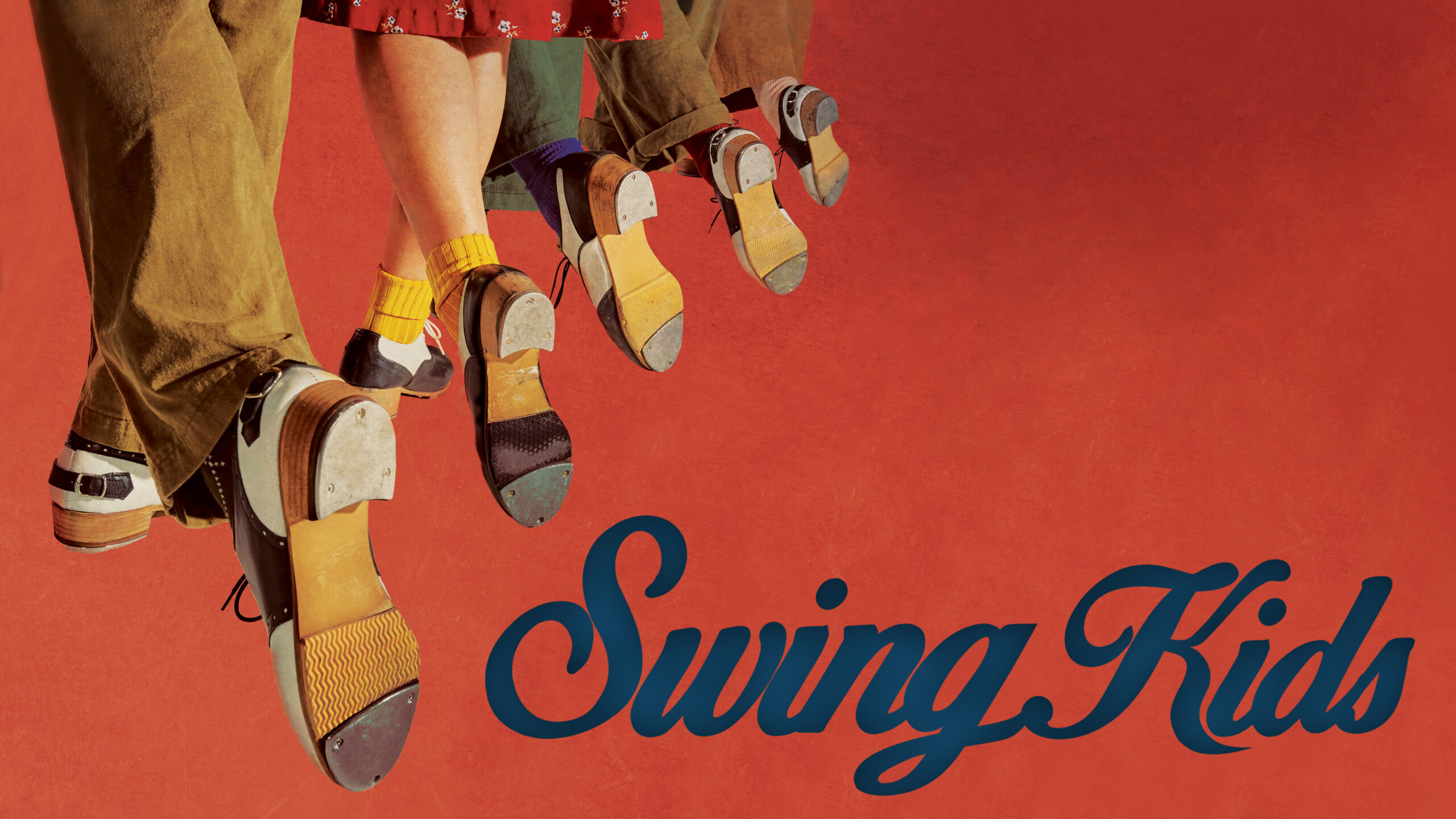
Swing Kids Turns a Korean War POW Camp Into an Unlikely Dance Floor
Set in 1951, during the Korean War, Swing Kids follows Ro Ki-soo (Doh Kyung-soo), a North Korean prisoner at the Geoje POW camp who becomes fascinated by tap dancing. After watching U.S. Army sergeant Jackson (Jared Grimes) dance, Ki-soo joins a new troupe being assembled inside the camp.
The idea came from the original musical Ro Gi-su, which caught director Kang Hyeong-chul’s attention because it connected two subjects he wanted to explore: the division between North and South Korea and his longstanding interest in music and dance.
That combination gives Swing Kids a distinctive setting. The film spends as much time with rehearsals and performances as it does with the political tensions surrounding the prisoners, while the characters have to navigate a camp shaped by the Korean War’s ideological divisions.
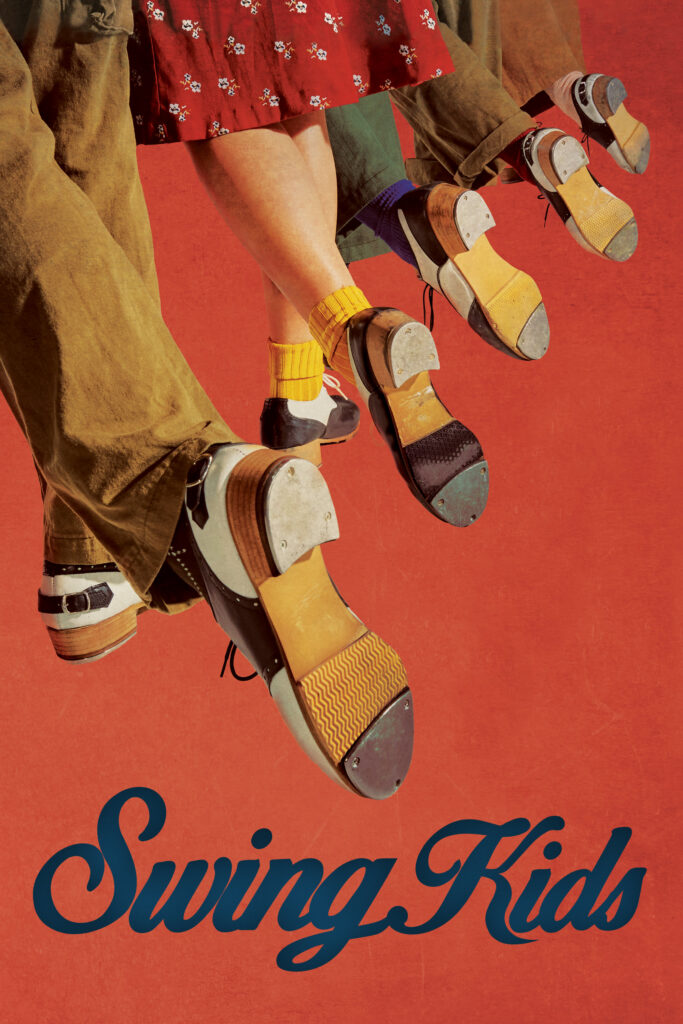
Watch Swing Kids on Amasian TV
The Real History Behind the Geoje POW Camp
The film’s setting is based on the real Geoje POW camp, established in February 1951 by the U.N. High Command. At its height, the camp held roughly 150,000 North Korean and 20,000 Chinese prisoners. Conflicts between pro-communist and anti-communist prisoners became increasingly violent, making the camp one of the most tense environments of the war.
The camp was closed after the 1953 Armistice and eventually became the Historic Park of Geoje POW Camp. Today, the site preserves barracks, military equipment, and other records from the period.
That history gives the dance troupe a very different environment from the usual movie rehearsal room. Ki-soo and the other prisoners are practicing tap steps while living inside a camp where political loyalties could have serious consequences.
Director Kang was particularly interested in that contradiction. He described ideology as the film’s ultimate villain and said he wanted to examine why people could become divided in the name of political beliefs.
D.O. Plays a North Korean Soldier Who Falls for Tap Dancing
Doh Kyung-soo, better known as D.O. from EXO, plays Ki-soo.
For viewers who know D.O. primarily from K-pop, Swing Kids offers a very different showcase for him. He was already an established singer and actor when the movie was made, but director Kang said he actually did not know D.O. was EXO’s vocalist when he first considered him for the role. What mattered to Kang was whether he could physically handle tap dancing and embody Ki-soo.
D.O. learned the tap choreography quickly enough that he did not need a stand-in, including for the film’s more difficult movements. The cast trained for a year, with Kang drawing the dance movements individually into the storyboards.
D.O. has also talked about learning tap dancing for the film, describing the experience as enjoyable despite the difficulty of learning a style that was unfamiliar to him.
That preparation matters because the dancing carries a lot of the film. The performers aren’t simply moving between dramatic scenes; the choreography is part of how their relationships develop and how the movie communicates its changing tone.
How the Swing Kids Troupe Comes Together
Jackson is tasked with creating a five-person tap troupe inside the POW camp for a Christmas performance. The group brings together people who have very little in common.
Ki-soo joins after becoming fascinated by Jackson’s dancing. Yang Pan-rae (Park Hye-su) becomes part of the troupe while supporting herself through dance. Kang Byung-sam (Oh Jung-se) is searching for his wife, while Xiao Fang (Kim Min-ho), a Chinese prisoner, also joins the group.
Jackson has his own challenges. Played by Broadway dancer Jared Grimes, he is an African-American U.S. Army sergeant with professional dance experience. Grimes was already well known in the Broadway dance world when he joined the film, although he had relatively little on-camera experience.
The troupe’s rehearsals gradually become the center of the film. Everyone arrives with a different reason for being there, and the Christmas performance becomes an increasingly important goal as the story develops.
The Dancing Took a Year to Prepare
Kang Hyeong-chul put considerable effort into making the tap sequences convincing.
The director said he storyboarded the dance movements one by one and had the cast practice for an entire year. He also emphasized that the actors needed to act while dancing rather than simply execute choreography correctly.
The result is especially noticeable in the larger dance sequences, where the performers have to maintain character while keeping up with complicated footwork.
The film’s cinematography was designed around the period setting as well. Cinematographer Kim Jee-yong aimed for the appearance of old color photographs, while later commentary on the film’s cinematography noted the use of older lenses and a deliberately aged visual texture.
That visual approach helps the musical numbers sit naturally within a 1950s setting rather than making the movie feel like a contemporary dance production dressed in period costumes.
The Soundtrack Goes From Bowie to Benny Goodman
The soundtrack gives Swing Kids another connection between its modern energy and its historical setting.
The film features songs including David Bowie’s “Modern Love,” Benny Goodman’s “Sing Sing Sing,” The Beatles’ “Free as a Bird,” and Jung Su-ra’s “Joy.”
“Sing Sing Sing” fits naturally into the film’s swing-era atmosphere, while Bowie’s music gives some of the dance sequences a much more contemporary pulse.
The music also helps explain why the film can move so quickly between comedy, dance, and much heavier material. Kang wanted to approach the Korean War through dance, arguing that dancing and singing are instinctive forms of human expression.
When the Christmas Performance Becomes More Complicated
The troupe’s Christmas performance gives the characters something to work toward, but the political situation around them keeps getting worse.
Ki-soo’s interest in American tap dancing already creates suspicion among other prisoners. He is also given a secret order to join the troupe and assassinate the camp’s commander during the performance.
That changes the meaning of the rehearsals. The characters are preparing for a public performance while carrying private loyalties and personal problems that could put everyone in danger.
The movie’s early sections have a strong comedic streak, particularly as the inexperienced dancers struggle to become a functioning troupe. As the story moves toward its final performance, however, the Korean War’s violence and ideological divisions become increasingly difficult to escape.
Why Swing Kids Is Such an Unusual Korean War Movie
The premise alone makes Swing Kids unusual: a North Korean prisoner discovers tap dancing inside a POW camp and ends up performing alongside an American soldier and prisoners from different backgrounds.
Kang’s approach was deliberate. He said the movie revolves around the Korean War while keeping dance as its main subject.
That gives the film two very different rhythms. The dance scenes are energetic and often funny, while the historical setting constantly reminds you that these characters are living through a devastating war.
The contrast becomes particularly effective in the later parts of the movie, when the troupe’s excitement about performing runs directly into the realities of the camp around them.
Swing Kids was released in South Korea on December 19, 2018, and opened in North America on December 21. The film runs 133 minutes and was directed by Kang Hyeong-chul.
The cast includes Doh Kyung-soo (D.O.), Park Hye-su, Jared Grimes, Oh Jung-se, and Kim Min-ho.
For fans of D.O., Korean War films, musicals, or movies built around dance, Swing Kids offers an unusual combination of all four. Watch Swing Kids on Amasian TV.