
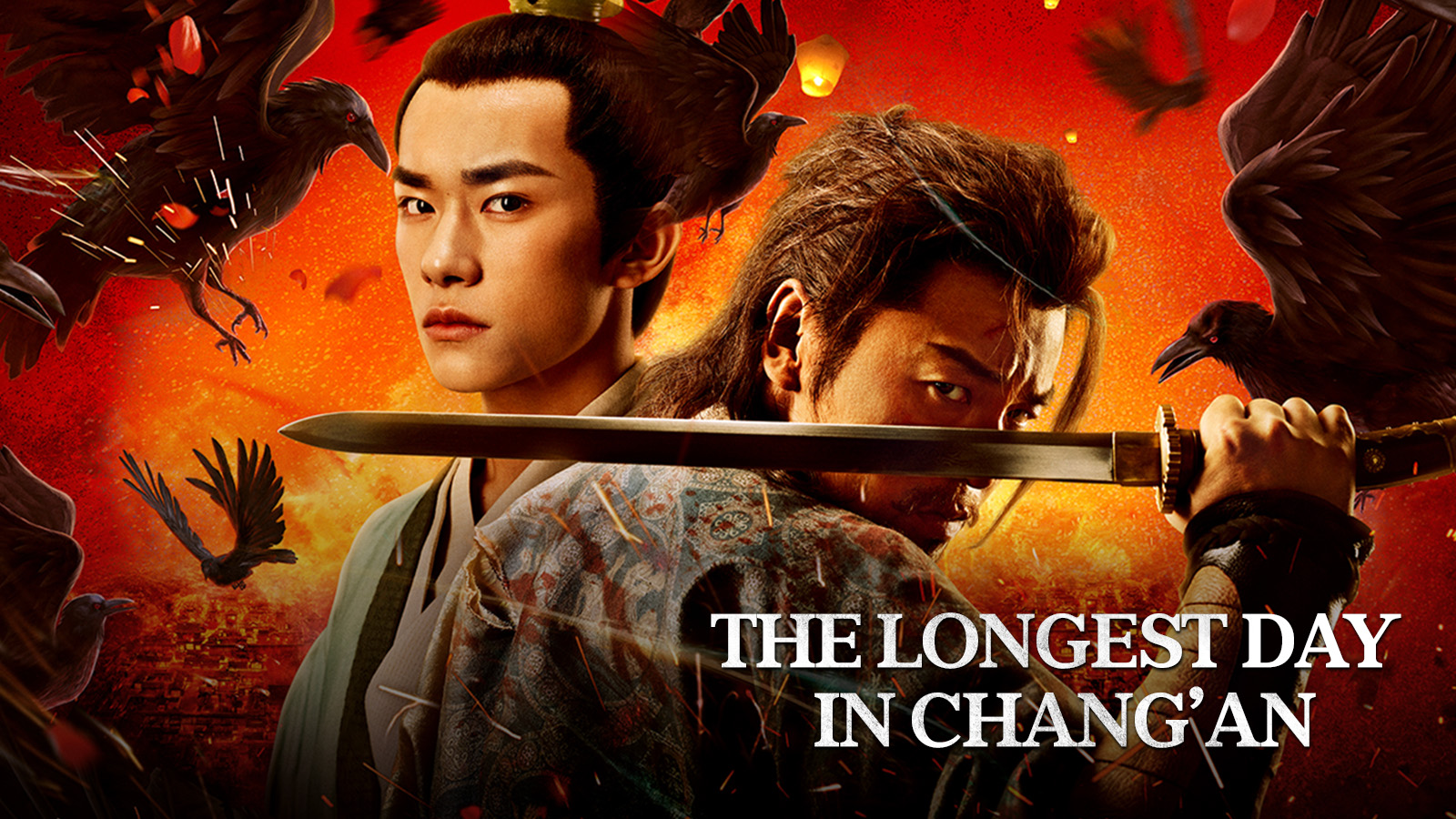
A city preparing for a festival should be a place of celebration. In The Longest Day in Chang’an, it’s a city on the verge of catastrophe.
Set during the Tang dynasty, the 2019 Chinese historical thriller follows an attempt to stop a devastating attack on Chang’an, the imperial capital. The catch? The entire crisis unfolds over a single day. There are conspirators moving through crowded streets, political figures protecting their own interests, and two very different men trying to work out what is happening before time runs out.
It’s a simple premise, but the execution is anything but. With 48 episodes covering the events of those 24 hours, The Longest Day in Chang’an turns a historical setting into the backdrop for an unusually ambitious race against the clock.
One day, one city, and a very complicated problem
The story begins when authorities uncover a plot to attack Chang’an during the Lantern Festival. With the celebration approaching and the threat already inside the city, the head of the security bureau, Li Bi (Jackson Yee), needs someone who can move through Chang’an’s less respectable corners and find the people responsible.
His choice is Zhang Xiaojing (Lei Jiayin), a former military officer and experienced investigator who is currently imprisoned. Zhang is released under an arrangement that gives him a chance to stop the attack, but his freedom depends on succeeding.
The two make an interesting pair. Li Bi is young, intelligent, and accustomed to operating within the structures of power. Zhang is older, more experienced in the streets, and considerably less concerned with following the rules. They need each other, even when they don’t necessarily agree on how to get things done.
And the deeper they look, the less the situation resembles a straightforward attack. What initially appears to be a security threat leads into a much larger web of political maneuvering, hidden loyalties, and people who have their own reasons for wanting the city to fall into chaos.
The clock changes everything
The 24-hour structure is what gives the series much of its identity.
Rather than jumping between days or allowing the investigation to unfold over weeks, the story keeps its characters trapped inside the same increasingly frantic stretch of time. Every delay matters. Information arrives too late, plans go wrong, and characters are constantly forced to react to developments elsewhere in the city.
The format also makes Chang’an feel like more than a backdrop. The investigation moves through markets, government offices, residential neighborhoods, and festival preparations. While Zhang searches for answers, the city continues with its ordinary business, largely unaware of how close it may be to disaster.
That contrast is part of the appeal. There’s something particularly tense about watching a crowded festival unfold when you know that not everyone in the crowd is there to celebrate.
A Tang dynasty city worth getting lost in
One of the first things you’ll notice about The Longest Day in Chang’an is how much attention has gone into its setting.
The production didn’t rely on a few elaborate palace interiors and call it a day. The crew spent months constructing the streets of Chang’an, recreating the visual details of Tang-era architecture, clothing, food, and everyday life. Historical references were used to inform the costumes and props, while specialists were consulted on details such as traditional food preparation.
The result is a city that feels busy even when the main characters aren’t in the frame. People are working, trading, preparing for the Lantern Festival, and going about their routines. The setting gives the investigation a sense of scale that would be difficult to achieve if the story stayed confined to a handful of rooms.
The cinematography adds to that impression. Long tracking shots and carefully choreographed sequences allow the camera to move through the environment rather than simply cutting between characters. Some scenes feel closer to a historical action film than a conventional television drama.
It’s easy to understand why viewers continue to bring up the production when recommending the series. In Reddit discussions, fans have specifically singled out its long takes, detailed sets, and action sequences as reasons it remains memorable. <escape>[1]</escape>
Is The Longest Day in Chang’an worth watching?
This is a good choice if you enjoy historical dramas that have more going on than palace rivalries and romantic subplots. There’s plenty of political intrigue here, but the central investigation gives the story a clear direction, while the countdown keeps the stakes in view.
It’s also worth knowing that this is a 48-episode series, not a quick weekend watch. The story is dense, with a large cast and plenty of moving parts. Its pacing can become slower in the later episodes, particularly as the conspiracy grows more complicated. But for viewers willing to settle into its world, there’s a lot to appreciate.
What makes The Longest Day in Chang’an memorable is the combination of its scale and its structure. It wants to show you an entire city at a particular moment in history, then make you feel that every street, every conversation, and every passing hour could matter.
That’s a pretty compelling reason to spend a day in Chang’an. Just don’t expect a relaxing one.