
3 Chinese Action Comedies When You Want Something Lighter
Sometimes you want an action movie without spending two hours watching everyone look miserable.
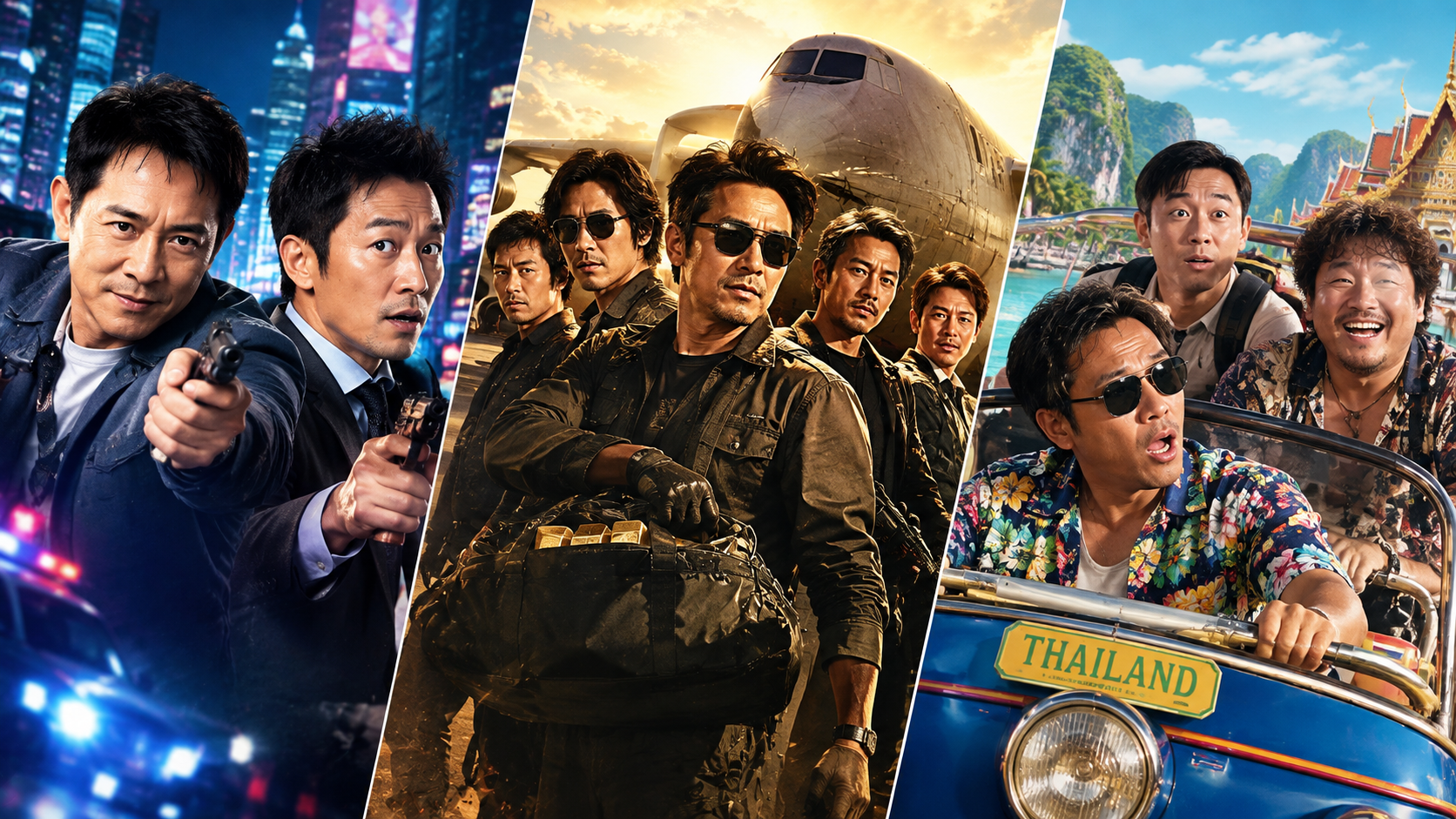
Chinese-language cinema has plenty of films that mix action with comedy, whether that means detectives stumbling through a murder investigation, former mercenaries turning a heist into a personal score-settling mission, or three strangers getting pulled into an increasingly ridiculous trip across Thailand.
Amasian TV has a few movies that fit that mood particularly well. Badges of Fury, Golden Job, and Lost in Thailand all take a different route to the same destination: action with plenty of personality and comedy along the way.
Badges of Fury Turns a Murder Mystery Into a Police Comedy
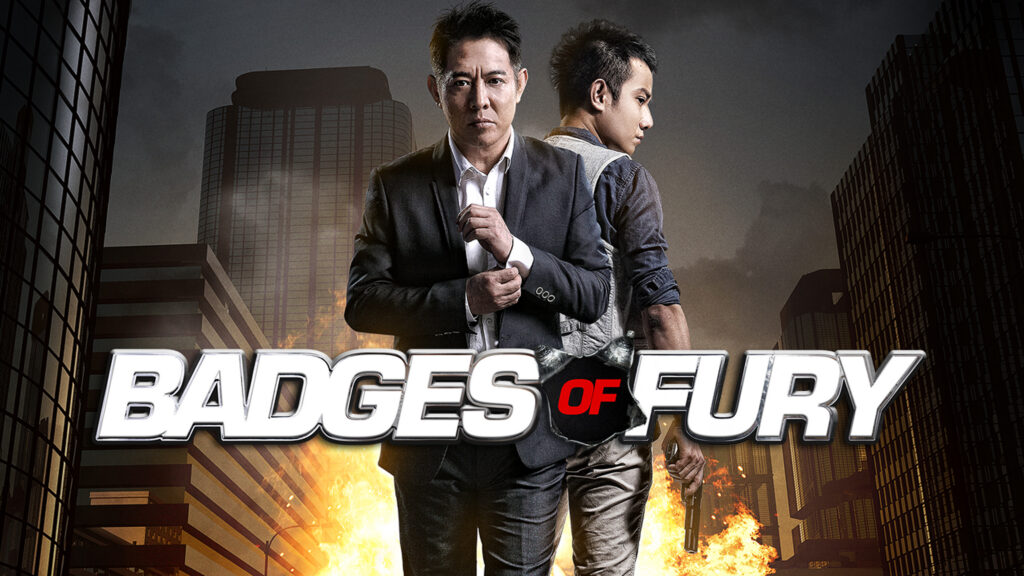
Three murders happen in Hong Kong over the course of three days, and the victims all have something unusual in common: each dies with a smile on their face.
That is the setup for Badges of Fury, a 2013 action comedy starring Jet Li and Wen Zhang as two detectives investigating what becomes known as the “Smiling Murder” case.
Wang Bu’er is the younger detective, while Jet Li’s Huang Feihong is the more experienced officer. Their investigation eventually points toward aspiring actress Liu Jinshui, putting the detectives in the middle of a case involving celebrities, suspects, undercover work, and increasingly ridiculous situations.
The interesting part of the movie is the contrast between its murder-mystery setup and its comedic tone. There are genuine stakes to the investigation, but the detectives themselves are frequently the source of the chaos.
And because this is a Jet Li movie, the comedy eventually gives way to martial-arts action. The film also features Collin Chou and Wu Jing, giving action fans some familiar faces to look out for.
Golden Job Brings the Heist Movie to Five Old Friends
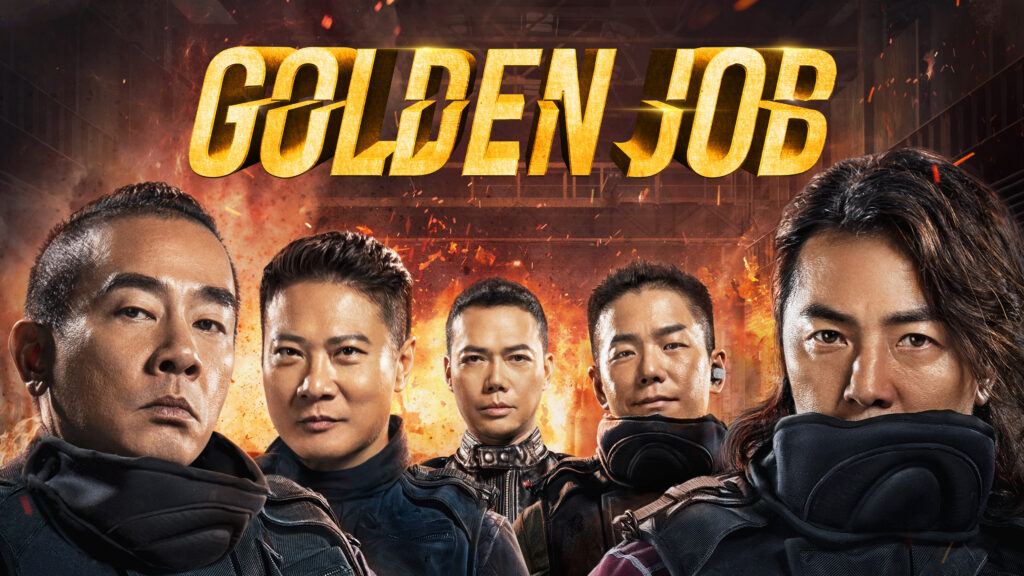
Golden Job has a more traditional action-movie setup: five former mercenaries reunite for a job.
Lion, Crater, Bill, Calm, and Mouse grew up together after being adopted and raised by the same mentor, Cho Sir. Years later, they work as mercenaries and decide to steal a truckload of medicine intended to help children in Africa. There’s one problem: the truck is actually carrying gold, and the entire operation turns out to be a setup by one of their own.
That betrayal changes the movie from a straightforward heist into a personal chase. Lion ends up imprisoned in Hungary, Cho is left seriously injured, and the group eventually comes back together to settle the score.
The film was directed by Chin Ka-lok, who also stars alongside Ekin Cheng, Jordan Chan, Michael Tse, and Jerry Lamb. The cast’s history together is part of the appeal: the movie reunites several of the actors from the Young and Dangerous films, giving the group dynamic an added layer for Hong Kong cinema fans.
The action also has a globe-trotting quality. Production took place in locations including Taiwan, Japan, Hungary, Montenegro, Beijing, and Inner Mongolia.
Lost in Thailand Leaves the Action Behind for a Road Trip

Then there’s Lost in Thailand, which takes the action-comedy idea in a completely different direction.
Xu Zheng’s 2012 directorial debut follows Xu Lang, a businessman racing to Thailand over control of a potentially valuable new technology. His rival, Gao Bo, is also heading there, while Wang Bao is simply looking to enjoy his trip and experience Thailand. The three eventually become entangled in the same journey.
Xu Zheng, Wang Baoqiang, and Huang Bo form the central trio, and much of the movie’s comedy comes from the mismatch between them. Xu Lang is focused on business, while Wang Bao approaches the trip with a much more carefree attitude.
That gives the movie a buddy-comedy quality that separates it from the other two films on this list. There is a business rivalry driving the story, but the journey itself becomes increasingly important as the characters get pulled away from what they originally intended to do.
The film was also a major Chinese box-office success. It became the highest-grossing Chinese-language film in China at the time, eventually taking more than ¥1.3 billion in mainland China.
Which Kind of Action Comedy Fits Your Mood?
These three movies make a good progression depending on what you’re looking for.
Badges of Fury is the choice for a detective story with martial arts and broad comedy. Golden Job leans into the ensemble action movie, with old friends, betrayal, international locations, and a heist gone wrong. Lost in Thailand is the most relaxed of the three, turning its business rivalry into an unpredictable road trip.
If you’re looking for something lighter between heavier thrillers and action movies, these three Chinese-language films are worth adding to the list.
From Occult Mysteries to Zombie Outbreaks: 4 Korean Thrillers to Watch
Korean thrillers have a habit of making familiar genres feel unpredictable. A ghost story can become a supernatural adventure, a zombie movie can turn a Seoul neighborhood into a survival maze, and a murder mystery can make you question whether the person investigating the crime can even trust his own memories.
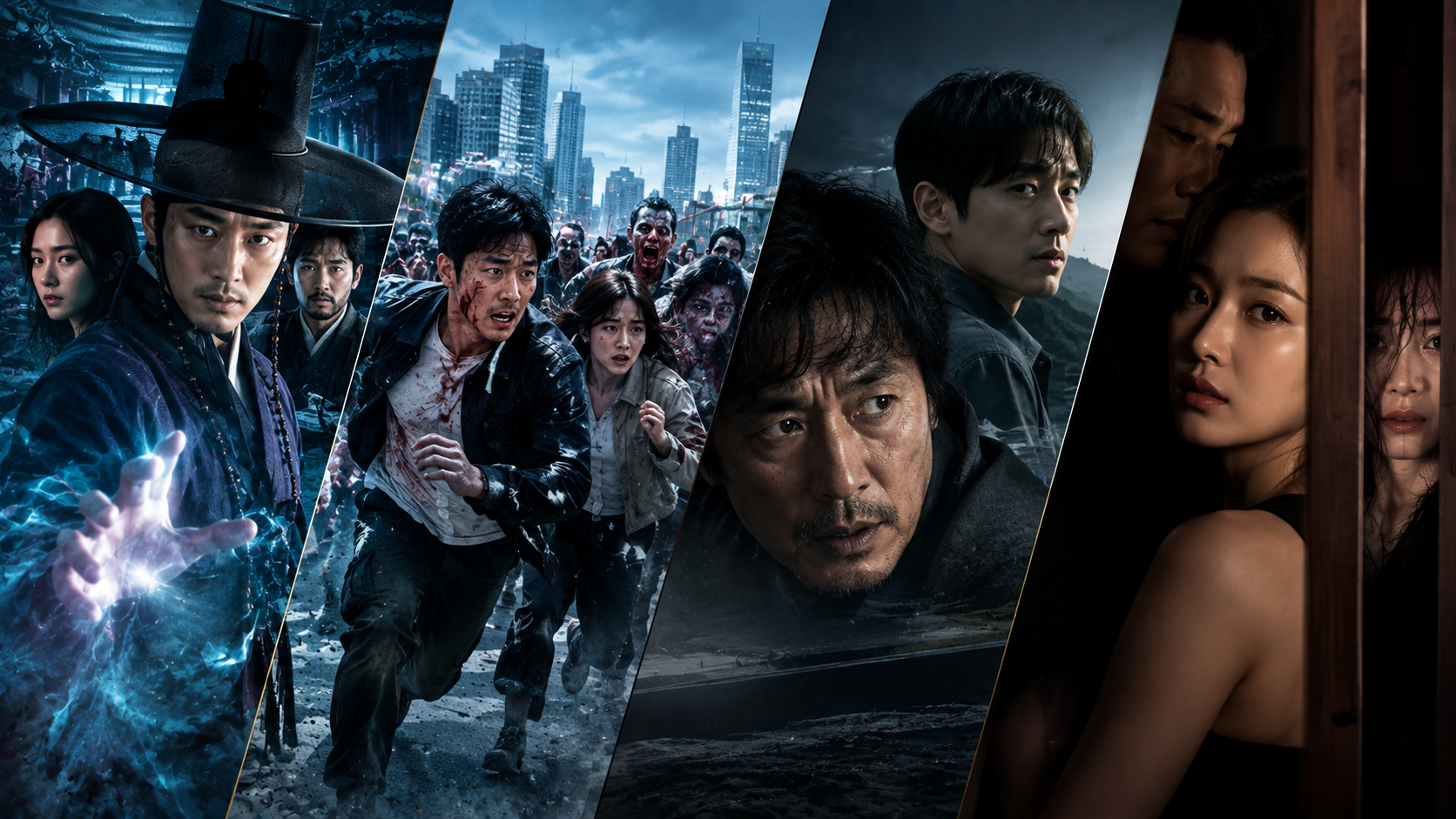
Amasian TV’s catalogue has several Korean films that play with those ideas in very different ways. Dr. Cheon and Lost Talisman, Gangnam Zombie, Memoir of a Murderer, and Hidden Face all fall somewhere within the thriller spectrum, but each builds suspense around a completely different problem: a fake exorcist facing something real, a city overrun by infected people, a former killer losing his memory, and a woman trapped behind a hidden wall.
Here’s where each movie takes its tension.
Dr. Cheon and the Lost Talisman Makes an Exorcist Into a Con Artist
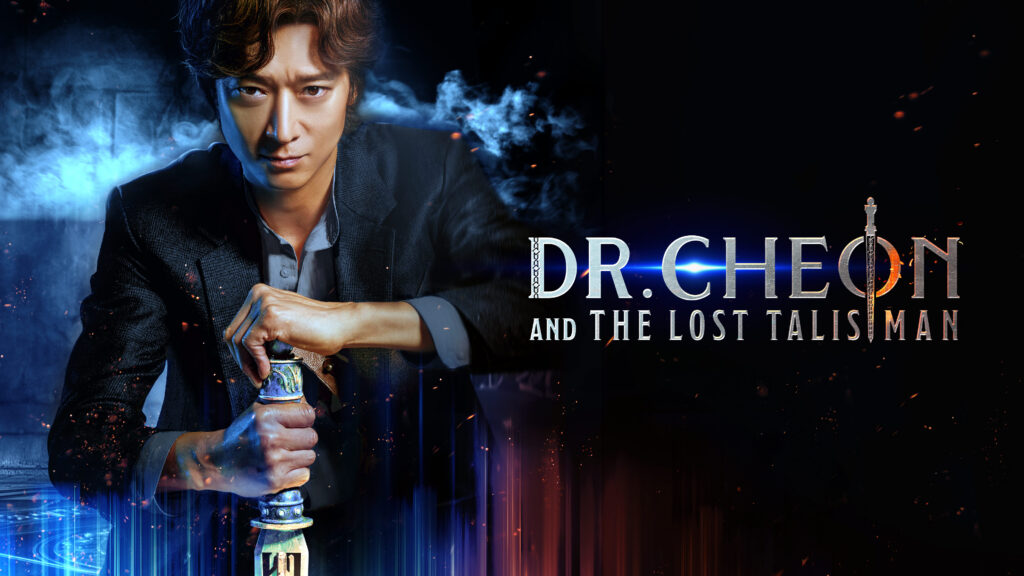
Gang Dong-won plays Dr. Cheon, an exorcist who has never actually seen a ghost. That would be a serious problem for someone who makes a living performing exorcisms, so Cheon relies on confidence, theatrical rituals, and psychological tricks to convince clients that their supernatural problems have been solved.
That setup gives Dr. Cheon and Lost Talisman a surprisingly playful beginning. Cheon and his assistant In-bae move from case to case treating exorcism like a business, complete with ritual props and carefully rehearsed performances.
Then Yoo-kyung arrives with a case that Cheon cannot explain away so easily.
The 2023 film, directed by Kim Seong-sik and based on the webtoon Possessed by Fresh, gradually shifts from supernatural comedy into dark fantasy action. The contrast is what makes Cheon interesting: he has built his entire career around pretending to understand the supernatural, only to encounter a case where pretending is no longer enough.
Gangnam Zombie Keeps the Danger Close
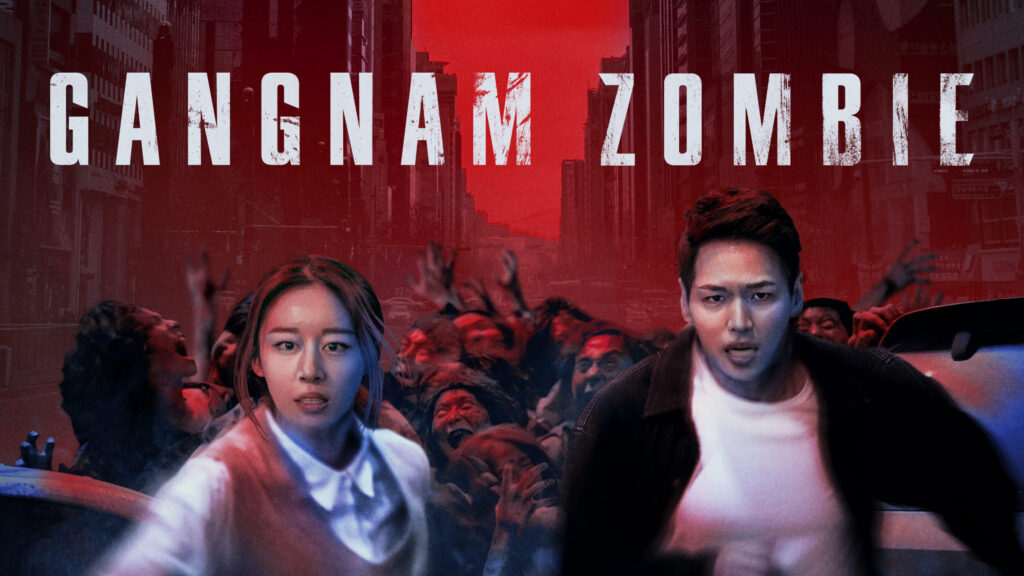
Gangnam Zombie takes a much simpler approach to suspense. The outbreak turns an upscale Seoul neighborhood into a place where ordinary surroundings suddenly become dangerous.
The story follows Hyeon-seok and Min-jeong as they try to survive while infected people begin attacking those around them. The movie runs only 81 minutes, so there isn’t much room for the situation to settle. Once the outbreak takes hold, the focus is on getting through the immediate danger.
That contained setup also gives the film an interesting connection to its setting. Gangnam is one of Seoul’s most recognizable districts, associated with offices, shopping, nightlife, and dense urban activity. Turning that environment into a zombie survival zone changes the meaning of all those familiar spaces.
For viewers looking for a quick Korean zombie movie with action at its center, Gangnam Zombie goes straight for the outbreak.
Memoir of a Murderer Turns Memory Into the Mystery
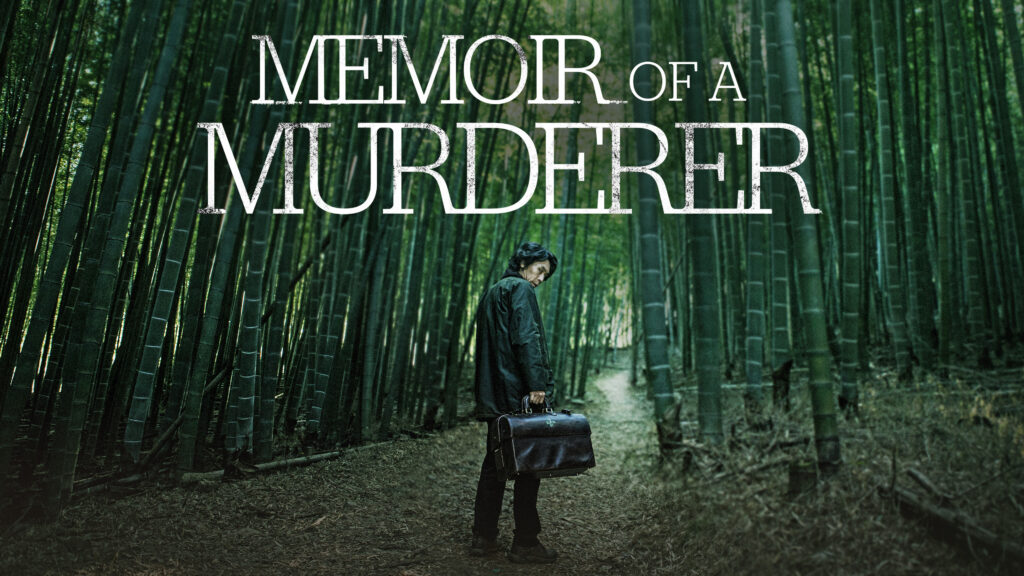
Memoir of a Murderer has one of the strangest protagonists in this group.
Sul Kyung-gu plays Byeong-soo, a retired serial killer who is suffering from Alzheimer’s disease. He has spent years hiding his past, but as his memory deteriorates, he becomes convinced that Tae-joo, a man who has entered his daughter’s life, is also a murderer.
The problem is obvious: Byeong-soo’s memories cannot always be trusted.
That creates a thriller where the mystery isn’t only about who is responsible for the murders. The audience also has to question what Byeong-soo actually remembers and how much of what he believes is happening around him is accurate. The film was adapted from Kim Young-ha’s novel A Murderer’s Guide to Memorization.
There is an unusual wrinkle for anyone who gets deep into the movie: a director’s cut exists with additional footage and a different ending. That means Memoir of a Murderer effectively has two versions that approach its final revelations differently.
Hidden Face Builds Its Thriller Around a Room
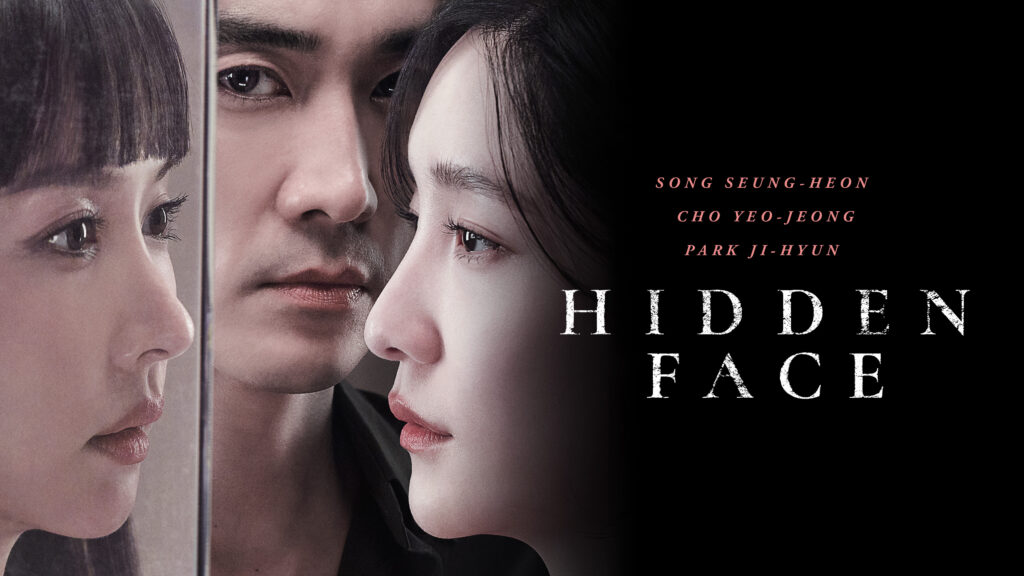
Hidden Face creates tension through a much more intimate setup.
Song Seung-heon plays Seong-jin, a conductor whose fiancée, Soo-yeon, suddenly disappears. Her replacement in the orchestra, Mi-joo, becomes increasingly close to Seong-jin, while Soo-yeon is actually trapped inside a concealed room in her own home, unable to escape or reveal herself.
The result is a thriller built around who knows what, who is watching whom, and how long a secret can stay hidden.
Directed by Kim Dae-woo, the 2024 film stars Song Seung-heon, Cho Yeo-jeong, and Park Ji-hyun. It is a Korean remake of the 2011 Spanish-Colombian thriller The Hidden Face.
The house itself becomes part of the suspense. Once the audience knows what is happening behind the walls, ordinary conversations and movements through the home take on a different meaning. The tension comes from knowing something the characters don’t, while waiting to see when that information will finally come to light.
Four Korean Thrillers, Four Different Kinds of Suspense
These movies cover a surprisingly wide stretch of Korean genre filmmaking. Dr. Cheon and Lost Talisman starts with an exorcist who is essentially performing a scam. Gangnam Zombie puts its characters in the middle of an urban outbreak. Memoir of a Murderer turns unreliable memory into part of the mystery. Hidden Face traps its central character inside a secret that the audience already knows about.
If you like Korean thrillers but want something beyond the usual crime investigation, this group gives you four very different places to start.
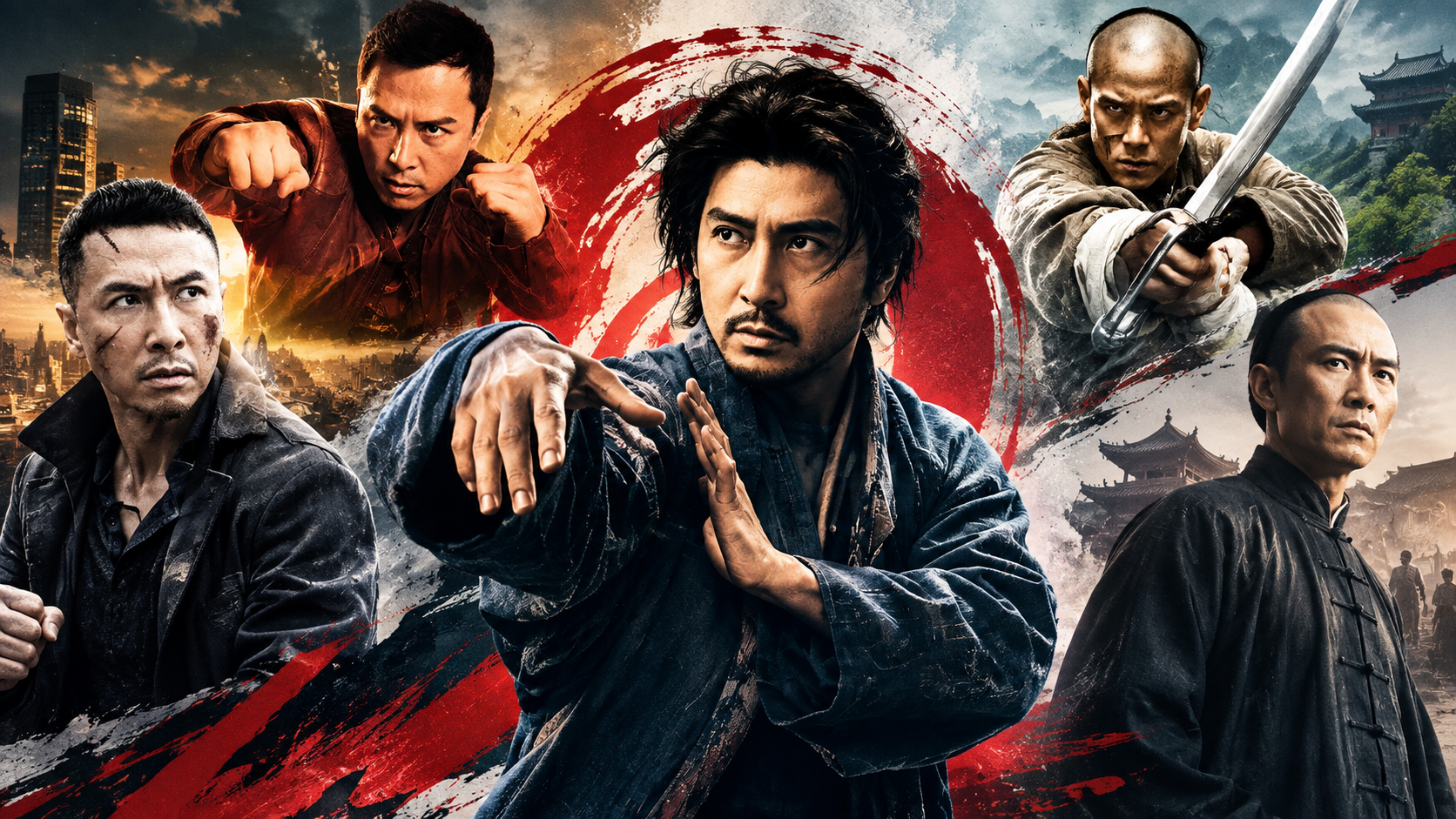
From Street Fights to Wuxia: 5 Chinese Martial Arts Movies to Watch
Chinese martial arts cinema can move between grounded street fighting, elaborate wuxia fantasy, historical drama, and stories about the rules and traditions surrounding martial arts themselves.
Amasian TV’s catalogue has several movies that make that range especially easy to see. Flash Point, Kung Fu Killer, Rise of the Legend, Sakra, and The Final Master all put martial arts at the center, but they have very different ideas about what those fights are supposed to accomplish.
If you’re looking for something beyond the same familiar kung fu setup, these five are a good place to start.
1. Flash Point makes every fight feel physical
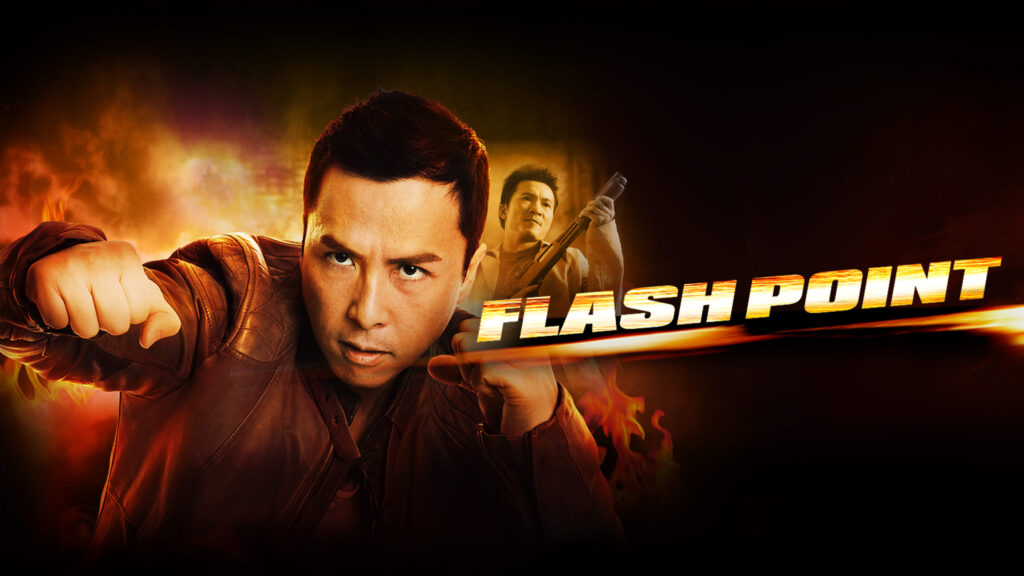
Flash Point is the movie to start with if you want martial arts that feel unusually close to an actual fight.
Donnie Yen stars as Detective Ma Jun, a Hong Kong police officer investigating a crime syndicate. The story eventually builds toward a confrontation with the gang, but the film’s reputation comes largely from what Yen did with the action choreography.
For Flash Point, Yen pushed the fights toward mixed martial arts, incorporating techniques such as grappling, takedowns and joint locks instead of relying exclusively on traditional kung fu forms. Contemporary coverage of the film specifically noted the shift toward MMA-style close combat and the use of real martial artists to give the sequences a more physical quality.
That approach makes a difference in the way the fights are filmed. Characters grab, throw, wrestle and struggle for position rather than politely taking turns displaying techniques.
The final confrontation is the payoff. It is messy, exhausting and intensely physical, which is exactly what makes Flash Point such an influential modern Hong Kong action movie.
Watch it if: you prefer fight choreography that looks like people are actually trying to hurt each other.
2. Kung Fu Killer turns martial arts knowledge into the mystery
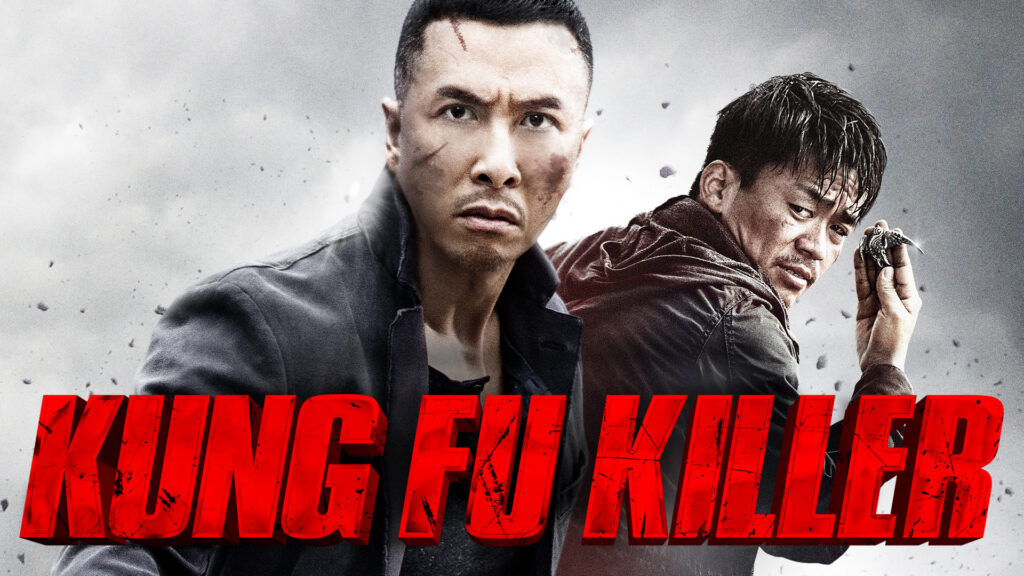
Kung Fu Killer takes a completely different approach.
Donnie Yen plays Hahou Mo, a martial arts instructor serving a prison sentence after killing a man during a fight. When martial-arts masters begin turning up dead, Mo offers to help the police identify the killer because he recognizes the patterns behind the murders.
The premise gives the movie a fun structural idea: different martial arts disciplines become clues.
The killer targets specialists in different forms of combat, so Mo can recognize what happened from the techniques used. One victim’s expertise might involve kicking, another’s weapons, another’s hand-to-hand fighting. The investigation therefore becomes partly a catalogue of martial arts styles.
The movie also functions as a love letter to Hong Kong action cinema. The film includes appearances from numerous figures associated with the industry, and its ending credits highlight many of those cameos.
And then there’s the final fight, which moves onto a busy highway and puts Yen and Wang Baoqiang into a particularly chaotic environment. The setting gives the fight a different kind of danger because traffic keeps moving around them.
Watch it if: you like the idea of a martial-arts movie that treats fighting styles almost like detective clues.
3. Rise of the Legend gives Wong Fei-hung a younger, rougher origin story
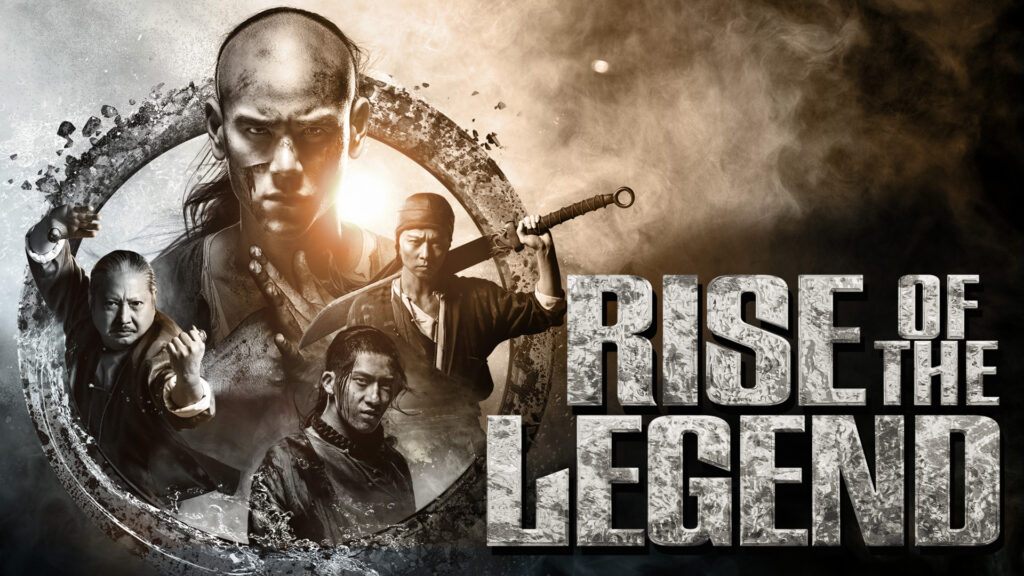
Wong Fei-hung is one of the most recognizable figures in Chinese martial arts cinema, but Rise of the Legend doesn’t present him as the already-established master audiences might expect.
Eddie Peng plays a younger version of Wong in 19th-century Guangzhou. The film gives him an origin story built around revenge, criminal gangs and the world that eventually turns him into the legendary martial artist. Sammo Hung plays the crime boss Blackie Tiger, putting two generations of martial-arts cinema talent at the center of the film.
The movie also deliberately gives the familiar Wong Fei-hung mythology a more modern visual treatment. Corey Yuen handled the action choreography, and the film mixes large-scale sets, digital effects and wire-assisted action with more traditional martial-arts movement.
That makes Rise of the Legend an interesting choice if you’ve seen older Wong Fei-hung movies. It isn’t trying to recreate the same tone. It takes a character with more than a century of cinematic history and rebuilds his early life as a darker, faster-paced action story.
Watch it if: you want a familiar martial-arts legend presented with a modern action-movie edge.
4. Sakra goes all-in on wuxia
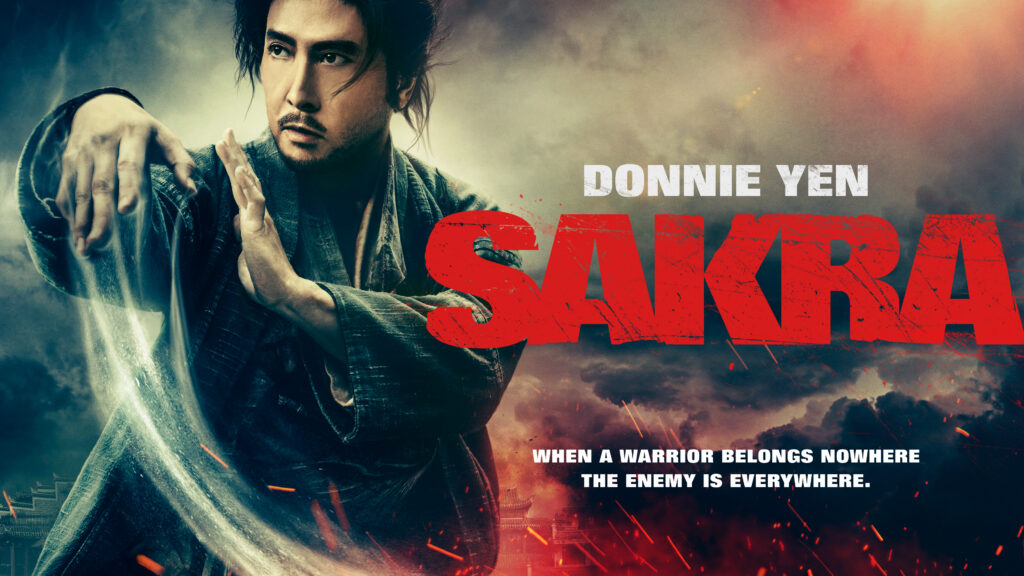
Then there’s Sakra, which takes the list firmly into wuxia territory.
Donnie Yen plays Qiao Feng, a powerful martial artist and leader of the Beggars’ Gang who becomes an outcast after being accused of murder. As he tries to clear his name, the story becomes tangled in questions of identity, loyalty and his mysterious origins.
The movie is adapted from Louis Cha’s Demi-Gods and Semi-Devils, one of the major works of modern wuxia literature. Yen also directed and produced the film, with Big Brother director Kam Ka-wai serving as co-director.
That source material changes what the fights look like.
In Flash Point, physical impact is the attraction. In Sakra, martial artists can launch themselves through the air, unleash exaggerated techniques and fight across elaborate sets. The movie is deliberately operating in the heightened world of wuxia rather than trying to make every movement look realistic.
The opening tavern fight is a good example of the difference. The environment becomes part of the choreography as furniture, walls and other pieces of the set are pulled into the action.
Sakra is also an interesting choice because it shows Yen working in a completely different register from the grounded combat of Flash Point. They’re both Donnie Yen movies, but they’re almost opposite interpretations of what a martial-arts fight can look like.
Watch it if: you want swordplay, flying martial artists and the larger-than-life world of wuxia.
5. The Final Master treats martial arts as a system of rules
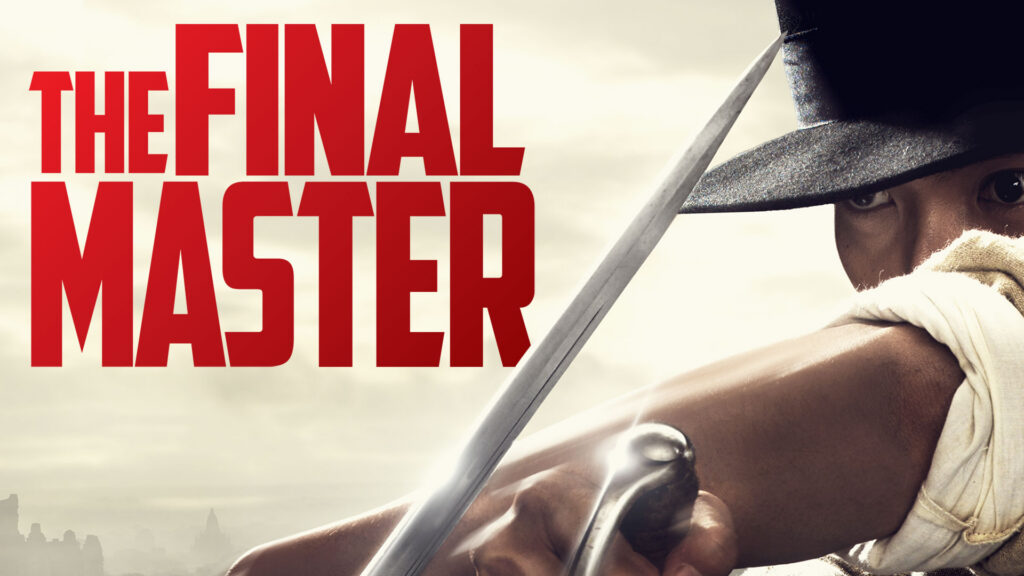
The Final Master might be the strangest movie in this group because its central conflict isn’t really about defeating a villain.
It’s about getting permission to open a martial-arts school.
Liao Fan plays Chen Shi, a Wing Chun master who travels to 1930s Tianjin hoping to establish a school. But Tianjin’s martial-arts community has its own rules. An outsider cannot simply arrive and start teaching. Chen has to navigate a complicated system involving rival schools, local masters and an apprentice who will fight on his behalf.
The result is part martial-arts movie, part political intrigue.
Director Xu Haofeng, who also wrote the screenplay for Wong Kar-wai’s The Grandmaster, is much more interested in the institutions surrounding martial arts than a straightforward hero’s journey. Characters constantly negotiate alliances, betray each other and manipulate the rules to get what they want.
Then the fighting cuts through all that conversation.
Xu choreographed the action himself, and the movie favors long takes, full-body framing and relatively grounded movement. The fights also make heavy use of weapons, particularly blades, rather than relying exclusively on empty-hand kung fu.
The contrast is what makes The Final Master memorable. The characters can spend several minutes talking about rules, honor and political maneuvering, and then suddenly settle an argument with a knife fight in a narrow alley.
Watch it if: you like martial-arts movies with elaborate schemes and a little more patience between the fights.
Five movies, five different ideas about martial arts
These movies make a pretty good progression through Chinese-language action cinema.
Flash Point strips the fighting toward physical impact. Kung Fu Killer turns different fighting disciplines into part of a murder mystery. Rise of the Legend takes a legendary martial artist and gives him a darker origin story. Sakra embraces the fantasy and mythology of wuxia. The Final Master looks at the traditions, politics and rivalries surrounding martial arts themselves.
That’s also why these five work better together than a generic action-movie roundup. They’re all built around martial arts, but the choreography is doing something different in each one.
Watch These Martial Arts Movies Free on Amasian TV
Detective Dee: The Chinese Mystery Movies Where History Meets Fantasy
What do you get when a historical detective story meets wuxia action, imperial intrigue, and giant sea monsters?
The Detective Dee movies.
The character is based on Di Renjie, a real Tang dynasty official who later became the subject of fictional detective stories. Tsui Hark’s films take that historical figure and build an entirely different kind of mystery around him, where solving a case can mean following clues through an imperial court one moment and fighting masked assassins the next.
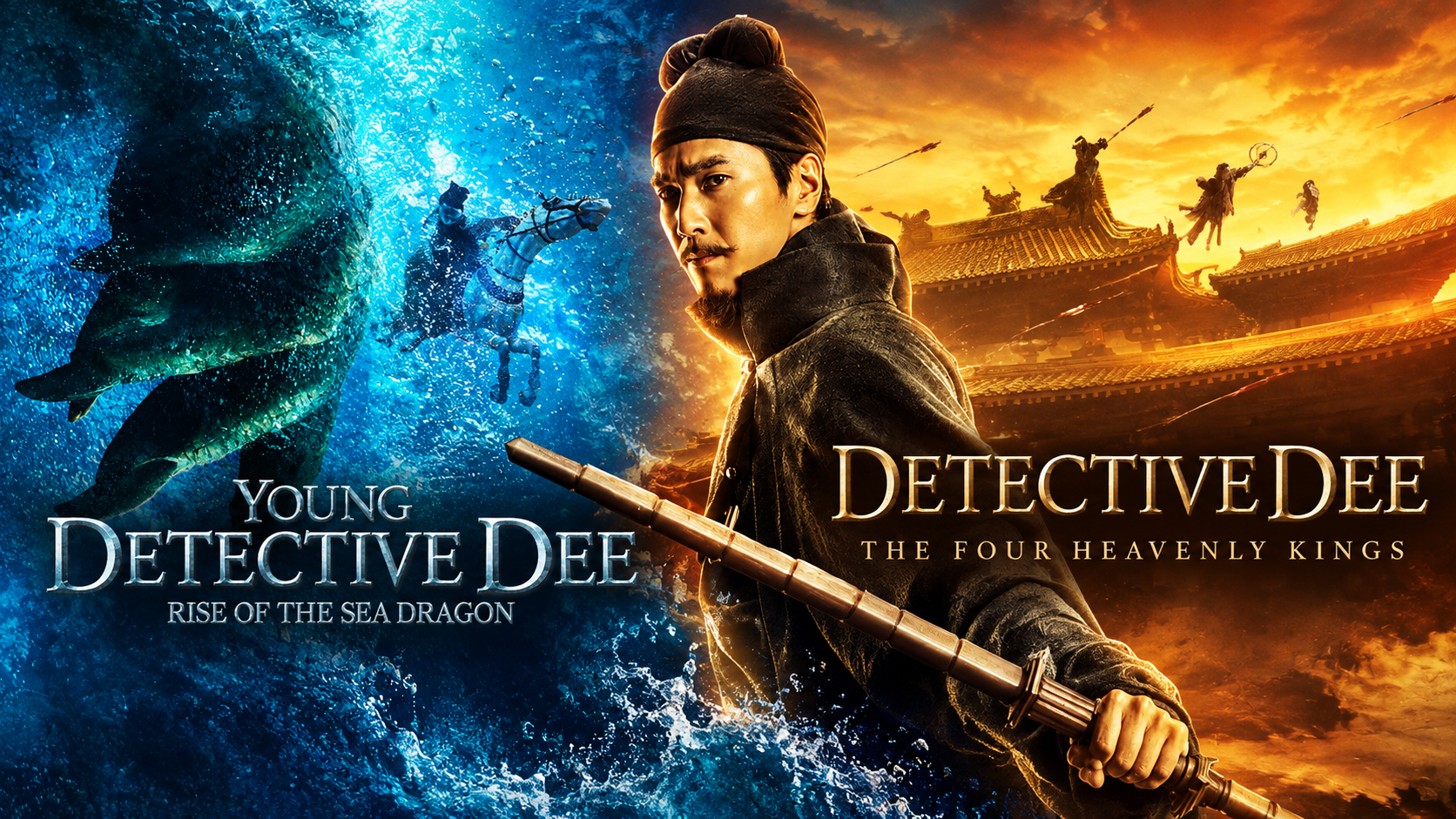
Two films on Amasian TV, Young Detective Dee: Rise of the Sea Dragon and Detective Dee: The Four Heavenly Kings, offer a good introduction to this version of the character.
1. Young Detective Dee: Rise of the Sea Dragon
2013 | Directed by Tsui Hark | Starring Mark Chao, William Feng, Angelababy, and Carina Lau
Set in AD 665, Rise of the Sea Dragon follows a young Dee as he arrives in Luoyang to join the imperial Justice Department. His timing isn’t great. A naval fleet has been attacked by what appears to be a massive sea monster, and Empress Wu has given the authorities only ten days to solve the mystery.
Mark Chao plays Dee as a younger, more confident version of the detective. He’s constantly observing people, remembering details, and finding connections that other investigators overlook. His rivalry with Yuchi Zhenjin, played by William Feng, gives the investigation another layer, with the two men repeatedly finding themselves on opposite sides of the same case.
Then things get considerably stranger.
The investigation brings Dee into contact with assassins who seem capable of moving through the water, mysterious creatures, palace intrigue, and a plot surrounding Yin Ruiji, the imperial capital’s most famous courtesan. The movie uses its detective premise as a gateway into the kind of elaborate fantasy action Tsui Hark is known for.
2. Detective Dee: The Four Heavenly Kings

2018 | Directed by Tsui Hark | Starring Mark Chao, William Feng, Lin Gengxin, Ethan Juan, Ma Sichun, and Carina Lau
The Four Heavenly Kings brings Dee back into the middle of another dangerous case, this time involving Empress Wu and a mysterious crime wave spreading through the city.
Dee is accused of wrongdoing by Wu while strange, seemingly supernatural events begin piling up around him. The official synopsis describes the film as a wuxia fantasy, and that’s an important distinction: the mystery is surrounded by martial arts, mysticism, elaborate weapons, and creatures that could never appear in a conventional historical detective story.
The film also shows just how far Tsui Hark pushes the visual side of the series. A giant albino gorilla, masked assassins, elaborate combat sequences, and supernatural imagery all become part of Dee’s investigation. Even critics who found the mystery itself less convincing noted the film’s constant energy and inventive action.
Where the detective story meets wuxia
That’s really the appeal of these movies.
The Detective Dee films don’t separate the investigation from the action. A clue can lead directly into a fight, while a fight can reveal something about the mystery. Dee’s intelligence matters, but he also has to survive a world filled with skilled fighters, political enemies, and seemingly impossible phenomena.
Tsui Hark’s approach also gives the historical setting a very different feel. The Tang dynasty provides the costumes, architecture, court politics, and political conflicts, while wuxia allows the filmmakers to turn that world into something much more fantastical.
So if you go into Detective Dee expecting a straightforward period crime story, you’re going to get something considerably stranger.
And that’s the fun of it.
If you’re looking for Chinese movies that combine mystery, martial arts, historical drama, and fantasy, Young Detective Dee: Rise of the Sea Dragon and Detective Dee: The Four Heavenly Kings are an easy pairing to start with.
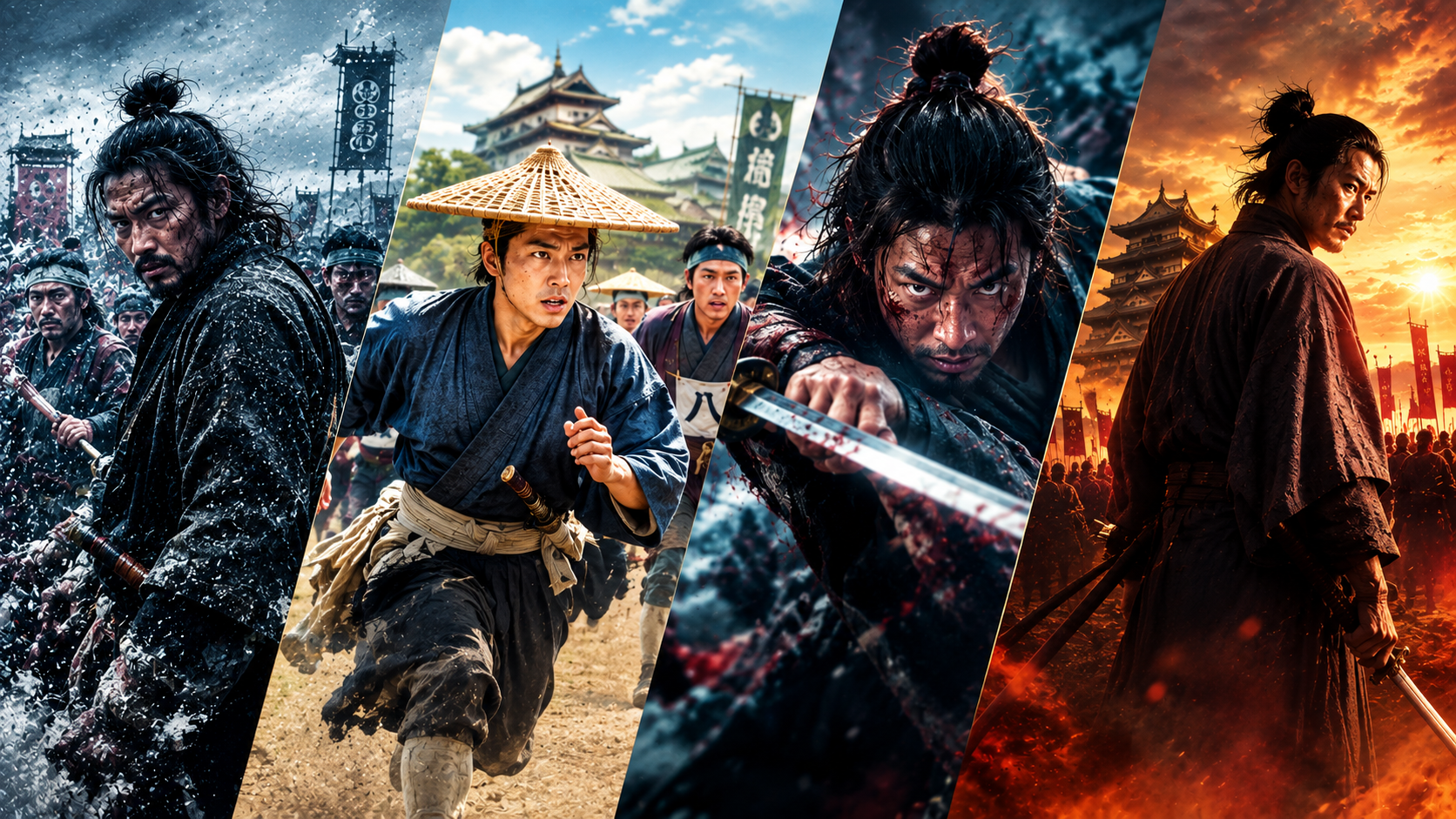
4 Japanese Samurai Movies That Take the Genre in Different Directions
The samurai movie has never been limited to one kind of story.
It can be a brutal war film, a historical adventure, a political rebellion, or even an extended experiment in sword-fighting choreography. The four Japanese films on Amasian TV below show just how different the genre can look depending on what a filmmaker wants to do with it.
From the bloody final days of the shogunate to a 77-minute sword fight, these movies have very different ideas about what a samurai movie should be.
11 Rebels: Samurai Without the Romance
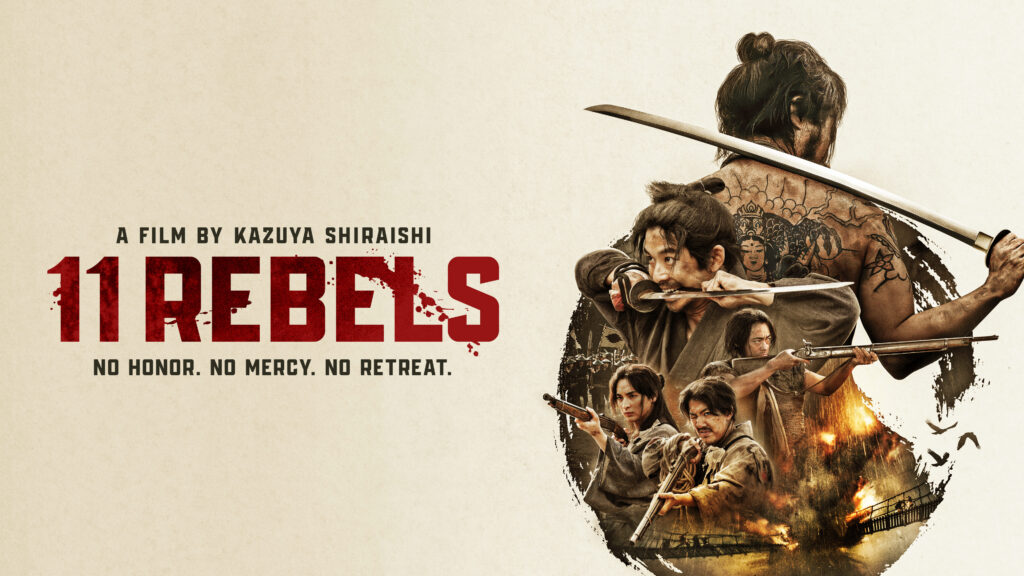
2024 | Directed by Kazuya Shiraishi
11 Rebels takes place during the Boshin War, when Japan was being torn apart following the fall of the Tokugawa shogunate.
The setup is grim. Eleven prisoners are recruited and ordered to defend a fortress against an advancing army. In exchange, they are promised freedom and forgiveness for their crimes. Their chances of surviving are extremely low.
What makes the film interesting is its attitude toward the samurai myth.
Instead of presenting the warrior class as an uncomplicated symbol of honor, 11 Rebels puts criminals and outcasts at the center of the story and surrounds them with political leaders who have their own interests in the conflict. The result is a much rougher version of the period film, with the battle itself becoming the main event.
The movie is particularly interested in what happens when ordinary people are asked to die for causes decided by people far above them.
It’s bloody, bleak, and deliberately uninterested in making war look noble.
Samurai Marathon: When a Race Becomes a Samurai Adventure
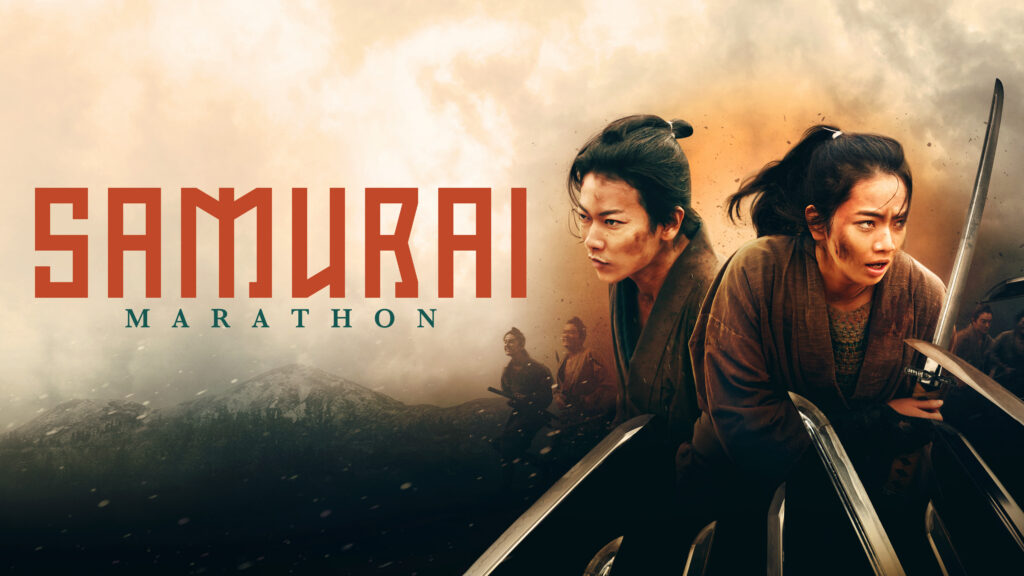
2019 | Directed by Bernard Rose
The premise of Samurai Marathon sounds almost like a joke: in 1855, a feudal lord organizes a long-distance race for his samurai.
But there’s a serious reason behind it.
The race is intended to prepare the lord’s warriors for the possibility of an attack, while the political situation surrounding Japan is becoming increasingly tense. One participant is also secretly working as a spy, turning the race into something considerably more complicated than a sporting event.
That unusual premise gives the film a lighter tone than the typical samurai drama.
The runners have to deal with exhaustion, rivalries, mistakes, and the physical demands of the journey, while the larger political story keeps moving around them. The result is part historical adventure, part comedy, and part action film.
It’s a useful reminder that period Japanese cinema doesn’t always have to be solemn. A samurai movie can have room for humor and an unconventional premise without abandoning its historical setting.
Crazy Samurai: 400 vs. 1: One Fight, Taken to the Extreme
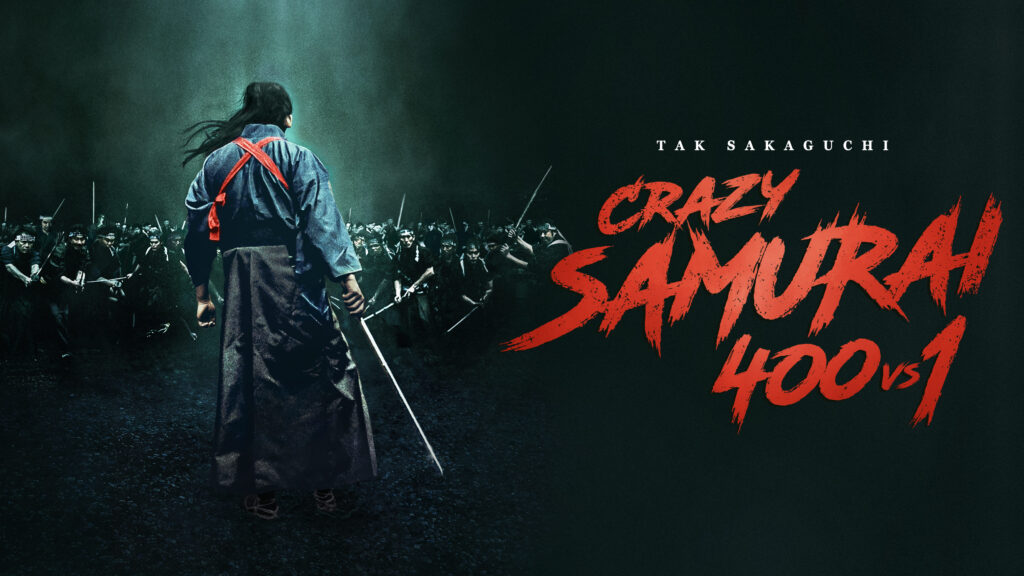
2020 | Directed by Yûji Shimomura | Starring Tak Sakaguchi
If the first two films show how much the story of a samurai movie can change, Crazy Samurai: 400 vs. 1 asks a different question:
How long can you sustain a sword fight?
The answer is roughly 77 minutes.
Tak Sakaguchi plays the legendary swordsman Miyamoto Musashi, who arrives at the Yoshioka dojo expecting a duel and instead walks into an ambush involving hundreds of warriors. The majority of the film’s central battle was filmed as a single continuous take.
That filmmaking decision is the movie’s entire identity.
There are obvious tradeoffs. Critics have pointed out that the story and character development are extremely thin, and the repeated combat can become exhausting. But the physical achievement is still unusual. Sakaguchi and the stunt team have to maintain the action, camera movement, positioning, and performance across an extraordinarily long sequence.
It’s less interested in telling you about Musashi than in making you watch what his endurance looks like.
If you want a samurai movie because you want samurai fighting, this is probably the most extreme choice on the list.
Samurai Fury: A Rebellion Against the Shogunate
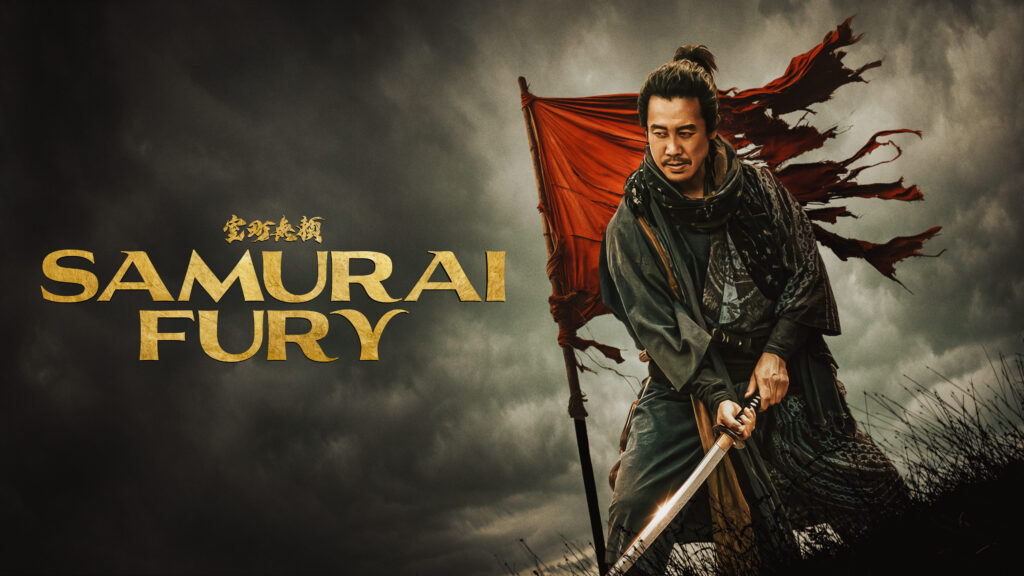
2025 | Directed by Yû Irie | Starring Yo Oizumi, Kento Nagao, Shin’ichi Tsutsumi
Samurai Fury moves further back in Japanese history, to 15th-century Kyoto, where famine and disease have devastated the population.
Hasuda Hyoe, a wandering warrior who has witnessed the suffering around him, decides that the shogunate’s failure to act has gone too far. He gathers a group of outcasts and begins planning an uprising. His biggest obstacle is Honekawa Doken, a former friend who now stands on the other side of the conflict.
That gives Samurai Fury a different focus from the other films here. The samurai isn’t simply fighting because another warrior challenged him or because a battle has arrived at his doorstep. Hyoe is caught up in a larger political revolt.
The film also has the scale to match that story. With its large cast of rebels, period settings, and battles, it plays more like a historical epic than a contained sword-fighting movie.
And because it was released in 2025, it makes for an interesting pairing with the older samurai traditions represented by the other films on this list.
Four Samurai Movies, Four Different Approaches
Put these four movies next to each other and the differences become pretty clear.
- 11 Rebels uses samurai warfare to explore sacrifice, class, and the ugliness of war.
- Samurai Marathon turns the period setting into an unusual historical adventure.
- Crazy Samurai: 400 vs. 1 strips the story down to an extraordinary endurance test built around one extended fight.
- Samurai Fury uses the samurai setting for a larger story about rebellion and political corruption.
That’s what makes the genre worth revisiting.
You can come to a samurai movie for sword fights and get a war drama. You can come for history and get a comedy about a race. You can come expecting a traditional adventure and end up watching one of the most unusual long-take action experiments in recent Japanese cinema.
Watch Japanese Samurai Movies on Amasian TV
Whether you’re looking for bloody battlefield action, historical adventure, political rebellion, or nonstop swordplay, these four films offer very different ways into Japanese samurai cinema.
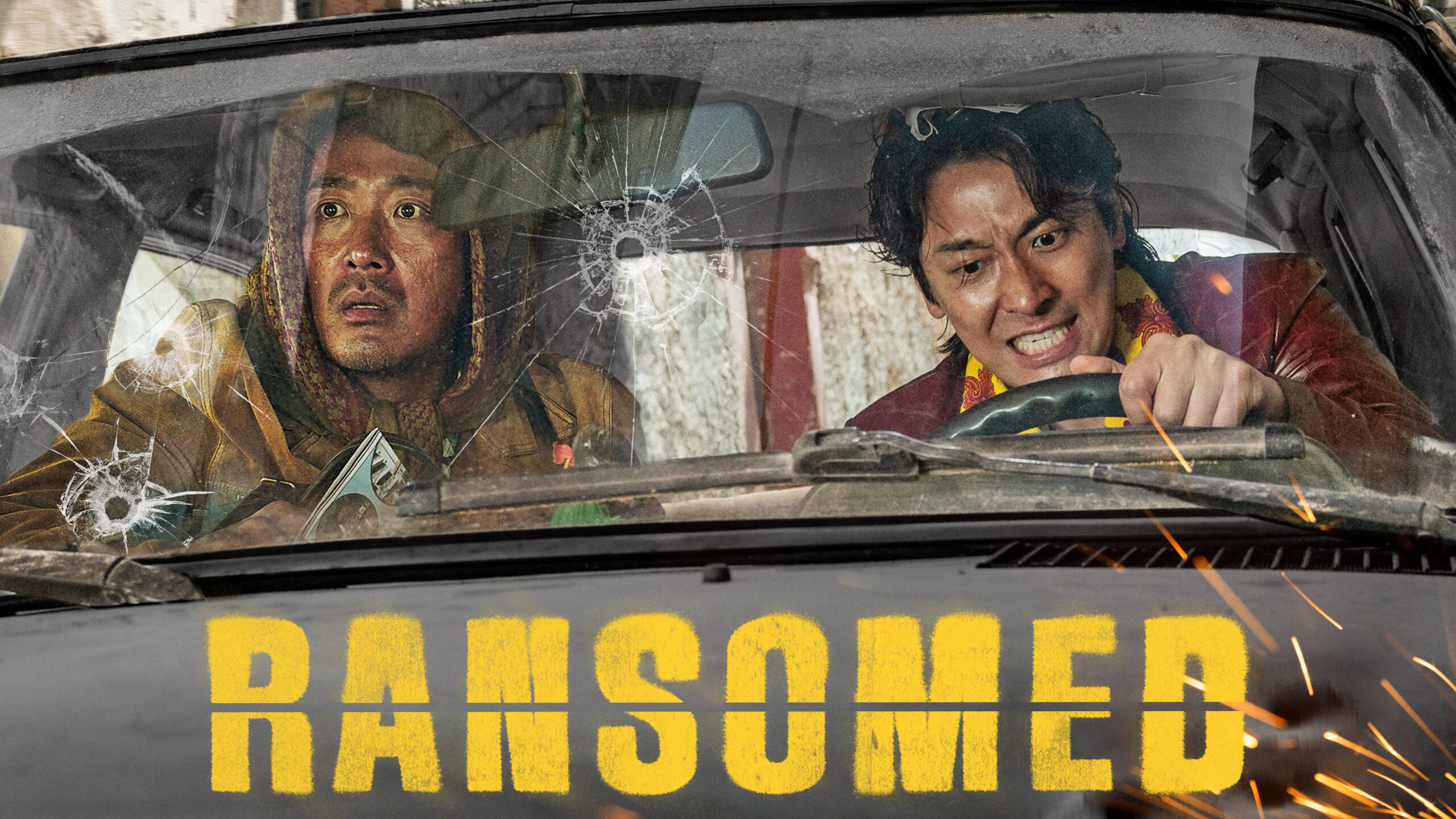
Ransomed: The Korean Action Thriller Inspired by a Real 1986 Kidnapping
Some Korean action movies are built around elaborate fictional conspiracies. Ransomed starts with something much closer to history: the 1986 kidnapping of a South Korean diplomat in Lebanon.
Directed by Kim Seong-hun, the filmmaker behind A Hard Day, Tunnel, and Netflix’s Kingdom, the 2023 film follows diplomat Lee Min-jun (Ha Jung-woo) as he takes on an unofficial mission to rescue a colleague who has been missing for nearly two years. What starts as a diplomatic operation quickly becomes a fight for survival after Min-jun arrives in Lebanon and finds himself relying on Kim Pan-su (Ju Ji-hoon), a Korean taxi driver living there.
But Ransomed doesn’t simply recreate the hostage crisis. It uses the real event as its foundation and builds a fictional action story around it.
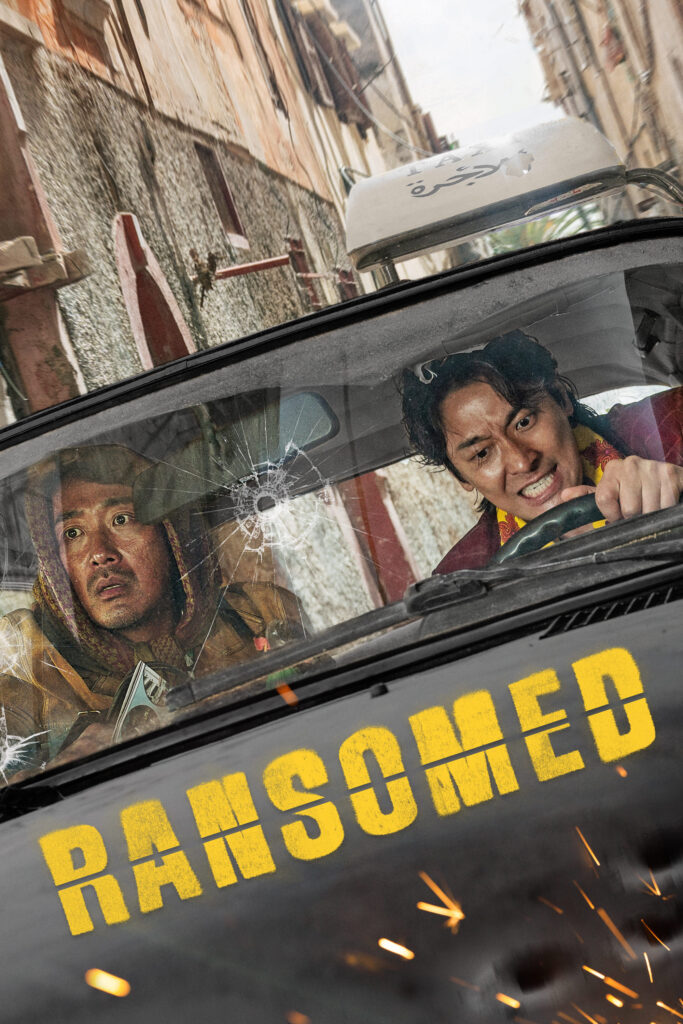
A Real Kidnapping Inspired the Story
The film’s starting point was the 1986 abduction of South Korean diplomat Do Chae-sung, who was working at the Korean embassy in Beirut. He was kidnapped at gunpoint in January 1986 and remained missing for roughly 20 months. In October 1987, he was released after efforts to secure his freedom, although some details surrounding the ransom negotiations remain classified.
Ransomed changes the names and circumstances of the people involved, but keeps the basic idea of an unofficial Korean rescue mission.
That distinction matters because the film isn’t trying to present every event on screen as historical fact. Director Kim Seong-hun has described the movie as a combination of factual events, perspective, and fiction. The fictional elements gave him room to turn a diplomatic crisis into a more traditional action-adventure story while still keeping the real kidnapping at its center.
Then It Becomes a Buddy Action Movie
This is where Ransomed takes its biggest creative turn.
Min-jun is a relatively inexperienced diplomat whose motivation isn’t entirely selfless: he hopes a successful rescue mission will help him earn a coveted posting in the United States. After arriving in Lebanon, he ends up escaping in the taxi of Pan-su, a Korean expatriate who has no intention of becoming involved in an international hostage rescue.
Pan-su is fictional, and his presence changes the movie considerably. Instead of following a lone diplomat through a grim rescue operation, Ransomed becomes a mismatched two-man adventure. Min-jun is trying to complete the mission; Pan-su is primarily trying to survive it.
That gives the movie its central source of humor. Their relationship starts with mutual distrust and gradually develops into an unlikely friendship, with Ha Jung-woo and Ju Ji-hoon’s chemistry doing much of the work. The two had already appeared together in Along with the Gods: The Two Worlds and Along with the Gods: The Last 49 Days, and director Kim specifically cited their previous collaboration when explaining why he paired them again.
The Action Was Built Around the Setting
Even though the story takes place in Lebanon, most of Ransomed wasn’t actually filmed there.
Around 70% of the movie was shot in Morocco, with the production also filming in South Korea and Italy. Morocco was chosen because its scenery and atmosphere could stand in for Lebanon, while also offering established production infrastructure.
That decision was especially important for the film’s action sequences. The production team prepared extensively for the car chases, including sequences through narrow streets, while the film’s climactic escape involved actors jumping from a building using wires.
The result is a movie that spends a surprising amount of time moving: cars, gunfights, escapes, and improvised plans keep pushing Min-jun and Pan-su further into trouble.
Why Ransomed Works as a Buddy Movie
The interesting thing about Ransomed is that its strongest relationship isn’t between a hero and a villain. It’s between two men who probably wouldn’t have chosen each other under normal circumstances.
Min-jun begins the story seeing the rescue as an opportunity to advance his career. Pan-su wants to protect himself and his livelihood. Neither one is particularly prepared for what happens after they meet, and neither completely trusts the other.
Their priorities gradually change as the mission becomes less about getting something for themselves and more about getting another person home.
That gives the movie a human center beneath all the car chases and shootouts. Reviews of the film frequently singled out the chemistry between Ha Jung-woo and Ju Ji-hoon, with Yonhap also noting that their previous work together helped give the movie its comedic energy.
A Korean Action Movie With More History Behind It
Ransomed ultimately sits somewhere between a historical drama, hostage thriller, and buddy action comedy. It takes a little-known chapter of South Korean diplomatic history and reshapes it into a much more accessible adventure.
The real kidnapping gives the story its foundation. The fictional Pan-su gives it its personality. And the Morocco-shot action sequences give the movie its momentum.
For viewers who like Korean action movies that aren’t confined to the usual settings, Ransomed is an easy one to add to the list.
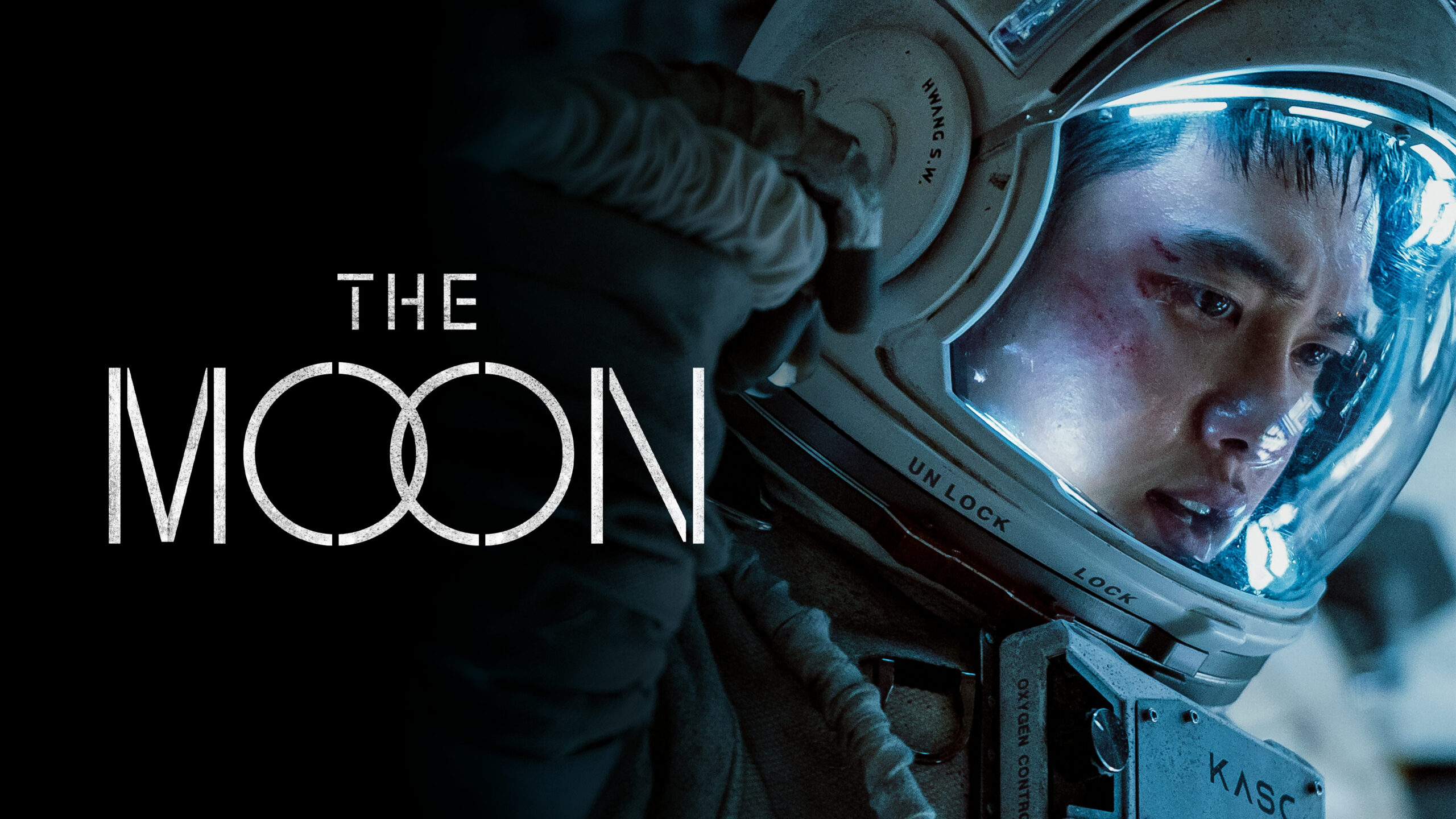
What Makes The Moon One of Korea’s Most Ambitious Sci-Fi Films
What happens when a country’s second attempt to send astronauts to the Moon goes wrong?
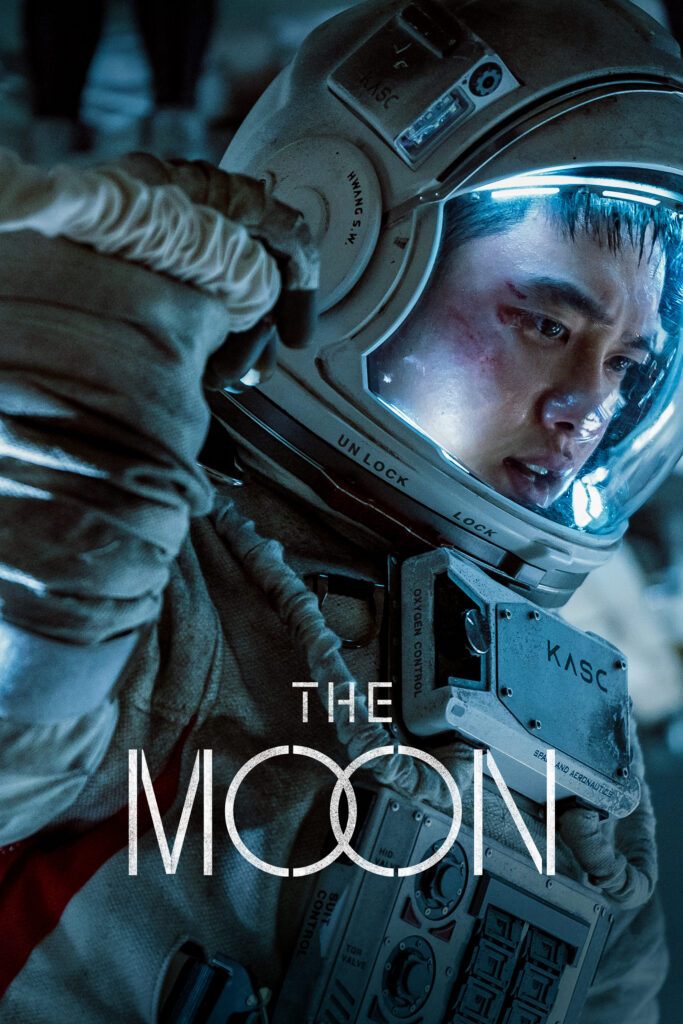
That is the setup for The Moon, Kim Yong-hwa’s 2023 Korean sci-fi disaster film. Set in 2029, the movie follows astronaut Hwang Sun-woo (Doh Kyung-soo), who becomes stranded on the lunar surface after a solar storm causes a catastrophic problem during South Korea’s second crewed lunar mission. Back on Earth, former Naro Space Center director Kim Jae-guk (Sul Kyung-gu) is brought back to help get him home. Kim Hee-ae plays Yoon Moon-young, a NASA official with her own connection to the failed mission that came before.
Directed by Kim Yong-hwa, the filmmaker behind Along with the Gods, The Moon was built around a very specific ambition: make a Korean space movie that could put the audience directly into the experience of being on the Moon. The production invested heavily in visual effects and virtual production to create the lunar landscape, spacecraft, and mission-control sequences.
A Korean Mission Goes Wrong on the Moon
The movie begins with South Korea’s first crewed lunar mission ending in disaster. Five years later, the country launches another mission, hoping for a different result.
Sun-woo is one of three astronauts aboard the spacecraft Uriho. The mission initially appears to be progressing successfully, but a powerful solar wind causes the spacecraft to malfunction. Sun-woo eventually becomes separated from his crewmates and is left alone on the lunar surface.
His survival depends on people thousands of miles away.
Jae-guk, who had stepped away from the space program after the earlier catastrophe, is called back to the Naro Space Center. His job becomes increasingly difficult as the team tries to communicate with Sun-woo and figure out how to bring him back.
That gives the movie two locations to work with: the vast, isolated lunar landscape where Sun-woo is fighting to survive and the increasingly frantic control room where Jae-guk and his team are trying to find a way to reach him.
D.O. Plays an Astronaut Alone on the Moon
Doh Kyung-soo, better known as D.O. from EXO, takes the lead role as Hwang Sun-woo.
The role required a very different kind of performance from his work as a K-pop performer. Much of the movie puts Sun-woo alone inside a spacesuit, with his interactions with the other characters happening through communications equipment.
D.O. said he focused on the physical reality of wearing a heavy spacesuit as well as Sun-woo’s fear, panic, and loneliness. He also described seeing a Korean film attempt this scale of space story as an indication of how far the country’s film industry had developed.
That isolation is important to the movie’s tension. There are long stretches where Sun-woo has no one physically beside him, leaving D.O. to carry scenes through movement, facial expressions, and conversations over radio communication.
Sul Kyung-gu and D.O. Spend Most of the Movie Apart
One of the more unusual aspects of The Moon is the relationship between Sun-woo and Jae-guk.
The two leads rarely share the screen because Jae-guk remains on Earth while Sun-woo is trapped on the Moon. Their relationship develops through communications between the spacecraft and the control center.
Sul Kyung-gu discussed the challenge in an interview with Korean Film Biz Zone, explaining that the actors had a completed CGI image of Sun-woo available on large monitors while filming. That gave the Earth-based actors something concrete to react to instead of forcing them to perform toward an empty space.
The setup also gives the film an interesting emotional divide. Sun-woo is dealing with immediate physical danger, while Jae-guk has to make decisions from a control room and live with the memory of the previous mission’s failure.
The Moon Was Built With Virtual Production
A major part of The Moon is the technology behind its visuals.
Kim Yong-hwa had already worked extensively with visual effects through his previous films, including Mr. Go and the Along with the Gods series. For The Moon, Dexter Studios developed its virtual production capabilities further, using an LED-panel studio to display CGI environments in real time while the actors and cameras were filming.
That technology was particularly useful for a movie where much of the action takes place somewhere impossible to film conventionally.
Instead of creating every lunar environment after the actors had finished shooting, the production could show completed CGI environments on large screens during filming. Sul Kyung-gu specifically said being able to see Sun-woo’s spacecraft on the monitors helped him understand the scenes and respond to what was happening around his character.
Kim also shot the film with IMAX and 4K cameras, aiming for an image that would hold up in large-format theaters. His stated goal was for viewers to feel as though they had landed on the Moon alongside the characters.
The Lunar Surface Was Designed Around Real Science
The film takes plenty of dramatic liberties, but its production put significant effort into making the lunar environment convincing.
Yonhap reported that experts from the Korea Aerospace Research Institute and Korea Astronomy and Space Science Institute were consulted on scientific aspects of the movie. The spacecraft and spacesuits were also designed with NASA’s human-spaceflight program as a reference.
The result is a very different visual environment from the brightly lit interiors of the space center. Sun-woo moves across a barren lunar landscape where even a small mistake can become a life-threatening problem.
The movie’s estimated production budget was around 28 billion won, or roughly $21.8 million at the time. That is a fraction of the budgets associated with major Hollywood space blockbusters, making the production’s VFX ambitions particularly notable.
Kim Yong-hwa’s Follow-Up to Along with the Gods
The Moon came from a director who already had experience making Korean films on a massive scale.
Kim Yong-hwa directed both Along with the Gods films, which each surpassed 10 million admissions in South Korea. He had also developed a close relationship with Korea’s VFX industry through earlier productions, making a space survival movie a natural next challenge for him.
He has said that his fascination with space and the Moon goes back to childhood. By the time he made The Moon, he believed Korean VFX technology had reached a point where he could finally attempt the kind of lunar movie he had imagined.
That ambition is visible throughout the film. The spacecraft, lunar terrain, spacewalks, and mission-control sequences all receive considerable visual attention.
A Space Thriller Built Around Survival
At its core, The Moon keeps returning to one problem: Sun-woo needs to survive long enough for Earth to find a way to bring him home.
His situation becomes increasingly dangerous as his oxygen supply, spacecraft systems, and the lunar environment work against him. The movie uses those physical problems to create its biggest action sequences, while the control center tries to respond to each new crisis.
The emotional side of the story comes from the history connecting Sun-woo’s mission to the disaster five years earlier. His father, Hwang Gyu-tae, was involved with the first mission, giving Sun-woo a personal reason for wanting the second attempt to succeed. The rescue effort also forces Jae-guk to confront the failure that led him away from the space program in the first place.
The film’s reviews were mixed on how successfully the human drama worked. Yonhap praised the visual effects and the realism of the lunar setting while criticizing the predictable story and heavy use of familiar disaster-movie conventions.
That makes The Moon an especially interesting watch for anyone curious about the technical side of Korean blockbuster filmmaking. Its biggest selling point is the scale of what the production attempted.
Watch The Moon on Amasian TV

Swing Kids Turns a Korean War POW Camp Into an Unlikely Dance Floor
Set in 1951, during the Korean War, Swing Kids follows Ro Ki-soo (Doh Kyung-soo), a North Korean prisoner at the Geoje POW camp who becomes fascinated by tap dancing. After watching U.S. Army sergeant Jackson (Jared Grimes) dance, Ki-soo joins a new troupe being assembled inside the camp.
The idea came from the original musical Ro Gi-su, which caught director Kang Hyeong-chul’s attention because it connected two subjects he wanted to explore: the division between North and South Korea and his longstanding interest in music and dance.
That combination gives Swing Kids a distinctive setting. The film spends as much time with rehearsals and performances as it does with the political tensions surrounding the prisoners, while the characters have to navigate a camp shaped by the Korean War’s ideological divisions.

Watch Swing Kids on Amasian TV
The Real History Behind the Geoje POW Camp
The film’s setting is based on the real Geoje POW camp, established in February 1951 by the U.N. High Command. At its height, the camp held roughly 150,000 North Korean and 20,000 Chinese prisoners. Conflicts between pro-communist and anti-communist prisoners became increasingly violent, making the camp one of the most tense environments of the war.
The camp was closed after the 1953 Armistice and eventually became the Historic Park of Geoje POW Camp. Today, the site preserves barracks, military equipment, and other records from the period.
That history gives the dance troupe a very different environment from the usual movie rehearsal room. Ki-soo and the other prisoners are practicing tap steps while living inside a camp where political loyalties could have serious consequences.
Director Kang was particularly interested in that contradiction. He described ideology as the film’s ultimate villain and said he wanted to examine why people could become divided in the name of political beliefs.
D.O. Plays a North Korean Soldier Who Falls for Tap Dancing
Doh Kyung-soo, better known as D.O. from EXO, plays Ki-soo.
For viewers who know D.O. primarily from K-pop, Swing Kids offers a very different showcase for him. He was already an established singer and actor when the movie was made, but director Kang said he actually did not know D.O. was EXO’s vocalist when he first considered him for the role. What mattered to Kang was whether he could physically handle tap dancing and embody Ki-soo.
D.O. learned the tap choreography quickly enough that he did not need a stand-in, including for the film’s more difficult movements. The cast trained for a year, with Kang drawing the dance movements individually into the storyboards.
D.O. has also talked about learning tap dancing for the film, describing the experience as enjoyable despite the difficulty of learning a style that was unfamiliar to him.
That preparation matters because the dancing carries a lot of the film. The performers aren’t simply moving between dramatic scenes; the choreography is part of how their relationships develop and how the movie communicates its changing tone.
How the Swing Kids Troupe Comes Together
Jackson is tasked with creating a five-person tap troupe inside the POW camp for a Christmas performance. The group brings together people who have very little in common.
Ki-soo joins after becoming fascinated by Jackson’s dancing. Yang Pan-rae (Park Hye-su) becomes part of the troupe while supporting herself through dance. Kang Byung-sam (Oh Jung-se) is searching for his wife, while Xiao Fang (Kim Min-ho), a Chinese prisoner, also joins the group.
Jackson has his own challenges. Played by Broadway dancer Jared Grimes, he is an African-American U.S. Army sergeant with professional dance experience. Grimes was already well known in the Broadway dance world when he joined the film, although he had relatively little on-camera experience.
The troupe’s rehearsals gradually become the center of the film. Everyone arrives with a different reason for being there, and the Christmas performance becomes an increasingly important goal as the story develops.
The Dancing Took a Year to Prepare
Kang Hyeong-chul put considerable effort into making the tap sequences convincing.
The director said he storyboarded the dance movements one by one and had the cast practice for an entire year. He also emphasized that the actors needed to act while dancing rather than simply execute choreography correctly.
The result is especially noticeable in the larger dance sequences, where the performers have to maintain character while keeping up with complicated footwork.
The film’s cinematography was designed around the period setting as well. Cinematographer Kim Jee-yong aimed for the appearance of old color photographs, while later commentary on the film’s cinematography noted the use of older lenses and a deliberately aged visual texture.
That visual approach helps the musical numbers sit naturally within a 1950s setting rather than making the movie feel like a contemporary dance production dressed in period costumes.
The Soundtrack Goes From Bowie to Benny Goodman
The soundtrack gives Swing Kids another connection between its modern energy and its historical setting.
The film features songs including David Bowie’s “Modern Love,” Benny Goodman’s “Sing Sing Sing,” The Beatles’ “Free as a Bird,” and Jung Su-ra’s “Joy.”
“Sing Sing Sing” fits naturally into the film’s swing-era atmosphere, while Bowie’s music gives some of the dance sequences a much more contemporary pulse.
The music also helps explain why the film can move so quickly between comedy, dance, and much heavier material. Kang wanted to approach the Korean War through dance, arguing that dancing and singing are instinctive forms of human expression.
When the Christmas Performance Becomes More Complicated
The troupe’s Christmas performance gives the characters something to work toward, but the political situation around them keeps getting worse.
Ki-soo’s interest in American tap dancing already creates suspicion among other prisoners. He is also given a secret order to join the troupe and assassinate the camp’s commander during the performance.
That changes the meaning of the rehearsals. The characters are preparing for a public performance while carrying private loyalties and personal problems that could put everyone in danger.
The movie’s early sections have a strong comedic streak, particularly as the inexperienced dancers struggle to become a functioning troupe. As the story moves toward its final performance, however, the Korean War’s violence and ideological divisions become increasingly difficult to escape.
Why Swing Kids Is Such an Unusual Korean War Movie
The premise alone makes Swing Kids unusual: a North Korean prisoner discovers tap dancing inside a POW camp and ends up performing alongside an American soldier and prisoners from different backgrounds.
Kang’s approach was deliberate. He said the movie revolves around the Korean War while keeping dance as its main subject.
That gives the film two very different rhythms. The dance scenes are energetic and often funny, while the historical setting constantly reminds you that these characters are living through a devastating war.
The contrast becomes particularly effective in the later parts of the movie, when the troupe’s excitement about performing runs directly into the realities of the camp around them.
Swing Kids was released in South Korea on December 19, 2018, and opened in North America on December 21. The film runs 133 minutes and was directed by Kang Hyeong-chul.
The cast includes Doh Kyung-soo (D.O.), Park Hye-su, Jared Grimes, Oh Jung-se, and Kim Min-ho.
For fans of D.O., Korean War films, musicals, or movies built around dance, Swing Kids offers an unusual combination of all four. Watch Swing Kids on Amasian TV.
Hi-Five: Five Strangers, Five Superpowers, and One Very Unlikely Team
What if your superpower came from an organ transplant?
That’s the bizarre question at the center of Hi-Five, a Korean action comedy that takes the superhero origin story in a very unexpected direction.
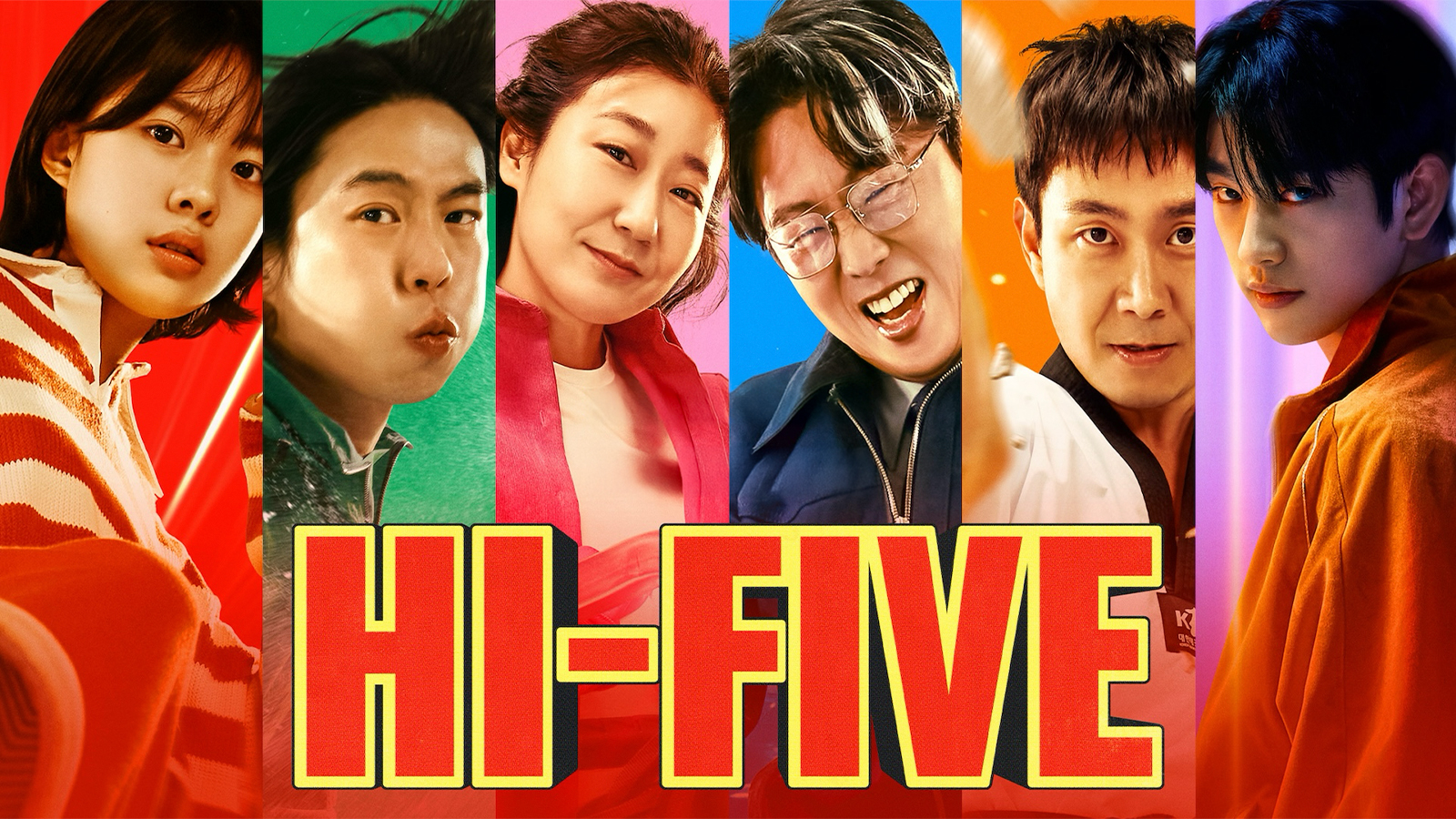
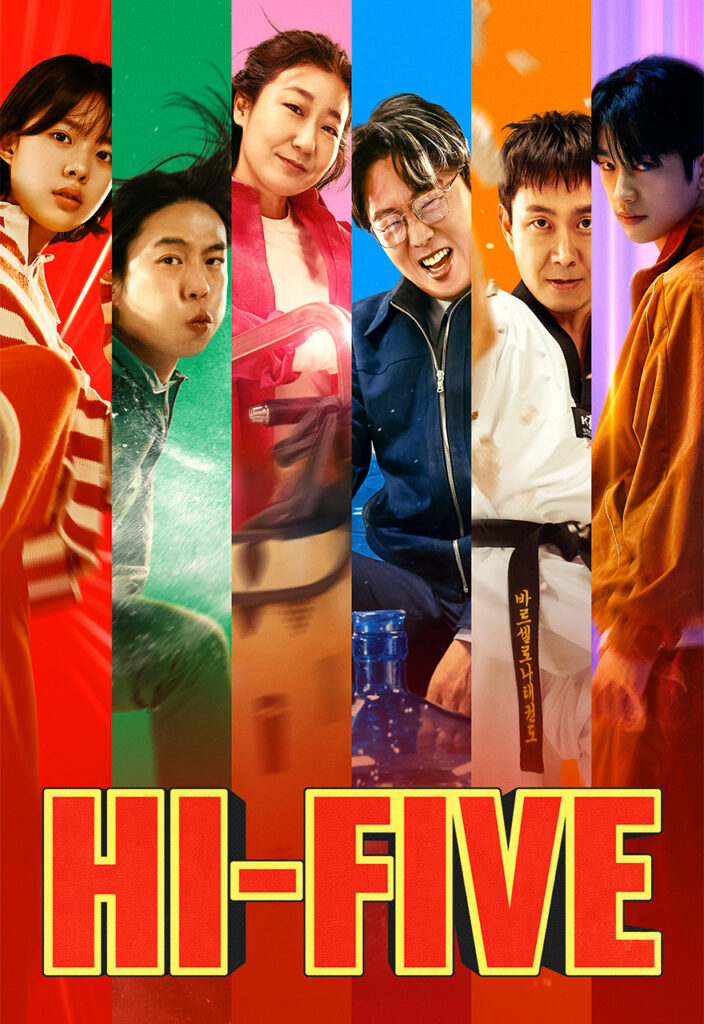
Five strangers receive organs from the same mysterious donor. Soon afterward, they discover that they’ve developed supernatural abilities. A teenage girl gets incredible strength. A hipster can manipulate electromagnetic waves. A novelist can summon powerful gusts of wind. A factory manager can heal other people. And one woman discovers a strange ability that isn’t immediately explained.
Together, they become HI-FIVE, an unlikely group of superheroes who never exactly asked for the job.
But they’re not the only people who received an organ from the mysterious donor.
A cult leader who received the donor’s pancreas develops a terrifying ability of his own and decides he wants the powers of HI-FIVE for himself.
If you’re looking for a Korean movie that’s energetic, strange, funny, and completely different from the usual superhero formula, Hi-Five deserves a spot on your watchlist.
What Is Hi-Five About?
The movie starts with a mystery.
A body donated for organ transplants mysteriously disintegrates into ashes. After the organs are transplanted, five recipients begin developing supernatural abilities.
The five don’t exactly fit the traditional superhero mold.
They’re not billionaires, trained warriors, or members of some secret organization. They’re regular people who suddenly have to figure out what their new abilities mean.
Eventually, they join forces as HI-FIVE.
And that’s when their problems really begin.
Because someone else has gained a power from the same donor.
Five Strangers Become a Superhero Team
One of the most fun things about Hi-Five is that its heroes don’t arrive fully formed.
They have to figure things out as they go.
There’s a teenage girl with immense physical strength, a hipster who can manipulate electromagnetic waves, a novelist who can generate powerful gusts, and a factory manager who can heal people. The fifth member has an unusual ability that remains unidentified.
That makes HI-FIVE feel less like a traditional superhero squad and more like five very different people trying to figure out how to function as a team.
And because they didn’t spend years training to control their abilities, there’s plenty of room for the movie’s comedy to come through.
The Villain Has a Power of His Own
Of course, a group of superheroes needs someone to fight.
In Hi-Five, that person is a cult leader who received the donor’s pancreas.
His transplant gives him the ability to drain life energy, and he becomes determined to steal the powers possessed by HI-FIVE.
Suddenly, the five strangers aren’t just learning how to use their abilities.
They’re being hunted.
That turns their strange new situation into a much bigger battle.
Why Hi-Five Doesn’t Feel Like a Typical Superhero Movie
American audiences have seen plenty of superhero origin stories.
Hi-Five takes a different approach.
There’s no elaborate superhero universe to learn before watching the movie. No previous films are required. No complicated mythology needs to be memorized.
The basic setup is wonderfully simple:
Five organ recipients get superpowers. A sixth recipient gets a dangerous power and wants theirs.
From there, the movie can have fun with the characters.
That’s also what makes the film a good fit for viewers who enjoy Asian movies that mix genres instead of staying neatly inside one category.
Hi-Five combines action, comedy, fantasy, and martial arts elements.
Meet the Cast of Hi-Five
The movie features a large Korean ensemble, with Lee Jae-in, Ahn Jae-hong, Ra Mi-ran, Kim Hee-won, and Yoo Ah-in among the central cast. The film also stars Oh Jung-se, Park Jin-young, and Shin Gu.
The ensemble is particularly important because Hi-Five isn’t built around a single superhero.
The five characters have different personalities, different abilities, and very different lives outside their newfound powers.
That gives the movie its group dynamic and helps distinguish it from the more familiar single-hero origin story.
From the Director of Sunny and Swing Kids
Hi-Five comes from director Kang Hyoung-chul, whose previous films include Scandal Makers, Sunny, Tazza: The Hidden Card, and Swing Kids.
For American viewers discovering Korean cinema through Amasian, that makes Hi-Five an interesting introduction to a filmmaker whose work spans comedy, drama, music, and now superhero-style action.
Rather than treating the superhero genre as a completely separate world, Kang brings his ensemble-focused filmmaking approach into the story.
Ready to Meet HI-FIVE?
If you’re looking for something different from the usual superhero blockbuster, Hi-Five is worth adding to your next movie night.
Five strangers.
Five mysterious powers.
One dangerous enemy.
And absolutely no idea what they’re doing.
5 Korean Action Movies to Watch for Free
Looking for a Korean movie with a little more adrenaline?
Korean cinema has no shortage of action, but the genre can take some pretty different forms. One movie might send you into a historical martial arts epic, while another throws you into a world of superpowered experiments. Then there are the revenge stories, crime thrillers, and brutally efficient assassins.
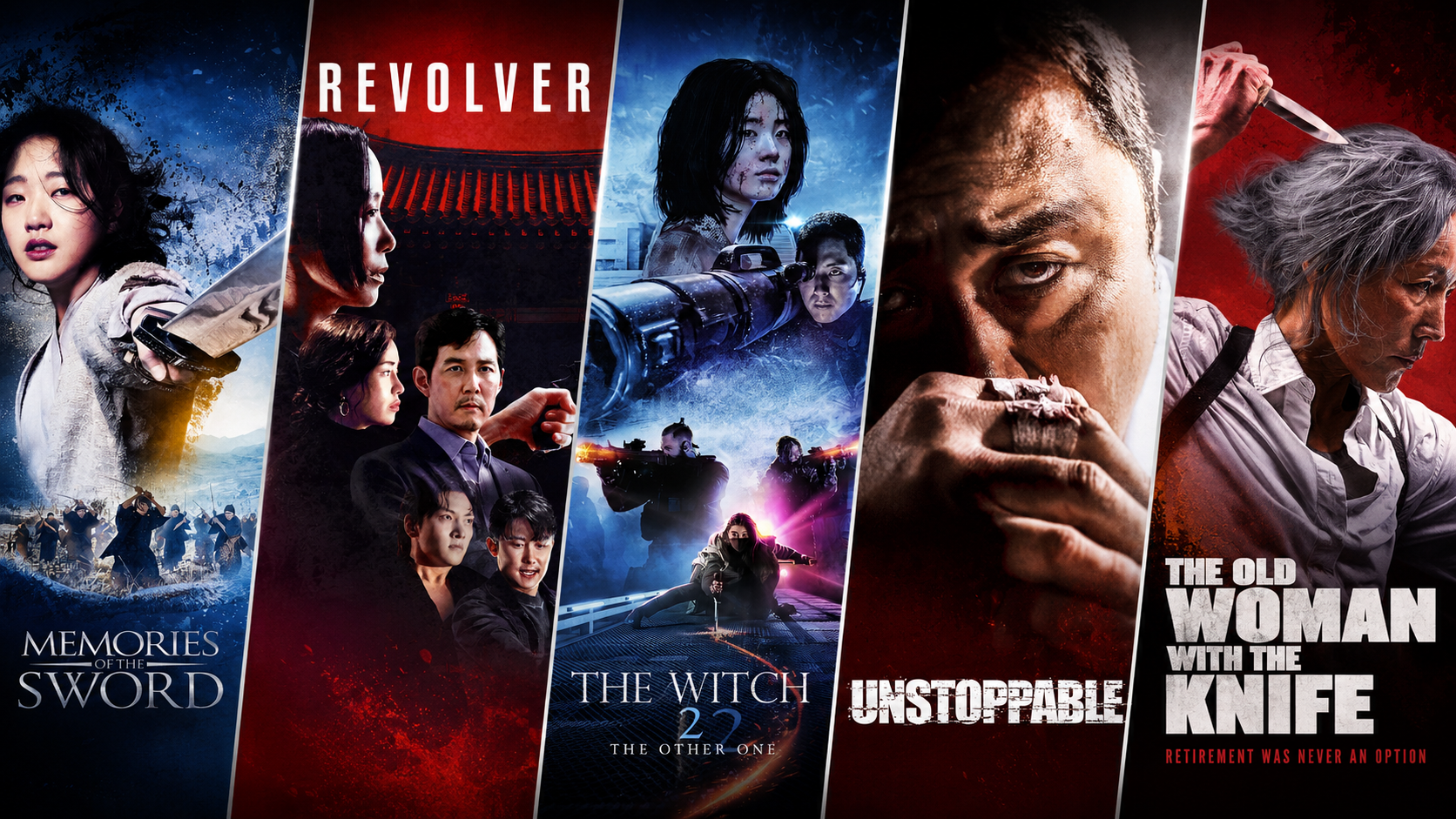
With that in mind, we’ve rounded up five Korean action movies. Each one brings something different to the table, so whether you’re looking for sword fights, superpowers, or a good old-fashioned revenge story, there’s a movie here worth adding to your watchlist.
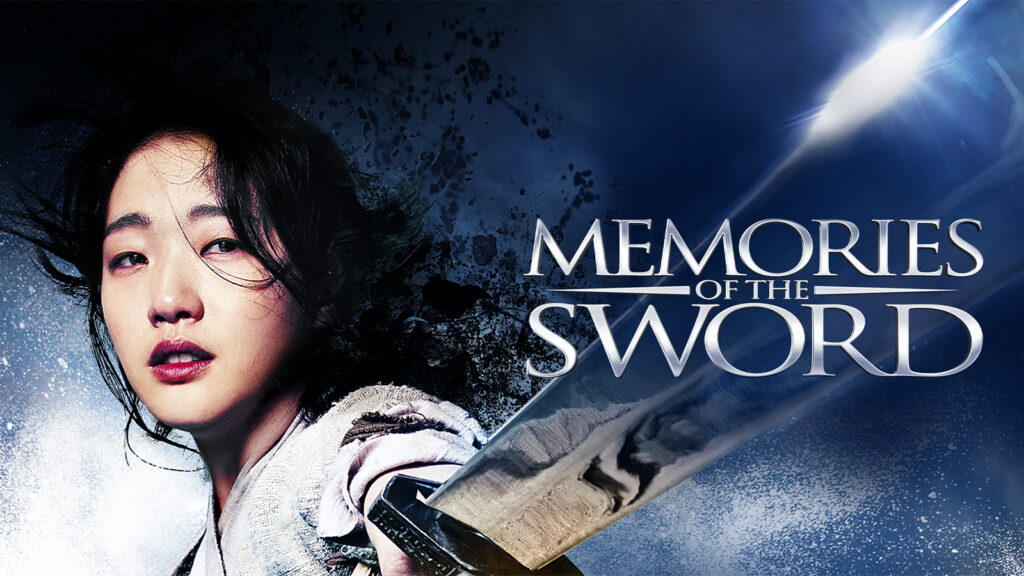
1. Memories of the Sword
If elaborate sword fights and historical revenge are your thing, start here.
Memories of the Sword takes place during Korea’s Goryeo era and follows three swordsmen who once joined forces in an uprising against a corrupt king. Their alliance falls apart when one of them, Deok-gi, betrays the others, leading to the death of Poong-cheon and the disappearance of Seol-rang and Poong-cheon’s young daughter, Hong-ee.
Eighteen years later, Hong-ee sets out on a path of revenge.
The movie stars Lee Byung-hun, Jeon Do-yeon, and Kim Go-eun, bringing together three major Korean actors for a story filled with complicated loyalties and spectacular martial arts.
What makes Memories of the Sword stand out is its combination of period drama and action. The revenge story gives the swordplay an emotional purpose, while the historical setting gives the movie a sweeping, almost epic quality.
Best for: Fans of martial arts movies, historical dramas, and revenge stories.
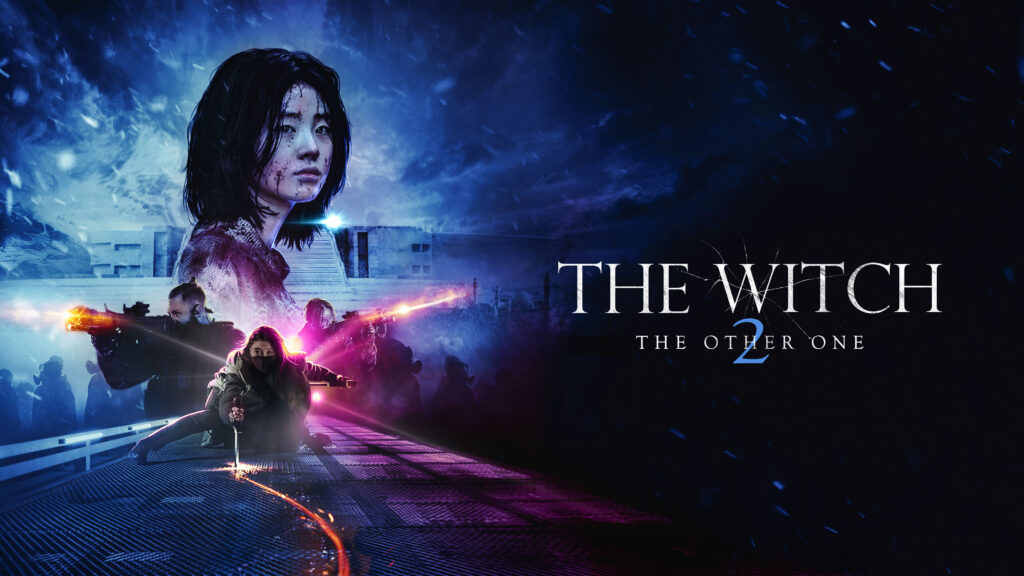
2. The Witch 2: The Other One
Want something a little stranger?
The Witch 2: The Other One moves away from traditional martial arts and into science fiction, horror, and superpowered action.
The sequel follows a mysterious girl who survives a violent attack on a secret facility connected to the “Witch” program. After escaping, she becomes the target of multiple groups determined to find her.
Directed by Park Hoon-jung, the film stars Shin Si-a, Park Eun-bin, Seo Eun-soo, Jin Goo, and Jo Min-su.
There’s a lot more going on beneath the surface, especially if you’ve seen The Witch: Part 1. The Subversion. But even with all the mystery surrounding the characters and the program, the movie knows when to let the action take over.
And when it does, things get intense.
Expect superhuman abilities, brutal fights, mysterious organizations, and plenty of questions about exactly what the Witch program has created.
Best for: Fans of sci-fi action, supernatural thrillers, and The Witch series.
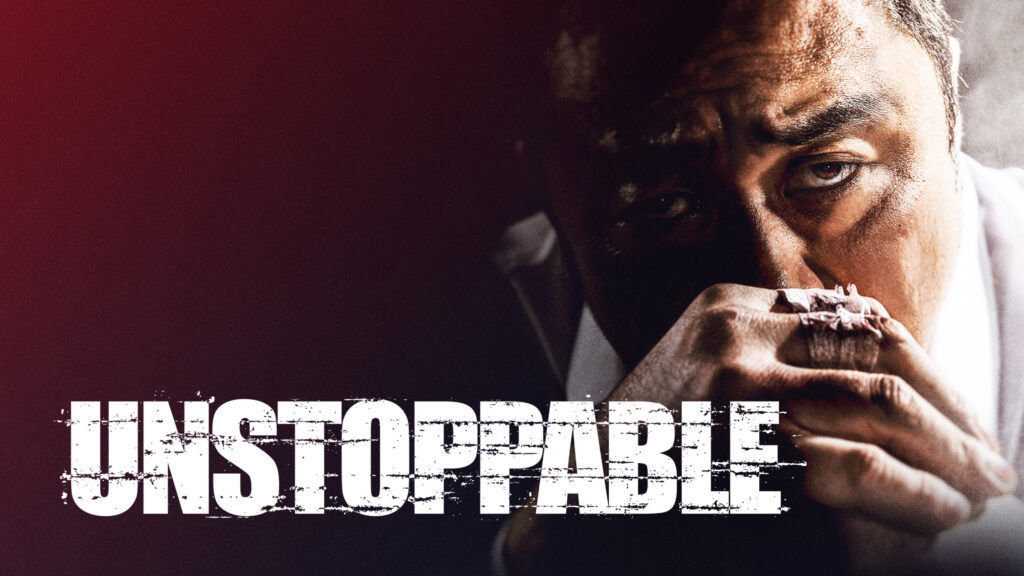
3. Unstoppable
Sometimes you don’t need superpowers or an elaborate historical setting.
Sometimes you just need to make the wrong person angry.
That’s essentially the premise behind Unstoppable, the 2018 action thriller starring Ma Dong-seok and Song Ji-hyo.
Dong-chul was once a legendary gangster, but he’s left that life behind and is trying to settle down with his wife, Ji-soo. His quiet existence falls apart when Ji-soo is kidnapped by a human trafficking ring.
The criminals make one major mistake: they don’t realize who they’re dealing with.
Dong-chul sets out to find his wife, drawing on the violent skills he thought he’d left in the past.
Ma Dong-seok is perfectly suited to this kind of role. There’s something particularly satisfying about watching a seemingly ordinary man gradually reveal that he’s considerably more dangerous than anyone expected.
The movie combines hard-hitting action with a straightforward rescue mission, making it one of the easiest picks on this list to jump into without needing much setup.
Best for: Fans of Ma Dong-seok, revenge-driven action, and relentless rescue thrillers.
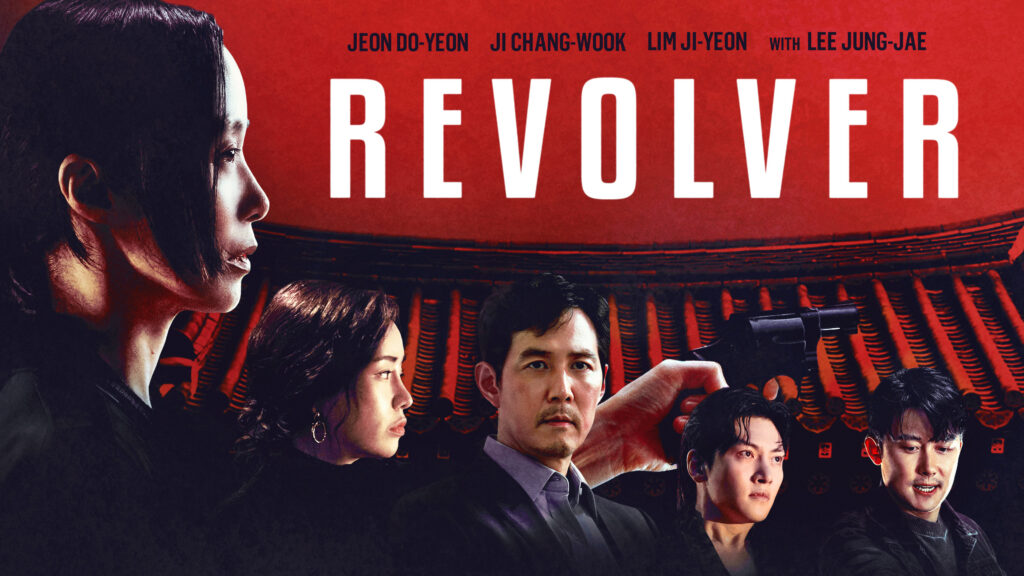
4. Revolver
Not every action movie needs to be nonstop explosions.
Revolver takes a slower, more controlled approach, building its tension around revenge, corruption, and a promise that turns out to be worth considerably less than expected.
The film stars Jeon Do-yeon as Ha Soo-young, a police detective who takes the fall for a corruption scandal after being promised a substantial reward. When she gets out of prison, however, she discovers that the compensation she was expecting isn’t waiting for her.
So she goes after it herself.
Directed by Oh Seung-uk, Revolver also stars Ji Chang-wook and Lim Ji-yeon, with the three actors at the center of a story where trust is in short supply.
This is the pick for anyone who likes their action with a little more crime thriller and revenge noir mixed in.
Instead of constantly escalating into bigger set pieces, Revolver lets its characters and their shifting relationships create the tension.
Best for: Fans of crime thrillers, revenge stories, and morally complicated characters.
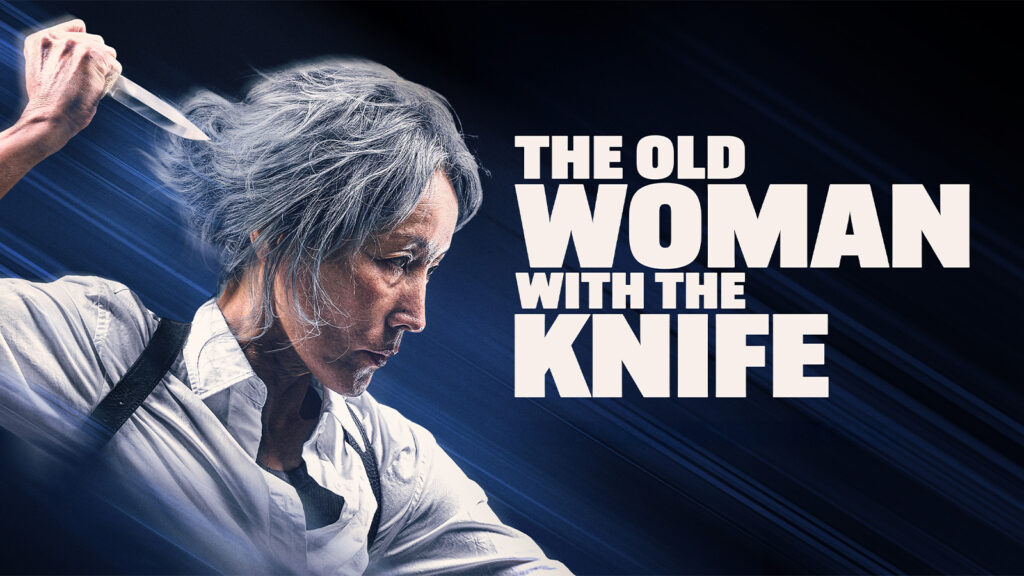
5. The Old Woman with the Knife
And then there’s The Old Woman with the Knife, which might have the most immediately intriguing premise of the group.
The film follows Hornclaw, a legendary assassin in her sixties who has spent decades eliminating criminals. Her routine changes when she encounters Bullfight, a young and ambitious killer who wants to work alongside her.
But Bullfight isn’t simply an admirer.
He has a connection to Hornclaw’s past, and as their relationship becomes more complicated, old memories and unresolved feelings turn into a much more dangerous confrontation.
Directed by Min Kyu-dong and starring Lee Hye-young and Kim Sung-cheol, the film mixes action with mystery and drama. It is also based on Gu Byeong-mo’s novel of the same name.
What makes this one particularly interesting is its central character. Hornclaw isn’t a young assassin discovering her abilities for the first time. She’s an experienced professional whose age has become part of the challenge.
That gives the action a different kind of edge.
Best for: Fans of assassin thrillers, character-driven action, and unconventional protagonists.
Which Korean Action Movie Should You Watch First?
It really depends on what kind of action you’re looking for.
For sword fights and historical drama: Memories of the Sword
For superpowers and sci-fi: The Witch 2: The Other One
For a straightforward revenge mission: Unstoppable
For crime and revenge: Revolver
For something completely different: The Old Woman with the Knife
That’s also what makes this group worth checking out. “Korean action movie” can mean a lot of different things, and these five films show just how much variety there is within the genre.
From Goryeo-era swordplay to secret experiments and aging assassins, there’s no shortage of ways to get your next adrenaline fix.
Ready for Some Korean Action?
Whether you’re in the mood for a historical sword fight, a superpowered showdown, or a revenge thriller, Amasian TV has plenty of Korean action movies to explore.
Add these five to your watchlist and see which one becomes your next favorite.
Watch Korean movies on Amasian TV and discover your next action-packed movie night.