
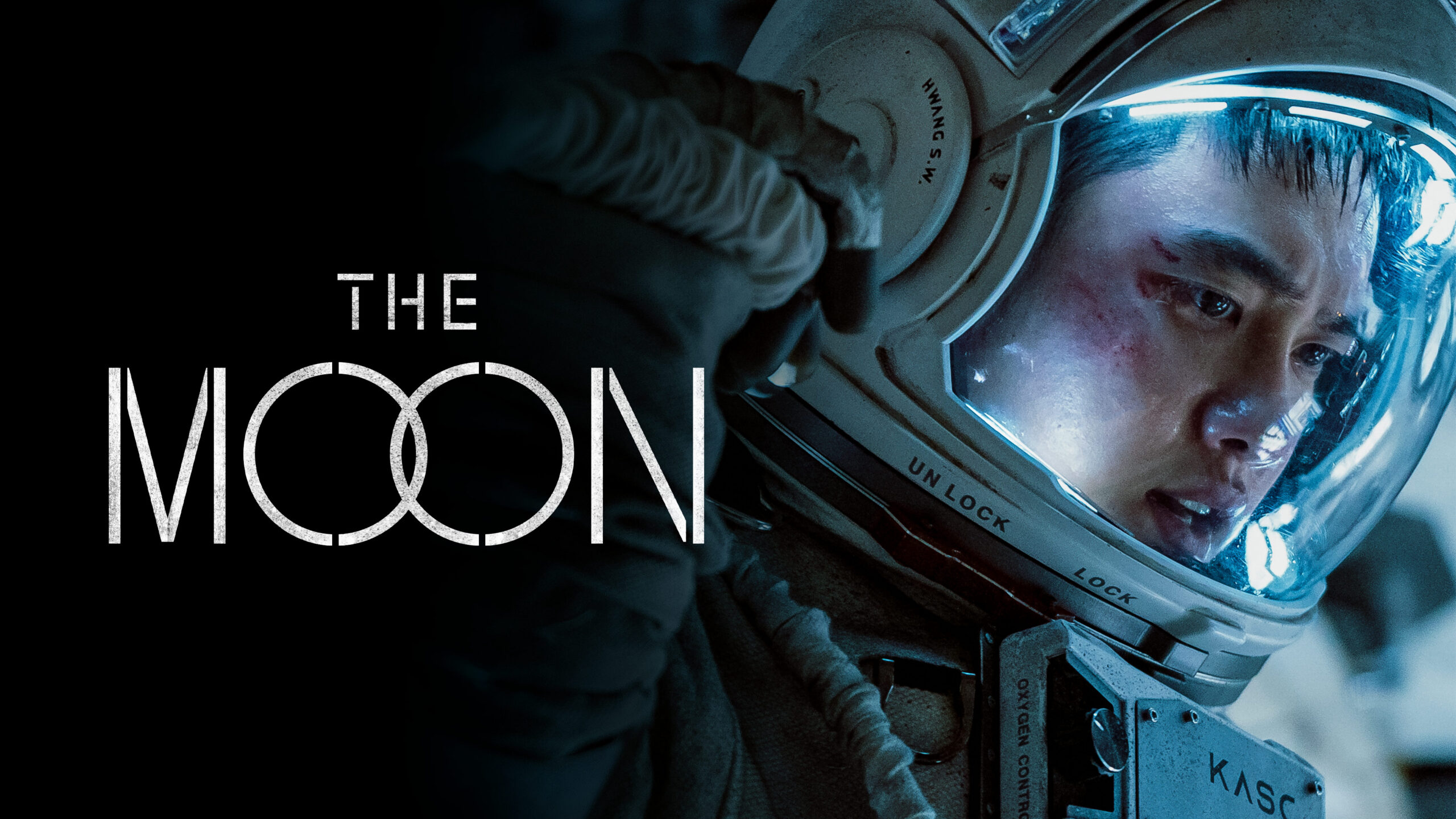
What happens when a country’s second attempt to send astronauts to the Moon goes wrong?
That is the setup for The Moon, Kim Yong-hwa’s 2023 Korean sci-fi disaster film. Set in 2029, the movie follows astronaut Hwang Sun-woo (Doh Kyung-soo), who becomes stranded on the lunar surface after a solar storm causes a catastrophic problem during South Korea’s second crewed lunar mission. Back on Earth, former Naro Space Center director Kim Jae-guk (Sul Kyung-gu) is brought back to help get him home. Kim Hee-ae plays Yoon Moon-young, a NASA official with her own connection to the failed mission that came before.
Directed by Kim Yong-hwa, the filmmaker behind Along with the Gods, The Moon was built around a very specific ambition: make a Korean space movie that could put the audience directly into the experience of being on the Moon. The production invested heavily in visual effects and virtual production to create the lunar landscape, spacecraft, and mission-control sequences.
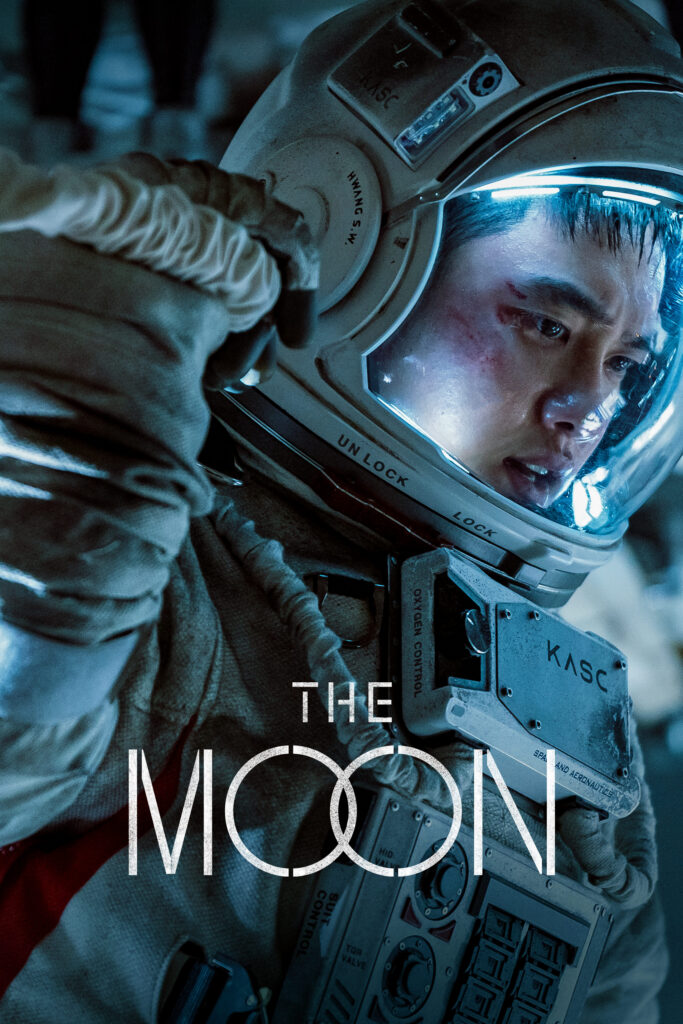
A Korean Mission Goes Wrong on the Moon
The movie begins with South Korea’s first crewed lunar mission ending in disaster. Five years later, the country launches another mission, hoping for a different result.
Sun-woo is one of three astronauts aboard the spacecraft Uriho. The mission initially appears to be progressing successfully, but a powerful solar wind causes the spacecraft to malfunction. Sun-woo eventually becomes separated from his crewmates and is left alone on the lunar surface.
His survival depends on people thousands of miles away.
Jae-guk, who had stepped away from the space program after the earlier catastrophe, is called back to the Naro Space Center. His job becomes increasingly difficult as the team tries to communicate with Sun-woo and figure out how to bring him back.
That gives the movie two locations to work with: the vast, isolated lunar landscape where Sun-woo is fighting to survive and the increasingly frantic control room where Jae-guk and his team are trying to find a way to reach him.
D.O. Plays an Astronaut Alone on the Moon
Doh Kyung-soo, better known as D.O. from EXO, takes the lead role as Hwang Sun-woo.
The role required a very different kind of performance from his work as a K-pop performer. Much of the movie puts Sun-woo alone inside a spacesuit, with his interactions with the other characters happening through communications equipment.
D.O. said he focused on the physical reality of wearing a heavy spacesuit as well as Sun-woo’s fear, panic, and loneliness. He also described seeing a Korean film attempt this scale of space story as an indication of how far the country’s film industry had developed.
That isolation is important to the movie’s tension. There are long stretches where Sun-woo has no one physically beside him, leaving D.O. to carry scenes through movement, facial expressions, and conversations over radio communication.
Sul Kyung-gu and D.O. Spend Most of the Movie Apart
One of the more unusual aspects of The Moon is the relationship between Sun-woo and Jae-guk.
The two leads rarely share the screen because Jae-guk remains on Earth while Sun-woo is trapped on the Moon. Their relationship develops through communications between the spacecraft and the control center.
Sul Kyung-gu discussed the challenge in an interview with Korean Film Biz Zone, explaining that the actors had a completed CGI image of Sun-woo available on large monitors while filming. That gave the Earth-based actors something concrete to react to instead of forcing them to perform toward an empty space.
The setup also gives the film an interesting emotional divide. Sun-woo is dealing with immediate physical danger, while Jae-guk has to make decisions from a control room and live with the memory of the previous mission’s failure.
The Moon Was Built With Virtual Production
A major part of The Moon is the technology behind its visuals.
Kim Yong-hwa had already worked extensively with visual effects through his previous films, including Mr. Go and the Along with the Gods series. For The Moon, Dexter Studios developed its virtual production capabilities further, using an LED-panel studio to display CGI environments in real time while the actors and cameras were filming.
That technology was particularly useful for a movie where much of the action takes place somewhere impossible to film conventionally.
Instead of creating every lunar environment after the actors had finished shooting, the production could show completed CGI environments on large screens during filming. Sul Kyung-gu specifically said being able to see Sun-woo’s spacecraft on the monitors helped him understand the scenes and respond to what was happening around his character.
Kim also shot the film with IMAX and 4K cameras, aiming for an image that would hold up in large-format theaters. His stated goal was for viewers to feel as though they had landed on the Moon alongside the characters.
The Lunar Surface Was Designed Around Real Science
The film takes plenty of dramatic liberties, but its production put significant effort into making the lunar environment convincing.
Yonhap reported that experts from the Korea Aerospace Research Institute and Korea Astronomy and Space Science Institute were consulted on scientific aspects of the movie. The spacecraft and spacesuits were also designed with NASA’s human-spaceflight program as a reference.
The result is a very different visual environment from the brightly lit interiors of the space center. Sun-woo moves across a barren lunar landscape where even a small mistake can become a life-threatening problem.
The movie’s estimated production budget was around 28 billion won, or roughly $21.8 million at the time. That is a fraction of the budgets associated with major Hollywood space blockbusters, making the production’s VFX ambitions particularly notable.
Kim Yong-hwa’s Follow-Up to Along with the Gods
The Moon came from a director who already had experience making Korean films on a massive scale.
Kim Yong-hwa directed both Along with the Gods films, which each surpassed 10 million admissions in South Korea. He had also developed a close relationship with Korea’s VFX industry through earlier productions, making a space survival movie a natural next challenge for him.
He has said that his fascination with space and the Moon goes back to childhood. By the time he made The Moon, he believed Korean VFX technology had reached a point where he could finally attempt the kind of lunar movie he had imagined.
That ambition is visible throughout the film. The spacecraft, lunar terrain, spacewalks, and mission-control sequences all receive considerable visual attention.
A Space Thriller Built Around Survival
At its core, The Moon keeps returning to one problem: Sun-woo needs to survive long enough for Earth to find a way to bring him home.
His situation becomes increasingly dangerous as his oxygen supply, spacecraft systems, and the lunar environment work against him. The movie uses those physical problems to create its biggest action sequences, while the control center tries to respond to each new crisis.
The emotional side of the story comes from the history connecting Sun-woo’s mission to the disaster five years earlier. His father, Hwang Gyu-tae, was involved with the first mission, giving Sun-woo a personal reason for wanting the second attempt to succeed. The rescue effort also forces Jae-guk to confront the failure that led him away from the space program in the first place.
The film’s reviews were mixed on how successfully the human drama worked. Yonhap praised the visual effects and the realism of the lunar setting while criticizing the predictable story and heavy use of familiar disaster-movie conventions.
That makes The Moon an especially interesting watch for anyone curious about the technical side of Korean blockbuster filmmaking. Its biggest selling point is the scale of what the production attempted.